I’ve noticed that the hardest spaces to decorate in a bedroom are often the smallest ones.
There’s the narrow gap beside the wardrobe. The empty corner near a window. The little bit of wall behind the door. They’re not really big enough for another piece of furniture, but leaving them completely empty can make the room feel unfinished.
I’ve had those spaces in my own home, and my first instinct was usually to ignore them.
But not every awkward corner needs to become storage. Sometimes it just needs a better purpose.
A small reading chair can make an unused window corner feel inviting. A slim mirror can turn the side of a wardrobe into a useful dressing spot. Even a few hooks behind the door can save a surprising amount of space.
Here are some of the ideas I’d actually consider before buying anything new for a bedroom.
Turn an Empty Window Corner Into a Reading Nook
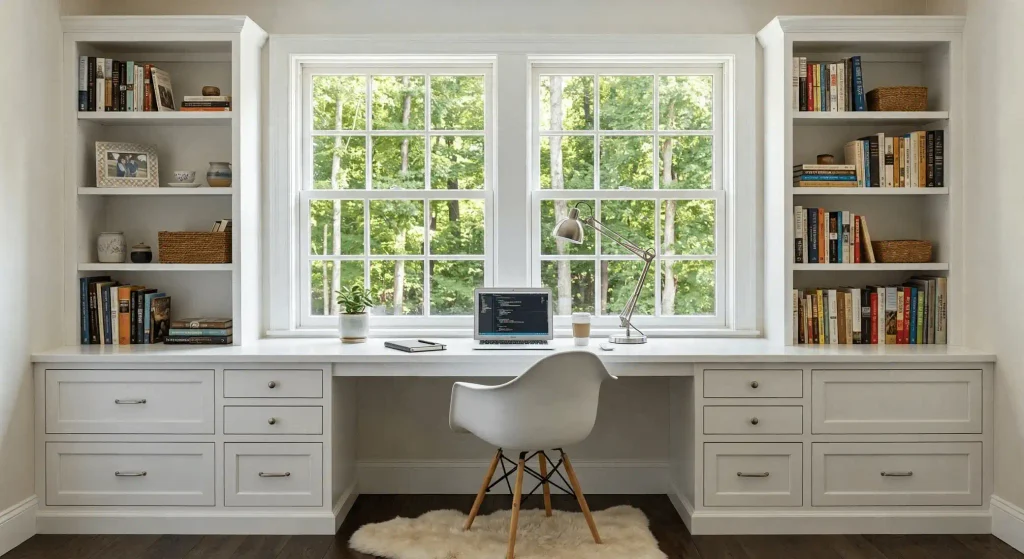
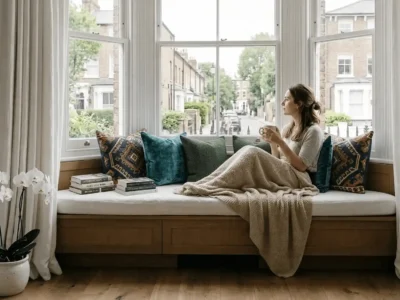
A window corner is probably one of the easiest spaces to make cozy.
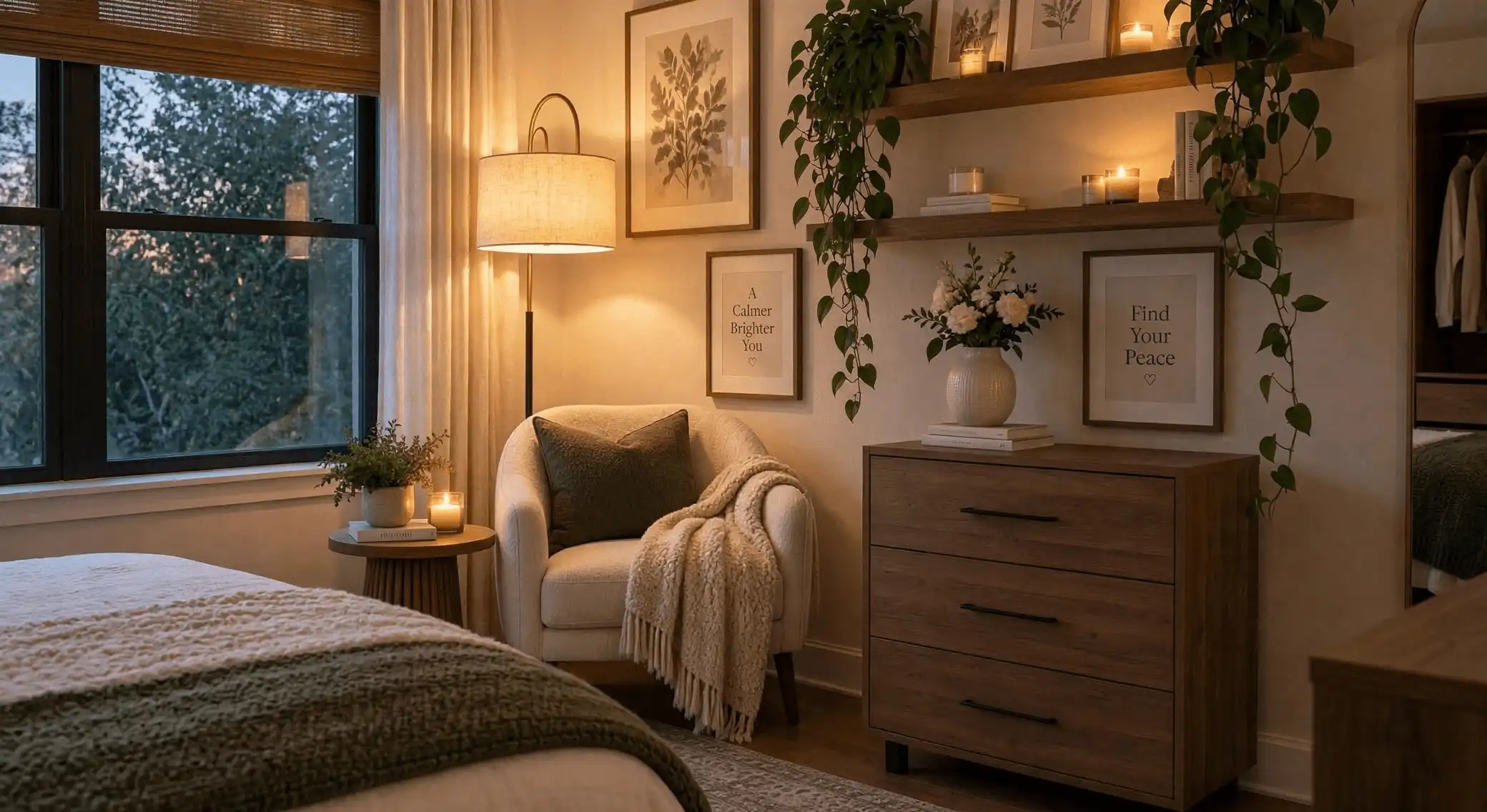
If you have enough room, try a comfortable chair with a small side table and a floor lamp. Add a throw blanket and you’re done.
I wouldn’t overdecorate it. The natural light is already doing most of the work.
It can become a quiet place to read, have your morning coffee, or sit for a few minutes when you don’t want to be in bed.
Even a fairly small corner can work. You don’t need an entire reading room.
Create a Small Dressing Spot Near the Window
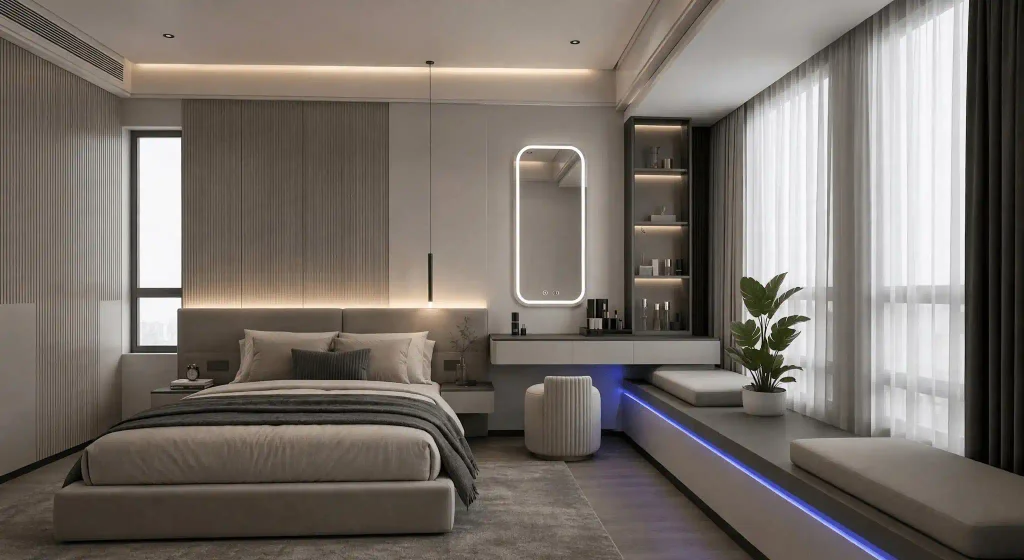
A wider window area can sometimes do double duty as a dressing space.
A slim floating vanity or narrow countertop can fit where a full-size dressing table would feel too bulky. Add a round or oval mirror above it and a small stool underneath.
I’d keep the surface simple. A little tray, a couple of perfumes and maybe a small plant are enough.
If there’s an awkward gap beside the vanity, you could use it for a narrow display shelf. That gives the area a little personality without filling every inch.
And if your window gets good natural light, getting ready there can be a lot nicer than standing in a darker corner of the bedroom.
Make the Narrow Space Beside the Bed Useful
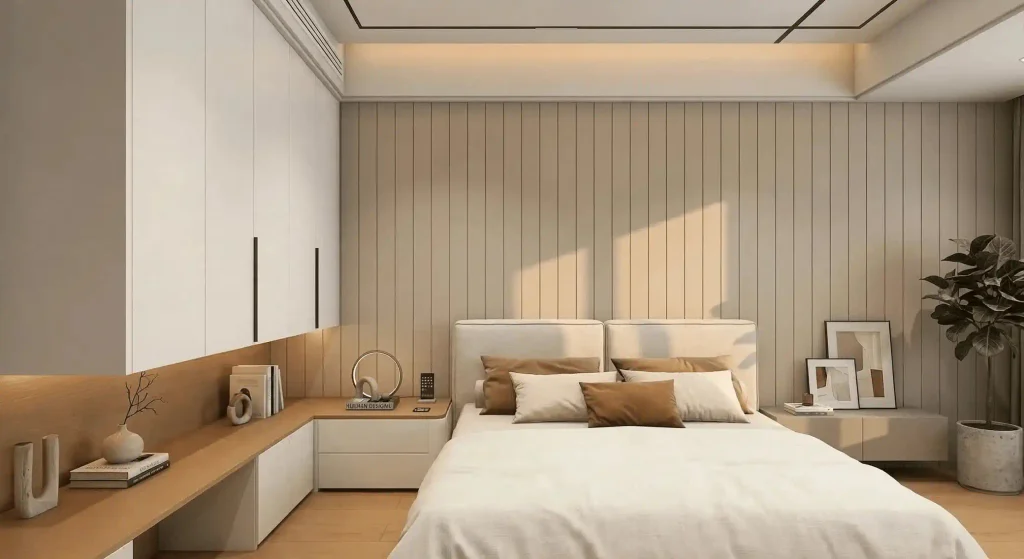
That little space beside the bed can be surprisingly tricky. A regular nightstand might feel too bulky, but leaving the spot completely empty can make it look a little awkward too.
I’d go with a slim nightstand or a simple floating shelf instead. It gives you just enough room for a lamp, your phone, a book, or anything else you like to keep close at night.
I especially like floating shelves in smaller bedrooms because you still have open floor space underneath. It makes the room feel a bit lighter and less crowded without adding another bulky piece of furniture.
You really don’t need to squeeze more furniture into a small bedroom. Sometimes a smaller, simpler version of what you need works much better.
Add a Bench at the Foot of the Bed
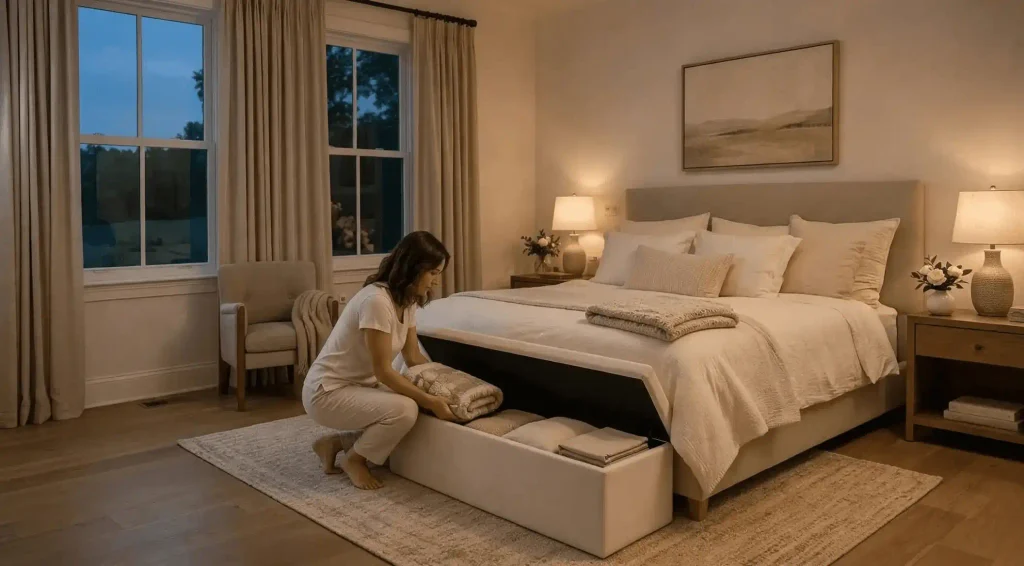
If there’s enough walking space at the foot of your bed, a bench can be a really useful addition.
A storage bench is even better if you’re short on closet space. You can tuck away extra blankets, pillows, seasonal clothes or things you don’t use every day.
But I wouldn’t add one just for storage.
A simple upholstered bench can give you somewhere to sit while putting on shoes or getting dressed, and it can make the bedroom feel more finished without making it look overdecorated.
Just measure the space first. A bench that leaves barely any room to walk around will become annoying very quickly.
Turn the Side of Your Wardrobe Into a Dressing Zone
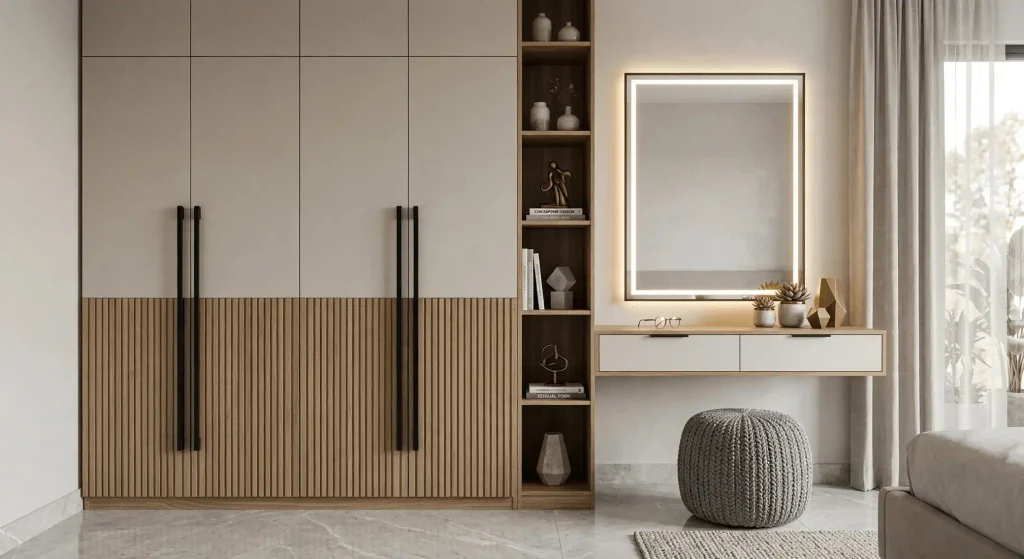
If you have an empty wall beside your wardrobe, you can turn it into a small dressing area without taking up much extra space.
A simple floating vanity works well here, especially with a backlit mirror that gives off a warm, soft glow. If there’s enough room, add a narrow shelf along the side of the wardrobe for perfumes, a few books, or the little things you like to keep nearby. A small knitted ottoman underneath gives you a place to sit without making the corner feel crowded.
I really like this setup because it makes use of space that might otherwise just sit empty. Everything has a place, but the corner still feels like part of the bedroom rather than a separate piece of furniture squeezed into it.
Add a Pegboard for Bags, Hats and Everyday Things
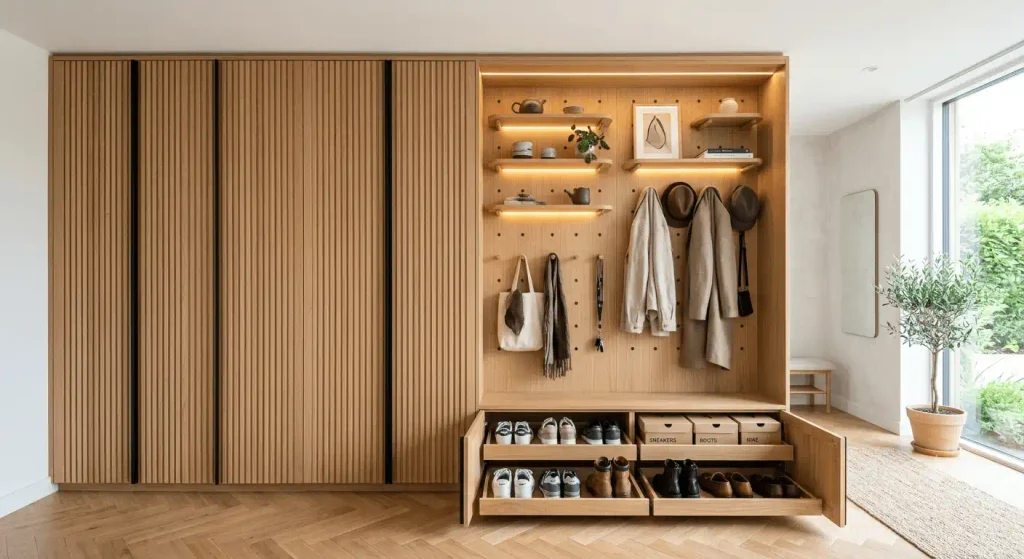
A narrow wall doesn’t always have to hold a shelf.
A slim wooden pegboard can give you a flexible place for handbags, hats, scarves and lightweight jackets.
The best part is that you can move the hooks around when your needs change.
I’d add two or three shelves underneath for shoes, small boxes or folded accessories. If the frame matches the wardrobe finish, the whole thing can look much more intentional.
This could be particularly handy if you like having the things you use most often within easy reach instead of buried in a closet.
Turn an Awkward Gap Into Hidden Storage
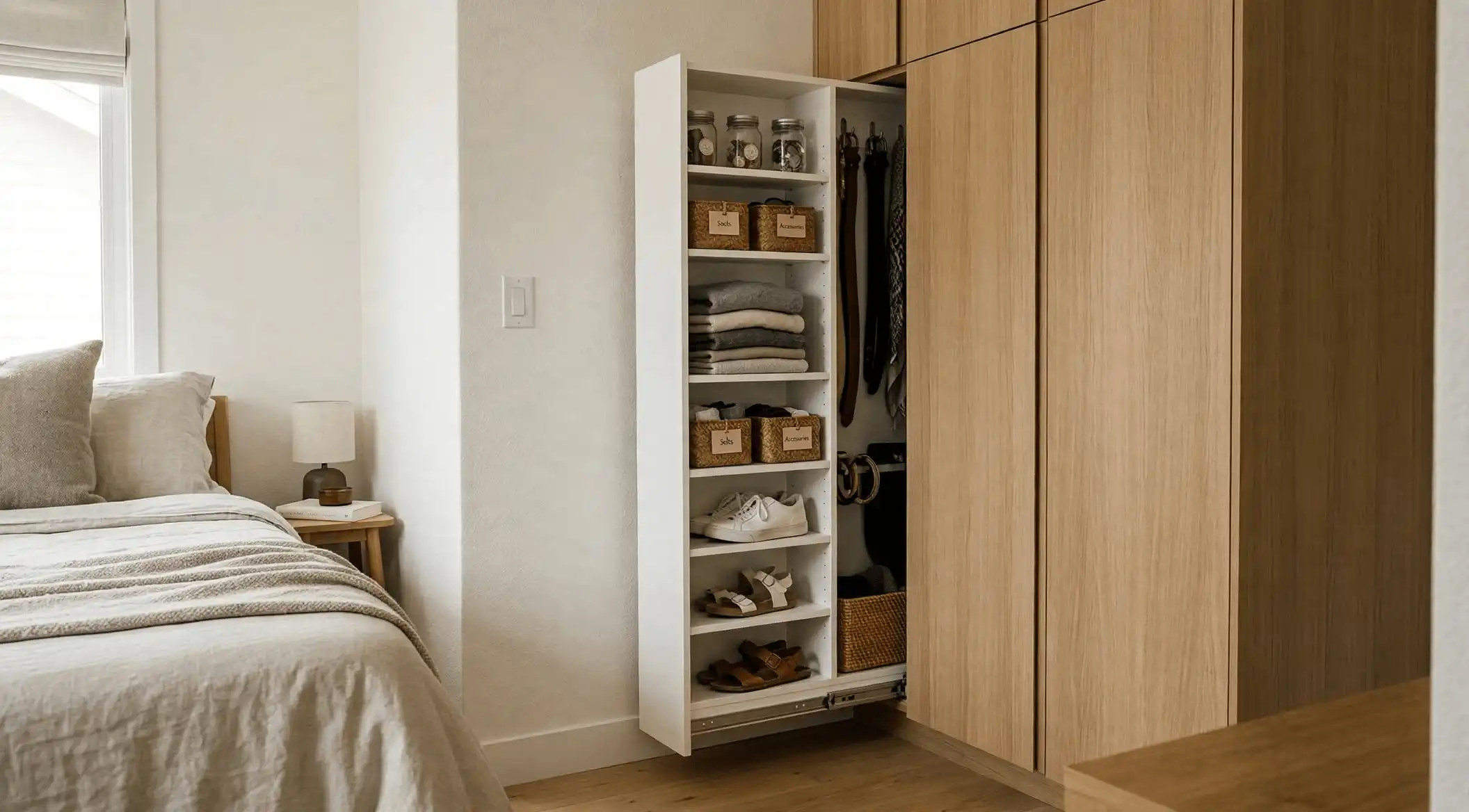
Some gaps are too narrow for regular furniture but too useful to leave completely empty.
If there’s enough depth, a slim pull-out cabinet could make surprisingly good storage.
Depending on where it is, you could use it for an ironing board, extra shoes, cleaning supplies, small household items or other things that don’t need to be on display.
I like this option for spaces that look almost useless at first.
When the cabinet is closed, the room still looks clean. When you need something, you simply pull it out.
Use the Back of the Bedroom Door
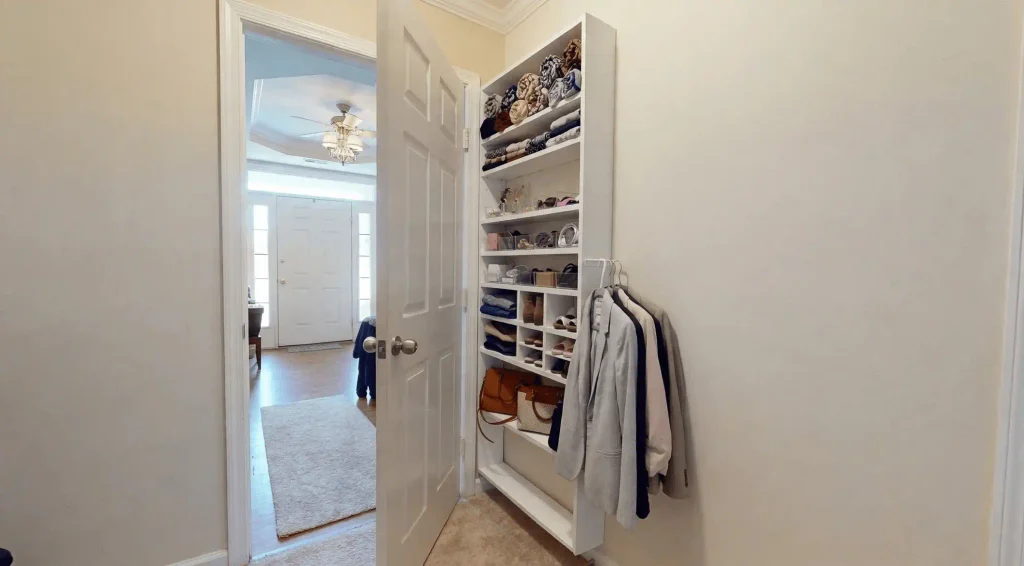
The back of a bedroom door is easy to overlook, but it can become a handy little storage area.
A few sturdy hooks are enough for a robe, handbag, jacket or the outfit you plan to wear the next day.
If you need more storage, a slim over-the-door organizer can hold shoes, scarves and smaller accessories.
I wouldn’t cover the entire door with stuff, though. A few everyday items are much easier to manage than an overloaded organizer that gets in the way every time you open or close the door.
Give an Empty Wall Corner a Purpose That Fits You
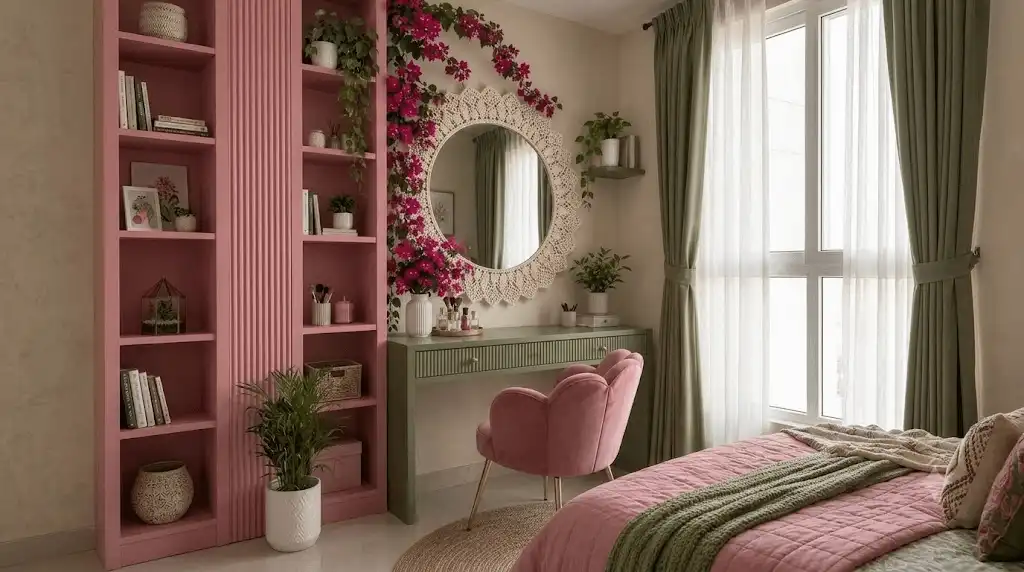
Not every empty corner needs a bulky cabinet.
Sometimes a slim vanity or a small dresser is enough. If you have an unused nook beside a tall shelf, it can become a simple dressing area with a round mirror, a comfortable chair, and a small plant. A couple of floating shelves nearby give you space for framed photos, books, or everyday items you like having within reach.
One thing I’ve learned is that it’s easy to fill a space based on ideas you see online, but the rooms that feel best are usually the ones designed around real life. Think about what you actually need first, then let the space grow from there.
What I’d Do Before Buying Anything
If I had an awkward empty space in my bedroom, I’d live with it for a few days before buying anything.
I’d notice what I keep reaching for, where I tend to drop my bag, where I get dressed, where I like to sit and which things always seem to end up without a proper home.
That usually tells you more than a furniture catalog does.
A narrow space beside the wardrobe might need a mirror. A window corner might be perfect for a chair. The back of the door might solve your jacket problem. A completely unused gap might be better left open.
The goal isn’t to fill every empty space.
It’s to make the spaces you already have work a little better.
And sometimes, that one small change is enough to make the whole bedroom feel more comfortable.