

I’ve never believed that a kitchen has to be completely remodeled to feel new again.
Sometimes I notice the difference from something really small. A shelf where there used to be an empty wall. A coffee corner that makes busy mornings easier. A fresh backsplash behind the sink. Even replacing an old kitchen trash can can make the room feel a little less annoying to use.
That’s what I like about smaller kitchen projects. They don’t require you to empty the room, live through weeks of construction, or spend your entire home-improvement budget in one weekend.
If your kitchen is mostly fine but has a few things that bother you every day, these are the kinds of updates I’d look at first.
Add an Open Shelf

There’s usually at least one kitchen wall that isn’t doing much.
Instead of leaving it completely empty, I like the idea of adding one simple open shelf.
In a US kitchen, that might be a short stretch of wall between cabinets, beside a window, or even above a small coffee area. You don’t need a whole row of shelves. One sturdy shelf can be enough to make an otherwise forgotten spot useful.
I’d use mine for things I actually reach for—favorite mugs, a couple of bowls, everyday glasses, or a small plant.
That’s an important part for me. An open shelf should earn its place.
I don’t want another surface that needs constant dusting or styling. If something is sitting out, I want to use it.
A wooden shelf can also add a little warmth if your kitchen has a lot of white cabinetry or cooler finishes. And because you’re working with a relatively small area, it’s an update that can change the feel of the kitchen without changing the whole kitchen.
One thing I’d avoid: filling the shelf from end to end.
Leaving a little breathing room usually makes it look more natural—and makes everyday items much easier to grab.Replace the Kitchen Bin
This is one of those changes that sounds almost too ordinary to mention.
But think about how often you use your kitchen trash can.
Probably every day. More than once.
If the lid sticks, the bin is always in the way, the size doesn’t work for your household, or you have to squeeze past it every time you open a cabinet, it may be worth replacing.
I’d start with the location before choosing a new one.
In a smaller kitchen, a slim bin beside the cabinets can work better than a large freestanding one. If you have enough cabinet space, an integrated or pull-out option can keep the floor area clear. In a larger kitchen, a sturdy lidded bin may simply be more convenient.
There’s no universal answer here because the right setup depends on how your kitchen actually works.
And honestly, that’s the point.
A remodel doesn’t have to be something people notice when they walk into your house. Sometimes the best updates are the ones you notice every single day.
Make a Small Coffee or Tea Station
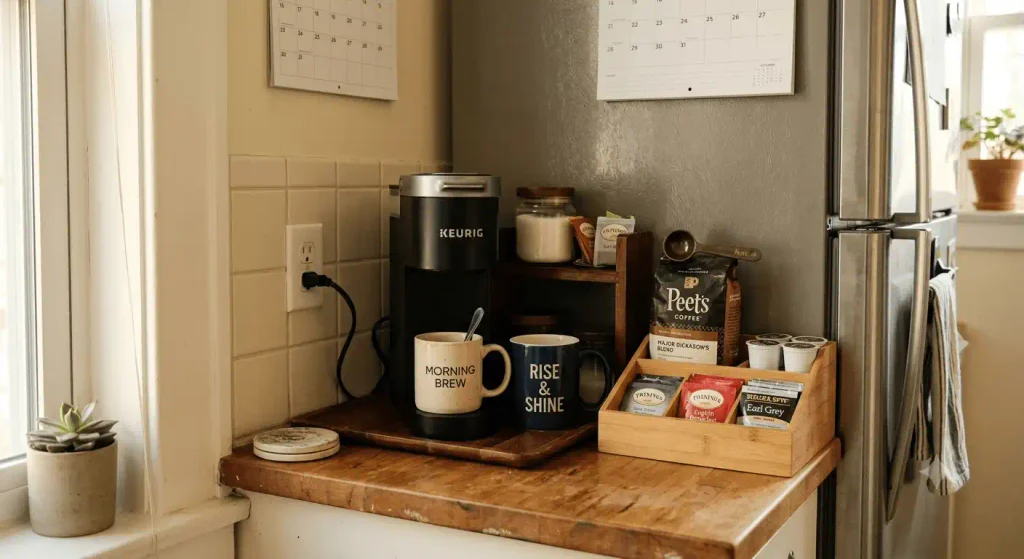
This one feels very personal to me because the kitchen is often where the day begins.
If you’re someone who reaches for coffee first thing in the morning—or has a proper tea ritual—giving those things their own little corner can make the kitchen feel more organized without adding much at all.
You could use a small section of countertop near an outlet for your coffee maker or kettle. Add your everyday mugs, coffee beans or pods, tea bags, and whatever you normally reach for.
A small tray can help keep everything together.
I’d also resist the temptation to turn it into a giant coffee-bar display. You don’t need matching jars, ten decorative signs, and things you never use.
Keep the things you actually drink and use.
If you have a narrow counter beside the refrigerator or a little unused corner near the dining area, that may be all the space you need.
And there’s something nice about having that little routine waiting for you in the morning.
Try a Simple Backsplash
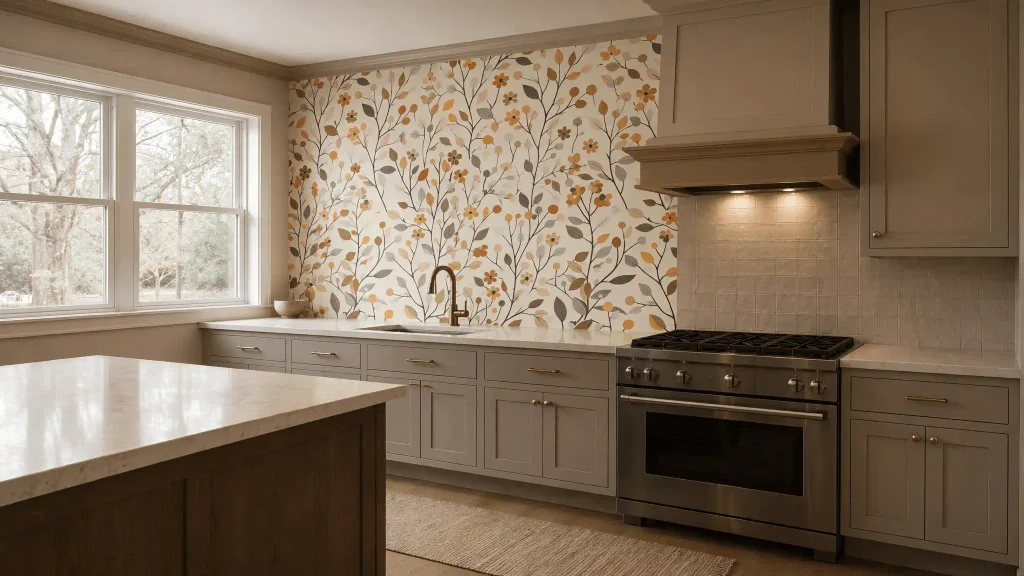
A backsplash is one of those kitchen details I notice more after living in a space for a while.
When the wall behind the counter or sink starts looking tired, the whole kitchen can feel older than it really is.
A simple backsplash can change that.
For a DIY project, I’d keep the design fairly straightforward. Depending on your kitchen and the area you’re covering, that could mean traditional tile, peel-and-stick backsplash materials designed for kitchen use, or another beginner-friendly option.
The important part is choosing something that works with what you already have.
If your countertops have a noticeable pattern, I’d probably go quieter with the backsplash. If your cabinets and counters are simple, this is a place where you can add a little more character.
Before buying anything, measure the area carefully and check the product instructions. Kitchens deal with moisture, heat, grease, and plenty of cleaning, so the material needs to be appropriate for where you’re installing it.
And don’t forget the visual test.
I like looking at samples beside the cabinets and countertop during both daylight and evening light. A color that looks perfect in a store can look surprisingly different once it’s in your actual kitchen.
Paint One Kitchen Wall
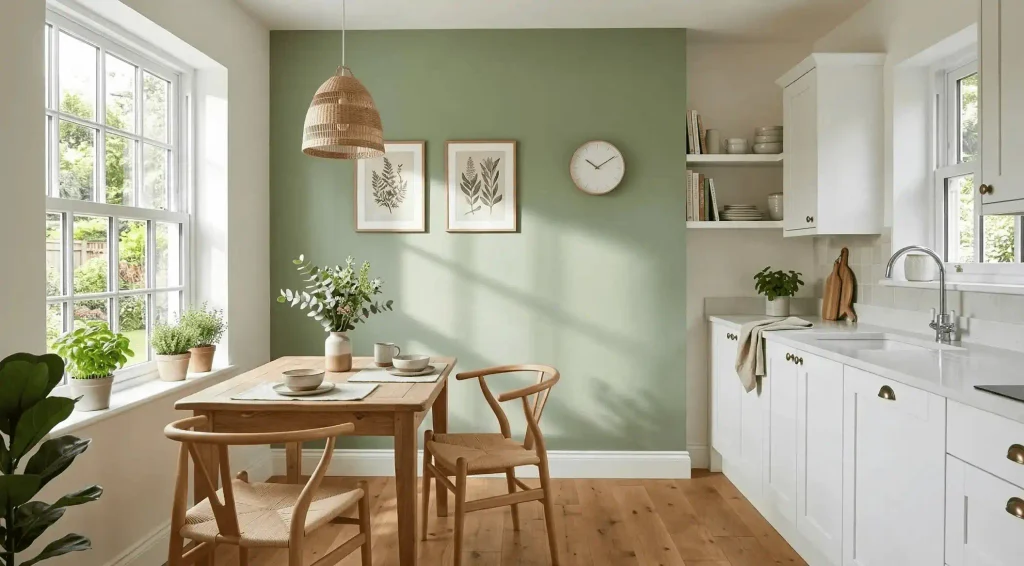
You don’t have to paint every wall to make a kitchen feel fresher.
Sometimes one wall is enough.
This is especially useful if the cabinets and countertops are still in good shape but the room feels a little flat. I’d look for a wall that gets noticed—perhaps the one around a breakfast table, beside a dining area, or a blank wall that has never really had a purpose.
A fresh color can give that space some definition without turning the project into an entire-kitchen painting job.
Before choosing the paint, I’d look at how much natural light the wall gets. A color can feel completely different in a bright kitchen in the afternoon than it does under warm lights at night.
And because kitchens deal with splashes and fingerprints, I’d choose a durable, washable paint finish suited to the wall.
I also like this idea because it gives you room to experiment.
If you’ve been nervous about using a color throughout the kitchen, one wall lets you try it without committing the entire room.
Add a Peg or Utensil Rail
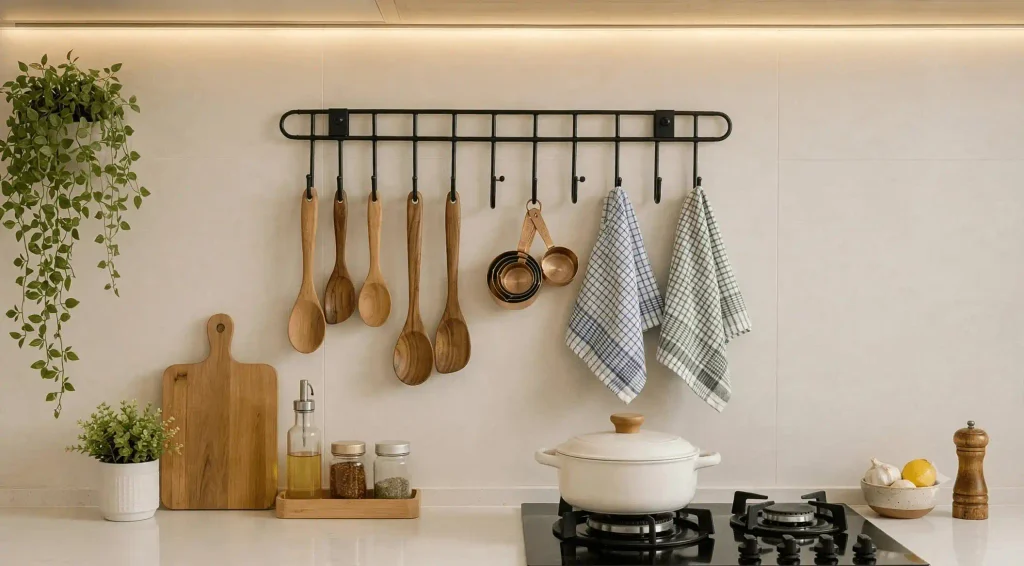
If your drawers are always full, look at the walls.
A small peg rail or utensil rail can give everyday kitchen tools a proper home while freeing up a little drawer space.
You might hang a few wooden spoons, measuring cups, kitchen towels, or the utensils you reach for while cooking.
I’d put it somewhere close to the prep area rather than across the room. The whole point is to make cooking easier, not create another place to walk to.
But there’s a little trick to making this look good:
Don’t hang everything.
A rail covered with every kitchen utensil you own can make the wall feel cluttered very quickly. I’d choose just the pieces I use regularly and keep everything else tucked away.
This works particularly well in smaller kitchens where cabinet space is limited.
And unlike adding another cabinet, it can make a blank wall useful without making the kitchen feel more closed in.
What I’d Do First

If this were my kitchen, I wouldn’t start by making a shopping list.
I’d walk around the room for a few minutes and pay attention to the things that annoy me.
Is there a blank wall that could actually be useful?
Is the trash can always in the way?
Do I have nowhere to put my coffee things?
Does one wall look tired?
Are my drawers so full that I’m digging through them every time I cook?
Those little frustrations usually tell you what the kitchen needs.
If the problem is storage, I’d look at the open shelf or utensil rail.
If the kitchen simply feels dated, I’d look at paint or a backsplash.
If mornings feel chaotic, I’d create the coffee station.
And if something as simple as the trash can is making the kitchen harder to use, I’d fix that first.
I don’t think a home needs to be changed all at once.
A Small Update Can Still Feel Like a Remodel
The nice thing about these projects is that none of them require you to start over.
You can keep the cabinets you already have. Keep the countertops. Keep the appliances that still work perfectly well.
Just change the parts that aren’t working for you.
That’s usually how I prefer to approach a home anyway. I’d rather make a few thoughtful changes and actually live with them than spend a lot of money trying to make everything look completely different overnight.
A kitchen should still feel like a kitchen—not a showroom.
Sometimes one useful shelf, a better coffee corner, or a freshly painted wall is enough to make you enjoy the room a little more.
And honestly, that’s a pretty good result for a weekend project.