It usually has more warmth and humidity than other rooms, and if you have a decent window, there may be plenty of natural light too. But kitchens also come with something plants don’t particularly love: heat, temperature changes and limited space.
So I wouldn’t choose a kitchen plant simply because it looks beautiful in a Pinterest photo.
The better question is: What will actually work in your kitchen?
A sunny windowsill, a darker apartment kitchen, an open shelf and a tiny countertop all call for different plants. With that in mind, these are 10 options worth considering for US and UK homes.
1. Pothos — Epipremnum aureum
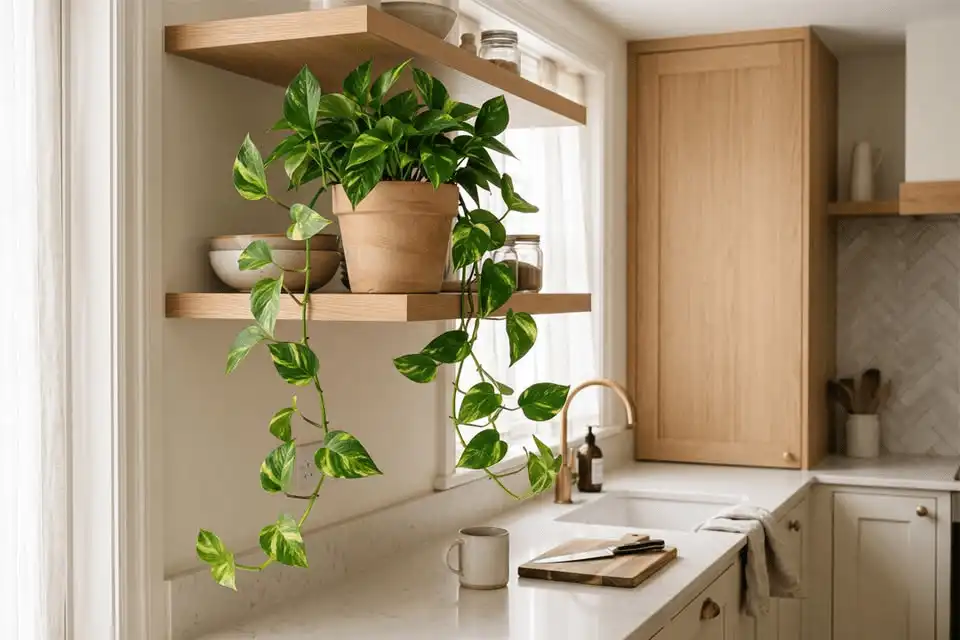
Best for: open shelves, cabinets and moderate light
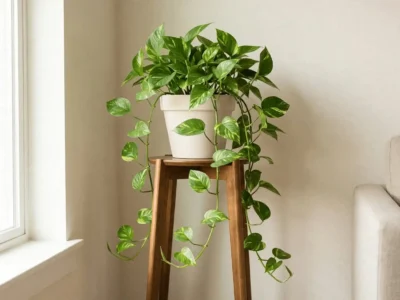
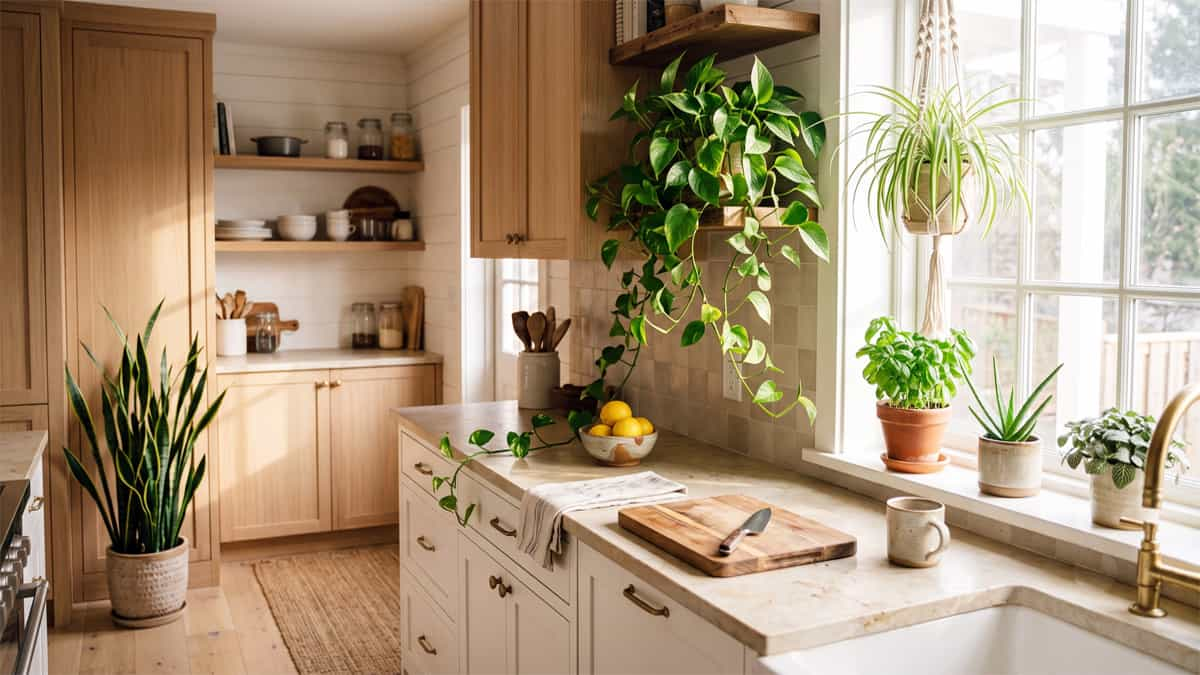
Pothos is one of my favourite choices for a kitchen because it doesn’t need to occupy your valuable worktop.
Let its vines trail from an open shelf, a cabinet or a high windowsill and you instantly get a softer, greener look without making the kitchen feel cluttered.
It can tolerate lower light, although brighter indirect light will generally give you stronger growth and better colour in variegated varieties.
If you want one plant that feels easy to work into almost any kitchen, this is a very good starting point.
Keep it away from: direct heat from the stove or oven.
2. Spider Plant — Chlorophytum comosum
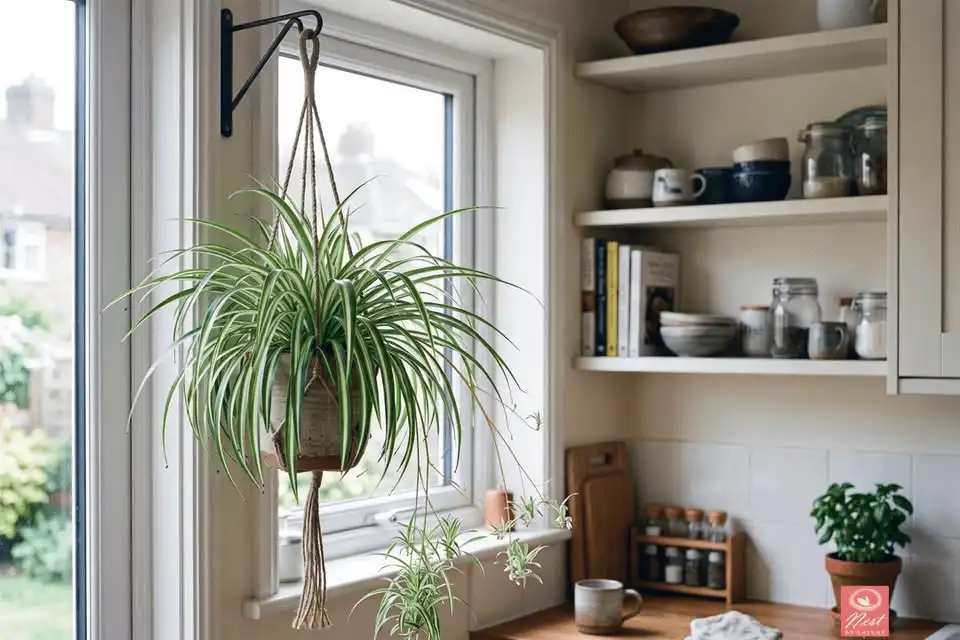
Best for: small kitchens and hanging planters
When counter space is limited, I would look upwards.
Spider Plant works beautifully in a hanging basket or on a high shelf because its long leaves naturally arch and spill over the sides.
It prefers bright, indirect light but can tolerate lower-light conditions. That makes it useful for kitchens that aren’t flooded with sunshine all day.
It also has a relatively forgiving nature, which is helpful if you don’t want plant care to become another item on your household to-do list.
Best spot: A bright shelf, hanging planter or windowsill with filtered light.
3. Snake Plant — Dracaena trifasciata
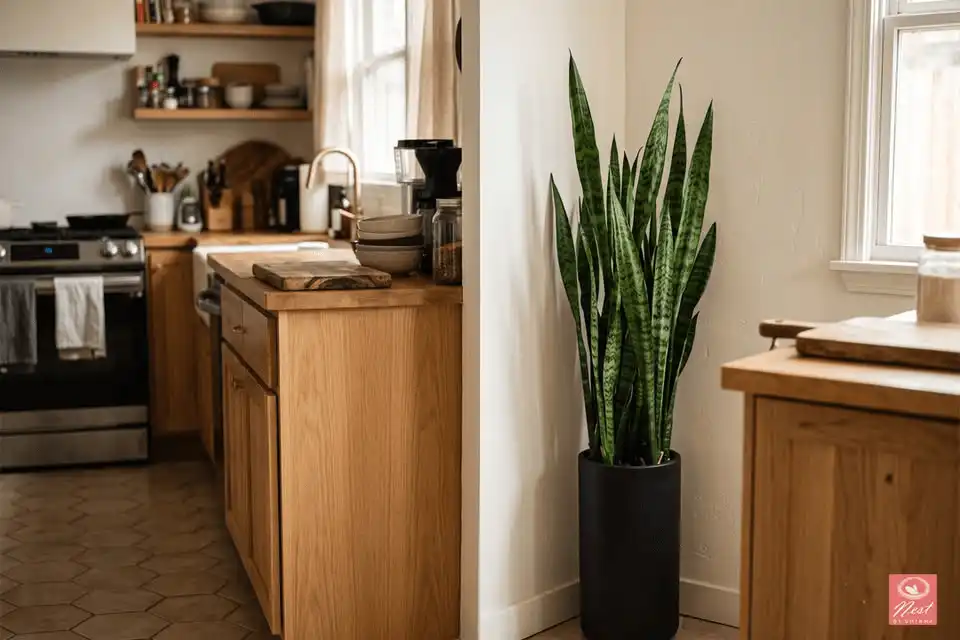
Best for: busy households and limited floor space
Some kitchens are simply not plant-friendly in terms of space.
That’s where the Snake Plant earns its place.
Its upright leaves have a narrow footprint, so you can fit one into an unused corner without sacrificing much room. It is also known for tolerating lower-light conditions and infrequent watering.
That makes it particularly appealing if you travel, work long hours or simply don’t remember to water plants on a strict schedule.
Just don’t take “low light” to mean “no light.” Even the toughest houseplant needs an environment where it can receive enough light to grow.
Best spot: A bright-to-moderately lit corner away from direct cooking heat.
4. Aloe Vera — Aloe vera
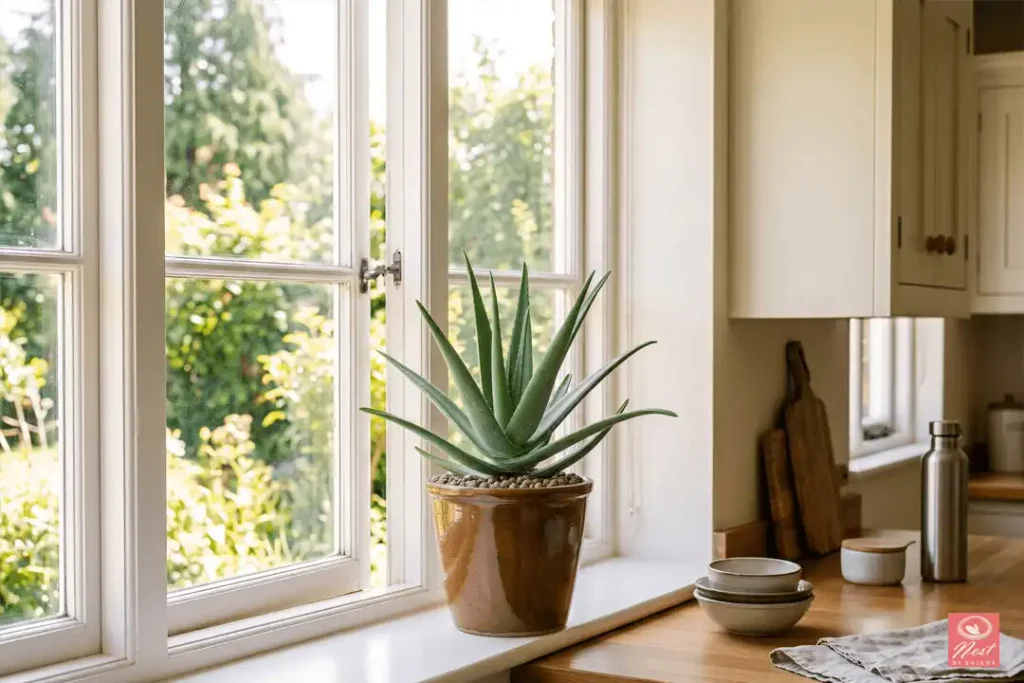
Best for: sunny kitchen windowsills
If your kitchen has a bright windowsill, Aloe Vera is one of the first plants I would consider.
It is a succulent, so its leaves store water. That means it doesn’t want the same watering routine as a plant that prefers consistently moist soil.
Aloe Vera can work particularly well for people who tend to overwater their plants. Give it plenty of light and let the growing medium dry appropriately between waterings.
The sunny windowsill is important, though. This isn’t the plant I’d choose for a gloomy kitchen corner.
Best spot: A bright windowsill, but not directly beside a cooker or intense heat source.
5. ZZ Plant — Zamioculcas zamiifolia
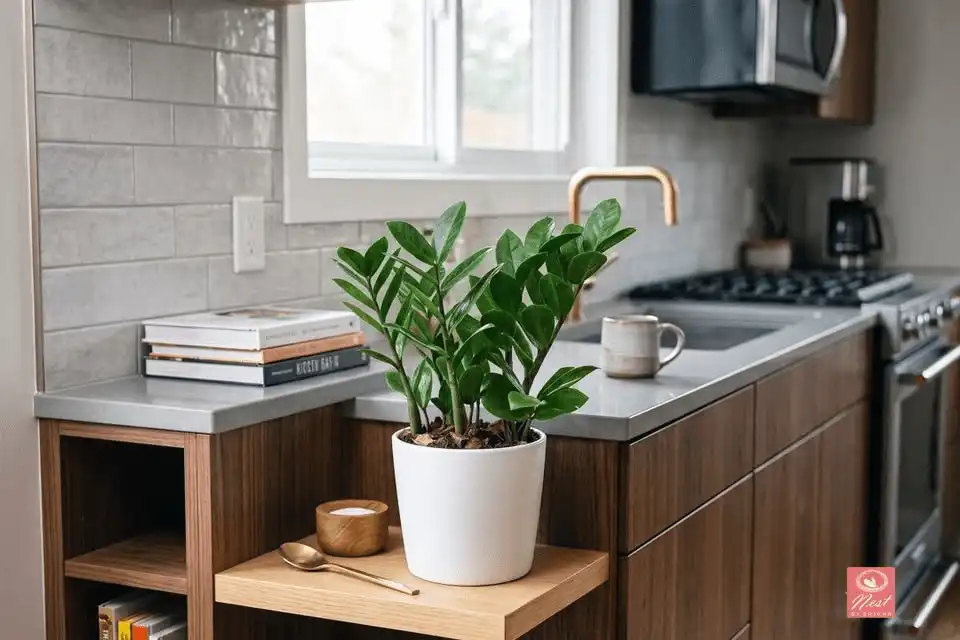
Best for: lower-light kitchens
The ZZ Plant has a clean, glossy appearance that works especially well with modern kitchens.
More importantly, it doesn’t demand the kind of attention that some houseplants do.
It can tolerate relatively low light and periods of dryness, making it a sensible choice for a kitchen that receives daylight but isn’t particularly bright.
I also like its shape for kitchens because it grows upward rather than spreading across your work surface.
Best for: Modern kitchens, busy households and spaces with limited natural light.
6. Chinese Evergreen — Aglaonema spp.
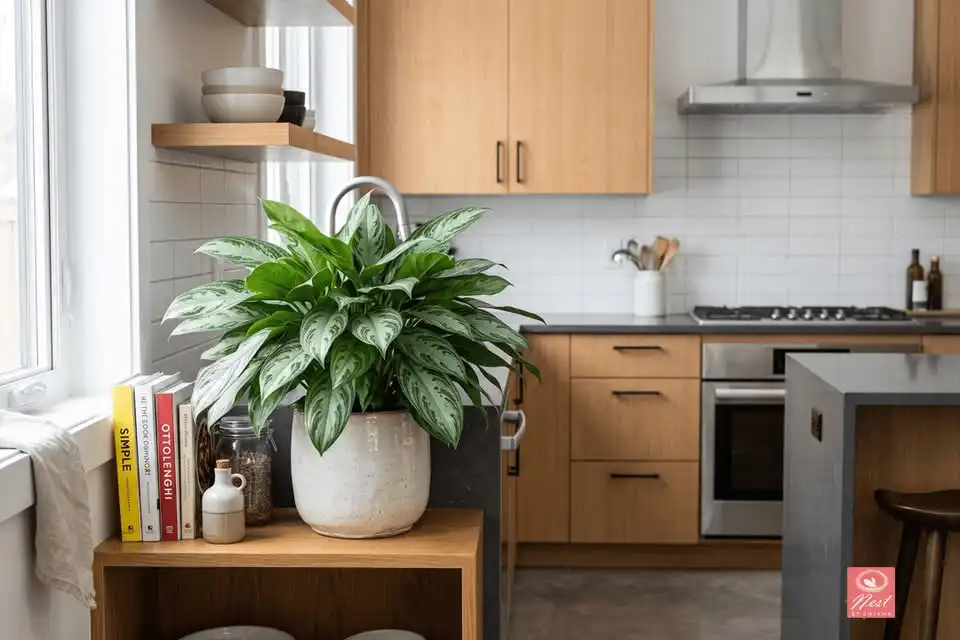
Best for: adding fuller, softer greenery
If your kitchen already has plenty of hard surfaces—stone worktops, cabinets, glass and stainless steel—a fuller plant can soften the room.
Chinese Evergreen is a good candidate for that job.
There are numerous varieties, so you can find foliage that is mostly green or more noticeably patterned.
It generally prefers bright, indirect light and a stable indoor environment. I would position it somewhere that gets daylight but isn’t exposed to the heat coming directly from your cooker.
Best spot: A shelf, corner or larger surface with indirect light.
7. Peperomia — Peperomia spp.
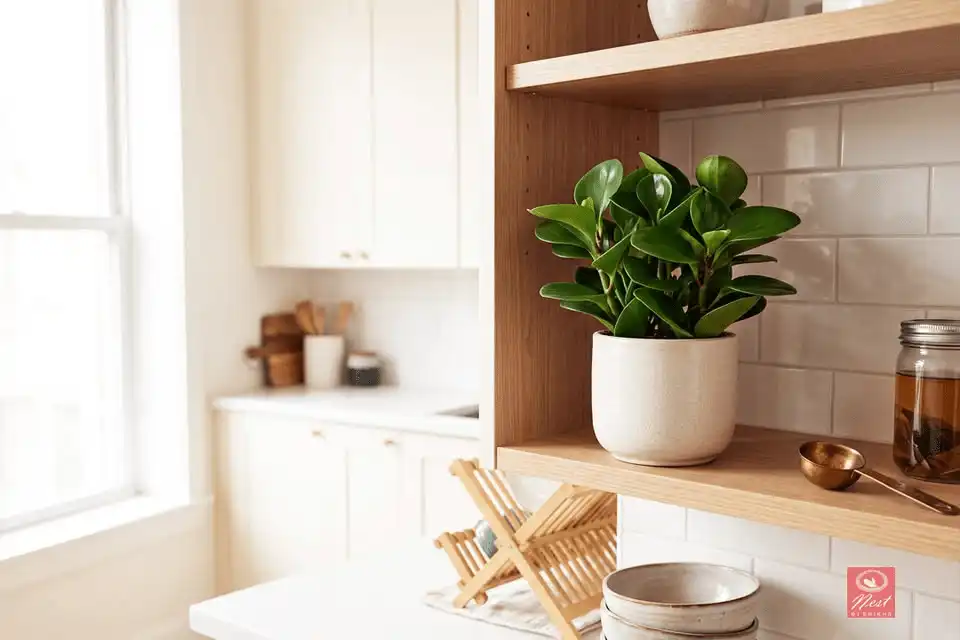
Best for: small kitchens and apartments
Not every kitchen needs a large statement plant.
Sometimes a small pot on an open shelf is all you need.
Peperomia comes in a wide range of shapes, textures and leaf patterns, but many varieties stay relatively compact. That makes it particularly useful when you’re decorating a small kitchen or apartment without wanting to lose valuable workspace.
It prefers bright, indirect light and should not be left sitting in constantly wet soil.
Best spot: A shelf or small countertop area with good indirect light.
A practical tip: Choose the pot size carefully. A small kitchen can look more balanced with one well-placed plant than several tiny pots scattered everywhere.
8. Jade Plant — Crassula ovata
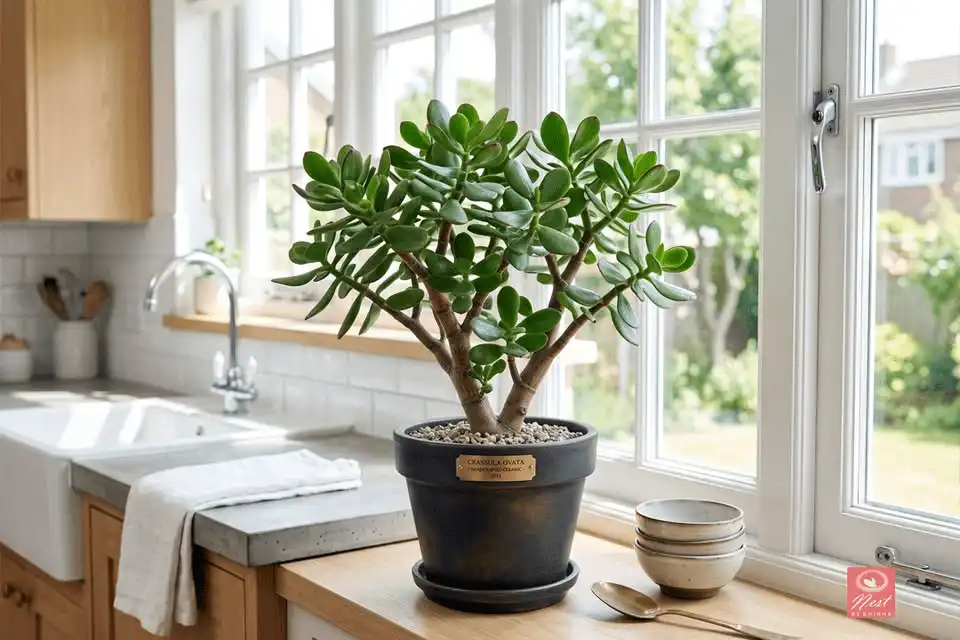
Best for: bright kitchens and sunny windowsills
Jade Plant is another strong choice if your kitchen gets plenty of natural light.
Its thick leaves and woody stems give it a more sculptural appearance, so it works particularly well if you prefer a clean, uncluttered look.
Like Aloe Vera, it is a succulent and stores water in its leaves. It therefore doesn’t need frequent watering and is better suited to someone who would rather water occasionally than constantly check the soil.
Best spot: A bright windowsill with plenty of natural light.
Avoid: Keeping it right beside an oven, hob or other intense heat source.
9. Basil — Ocimum basilicum
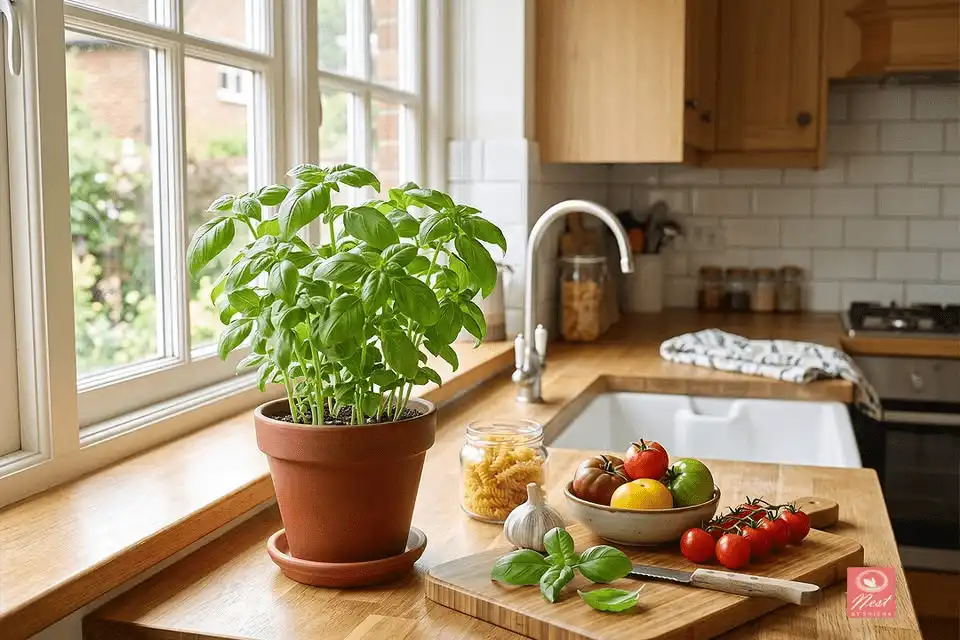
Best for: people who actually cook
This one has a very obvious advantage: you can use it.
Basil can turn a sunny kitchen windowsill into a small edible garden. A few fresh leaves can go straight into pasta, salads, sauces or homemade pizza.
Unlike some of the tougher foliage plants on this list, Basil does need good light and more regular attention to watering.
So I wouldn’t recommend it for a dark kitchen or for someone looking for a plant they can completely forget about.
But if you cook regularly and have a bright window, it makes a lot of sense.
Best spot: A sunny windowsill close to, but not directly above, your cooking area.
10. Cast-Iron Plant — Aspidistra elatior
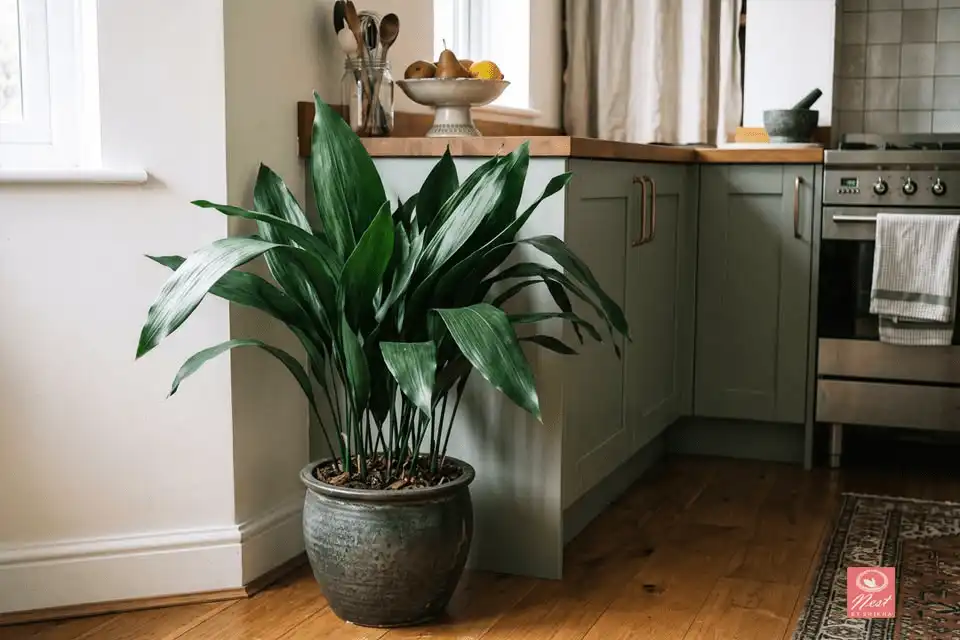
Best for: lower-light kitchens
The Cast-Iron Plant is a useful option when your kitchen doesn’t have the bright windows that make Basil, Aloe Vera and Jade Plant happy.
It is known for being tough and tolerant of lower-light conditions, which makes it particularly useful in homes where natural light is limited.
Its broad green leaves also bring a fuller look to the room than a narrow Snake Plant.
There is one important catch: don’t put it beside a hot cooker simply because it can handle lower light. It is better suited to a cooler, stable corner of the kitchen.
Best spot: A shaded or moderately lit area away from direct heat.
Which Kitchen Plant Should You Choose?
Instead of asking which plant is “best,” I’d start with the conditions you already have.
For a dark or low-light kitchen
Look at:
- Snake Plant
- ZZ Plant
- Pothos
- Cast-Iron Plant
Remember, low light does not mean complete darkness. If your kitchen receives virtually no natural light, you may need suitable supplemental lighting.
For a sunny windowsill
Consider:
- Aloe Vera
- Jade Plant
- Basil
These are much better suited to a bright position than trying to force a low-light plant into strong sun.
For a small kitchen
Try:
- Peperomia
- Spider Plant
- Snake Plant
- Pothos
Hanging planters and shelves are particularly useful when countertop space is already spoken for.
If you often forget to water
Start with:
- Snake Plant
- ZZ Plant
- Aloe Vera
- Jade Plant
But remember: drought-tolerant doesn’t mean impossible to kill. Overwatering is still a common problem with these plants.
If you want something useful as well as decorative
Go for Basil.
It is one of the few plants on this list that can genuinely become part of your cooking routine.
A Quick Note for Pet Owners
If you have cats or dogs, check the safety of a plant before bringing it into your home.
This is especially important when plants are going on low shelves, countertops or windowsills that pets can reach.
A plant being popular, natural or easy-care doesn’t automatically mean it is safe for every household.
Final Thoughts
I don’t think a kitchen needs to look like a greenhouse to feel welcoming.
Sometimes one healthy plant in the right place does more for a room than a collection of plants squeezed onto every available surface.
Choose according to your light first. Then think about space, watering and distance from cooking heat.
For an easy all-rounder, Pothos is hard to ignore.
For a darker kitchen, Snake Plant, ZZ Plant or Cast-Iron Plant makes more sense.
For a sunny windowsill, Aloe Vera or Jade Plant can be a better match.
And if you actually enjoy cooking, Basil gives you something beautiful that earns its space.
The best kitchen plant isn’t the one that looks perfect online.
It’s the one that fits naturally into the kitchen you actually live in.
My Practical Tips for Kitchen Houseplants
- Start with the light, not the plant. Before buying anything, watch where daylight actually falls in your kitchen during the day. A sunny windowsill and a shaded corner need very different plants.
- Keep plants away from direct cooking heat. A spot may look perfect until you realise it sits beside the oven, hob or a stream of hot steam. Give plants a little breathing room from cooking appliances.
- Don’t sacrifice useful worktop space. In a small kitchen, shelves, windowsills and hanging planters usually make more sense than filling the countertop with pots.
- Check the soil before reaching for the watering can. Kitchens can be warmer or more humid than other rooms, so watering on a fixed weekly schedule can easily lead to overwatering.
- Wipe the leaves occasionally. Cooking can leave a light film of dust and grease on nearby foliage. A gentle wipe with a damp cloth helps keep broad leaves clean.
- Rotate plants that lean toward the window. Giving the pot a small turn every week or two can help the plant maintain a more balanced shape instead of growing strongly in one direction.
- One well-placed plant can be enough. You don’t need to turn the kitchen into an indoor jungle. A trailing Pothos on a shelf or a healthy Basil plant on the windowsill can make a surprisingly big difference.