

Why Small Snake Plants Are My Secret Weapon
I have a confession: I used to think snake plants were just those tall, spiky things you see in dentist office corners. You know the ones—tucked into office corners, somehow surviving on fluorescent light and neglect alone. They felt impersonal. Architectural, sure, but not exactly charming.
Then I discovered the small ones.
I’m talking about the compact, easy-to-place kind of snake plants. The ones that quietly make a small space feel calmer and more lived-in. The ones that sit beside my workspace while I write and ask absolutely nothing of me except a splash of water every few weeks.
These dwarf varieties have become my go-to recommendation for anyone who wants greenery without the guilt of high-maintenance care. They’re compact, resilient, and surprisingly full of personality. Many people also keep snake plants indoors because of their reputation as beginner-friendly, air-purifying houseplants, making them a staple choice alongside other indoor plants for beginners by climate zone
Here are the small snake plant varieties I’ve fallen for, plus everything I’ve learned about keeping them happy.
Note: Many snake plants formerly classified under Sansevieria are now botanically grouped under the Dracaena genus, though most gardeners and nurseries still commonly use the older Sansevieria names.
1. Bird’s Nest Snake Plant (Sansevieria Hahnii)

Best for: Nightstands, workspaces, narrow shelves
Mature size: 6–8 inches
Light needs: Low to bright indirect light
This is the variety that completely changed my opinion of snake plants.
The Bird’s Nest Snake Plant forms a tight, low-growing rosette of leaves that genuinely looks like a little green nest. It stays between six and eight inches tall, making it the perfect addition to a crowded workspace or a narrow bookshelf. The classic Hahnii has dark green leaves with subtle horizontal bands. It’s understated, elegant, and fits into any decor without demanding attention.
I keep one in a wide, shallow terracotta pot on my nightstand. It’s the last thing I see before I turn off the lamp as part of my simple evening routine for a cozy home, and something about its tidy little shape makes my brain feel organized.
Care tip: Because the leaves grow in a tight rosette, water directly into the soil rather than over the leaves. Water sitting in the center crown can cause rot.
2. Golden Bird’s Nest (Sansevieria ‘Golden Hahnii’)

Best for: Dark shelves needing color contrast
Mature size: 6–8 inches
Light needs: Bright indirect light
Once I had the classic Hahnii, I immediately wanted the flashier sibling.
Golden Hahnii has the same compact rosette shape, but its leaves are edged with wide, creamy yellow margins that practically glow against the dark green center. It looks like it’s been dipped in gold leaf. This variety adds warmth and contrast to shelves and brighter indoor corners.
I placed mine on a dark wood shelf, and the contrast is stunning—the yellow edges pop against the deep brown, and the whole setup looks far more expensive than it actually is.
One thing to note: Golden Hahnii needs a bit more light than the classic version to keep that vibrant variegation. In a very dark corner, the yellow can slowly fade to a duller green. It won’t die, but it won’t dazzle either. A spot with bright, indirect light keeps it looking its best.
3. Starfish Snake Plant (Sansevieria ‘Boncel’)

Best for: Minimal workspaces & modern decor
Mature size: 8–12 inches
Light needs: Bright indirect light
If you want a plant that looks like a piece of modern sculpture, Boncel is the one.
This variety has fat, cylindrical leaves that spread out in a fan shape, almost like a starfish reaching upward. It’s chunky, architectural, and completely different from the flat-leaved snake plants most people recognize. Despite its unusual appearance, Boncel is just as low-maintenance as any other Sansevieria. It handles occasional neglect remarkably well.
Mine lives beside my workspace, and guests always ask about it first. “What is that?” It’s a conversation starter that asks for almost no maintenance.
Care tip: Boncel’s thick, succulent-like leaves store a lot of water. When in doubt, wait an extra week before watering. It will forgive you.
4. Sansevieria Cylindrica (Cylindrical Snake Plant)

Best for: Windowsills & narrow spaces
Mature size: 12–24 inches (grows slowly, stays compact for years)
Light needs: Bright indirect light
Okay, this one technically isn’t always small. In the right conditions, Cylindrica can grow several feet tall. But here’s the thing: it grows incredibly slowly, and when you buy a young plant in a small pot, it stays compact for years. Nurseries often sell them as small, upright clusters of round, spear-like leaves, and in that stage, they’re perfect for small spaces.
The leaves are smooth, round, and rigid, with subtle horizontal bands in varying shades of green. The shape is so clean and minimalist that it looks almost artificial—in the best way. Some nurseries even braid the leaves together, giving the plant an even more sculptural appearance.
I have a small cluster of three Cylindrica spears in a slim ceramic pot on my windowsill. Their upright form adds height without making the space feel cluttered.
5. Twisted Sister (Sansevieria Trifasciata)

Best for: Desks and shelves needing a playful touch
Mature size: 12–16 inches
Light needs: Bright indirect light
This one is pure fun.
Twisted Sister has bright gold and green leaves that literally twist and curl as they grow. The leaves spiral outward from the center, creating a playful, almost whimsical shape. It’s like the snake plant version of curly hair. Unlike the stiff, upright posture of most Sansevierias, Twisted Sister has movement and personality.
I gave one to my best friend for her birthday. She placed it beside her writing nook and named it Medusa. It has far more personality than most compact houseplants.
Care tip: Twisted Sister can reach about 12–16 inches at maturity, but it grows slowly. Bright, indirect light helps maintain the vivid yellow variegation.
6. Sansevieria Ehrenbergii ‘Samurai Dwarf‘

Best for: Tiny shelves & bathroom counters
Mature size: 4–6 inches
Light needs: Bright indirect light (several hours daily)
This variety is a bit harder to find, but absolutely worth the hunt.
Samurai Dwarf is tiny—truly tiny. It tops out at around four to six inches tall, with short, thick, pointed leaves that grow in opposite directions. The leaves have a slight blue-green tint and a rigid, almost prehistoric look. It reminds me of a miniature agave plant.
Because of its compact size, Samurai Dwarf is ideal for the tiniest of spaces: a narrow windowsill, a corner of a shelf, even a well-lit bathroom counter where it pairs beautifully next to the best bath mat for your climate. It prefers a bit more light than other snake plants—ideally several hours of bright, indirect sun daily—but otherwise, it’s just as drought-tolerant and forgiving.
I found one at a local plant shop and almost didn’t buy it because it seemed so small in the pot. Now it’s one of my favorite pieces. Good things really do come in small packages.
7. Kenya Hyacinth (Sansevieria Parva)

Best for: Side tables & plant stands
Mature size: 12–18 inches
Light needs: Low to bright indirect light
I’m including this one partly for the leaves and partly for the flowers.
Kenya Hyacinth has slender, fountain-shaped leaves that bend slightly outward, giving it a softer silhouette than the stiff, upright varieties. It stays compact—typically around one to one and a half feet tall—and works beautifully on a plant stand or a side table.
The real magic, though, is the bloom. Unlike most snake plants, which rarely flower indoors, Kenya Hyacinth can produce fragrant white blossoms that smell like hyacinth at night. I haven’t been lucky enough to experience this yet, but I’ve heard from other growers that it’s one of the most rewarding surprises in the plant world. Even without flowers, the graceful leaf shape makes this variety a standout.
General Care for Small Snake Plants
No matter which variety you choose, the care routine is essentially the same. Snake plants are succulents, which means they store water in their leaves and prefer to be left alone.
💧Watering
I water mine every two to three weeks during the growing season (spring and summer) and cut back to once a month or less in winter. The golden rule: let the soil dry out completely between waterings. If you stick your finger in and feel any moisture, wait. Overwatering is the fastest way to kill a snake plant. If you’re unsure whether it’s time to water, waiting a few extra days is usually safer than watering too soon.
☀️Light
Bright, indirect light near an east- or north-facing window is ideal. But snake plants are famously tolerant of low-light conditions. That dark corner where nothing else grows? A snake plant will survive there. It won’t thrive as quickly, but it won’t die. Low light does not mean no light — a room should still receive some natural daylight for healthy growth. Avoid direct, hot sunlight, which can scorch the leaves.
🌱Soil
Well-draining cactus or succulent mix is best. Standard potting soil holds too much moisture. I add a handful of perlite to my mix for extra drainage.
🪴Pot choice
Terracotta pots are ideal because they’re porous and allow the soil to dry out more quickly. Plastic or glazed ceramic works too, as long as there’s a drainage hole. Snake plants prefer to be slightly root-bound, so choose a pot that’s only an inch or two wider than the root ball. Wide, shallow pots are better than deep ones.
🌡️Temperature and humidity
These plants are comfortable in average household conditions—temperatures between 60–85°F and average indoor humidity levels. They don’t need misting or special treatment. Prolonged exposure to temperatures below 50°F can cause stress, so keep them away from drafty windows in winter.
🏺Best Pots for Small Snake Plants
Small snake plants look best in pots that complement their compact shape. Wide terracotta bowls work beautifully for Bird’s Nest varieties, while sleek ceramic cylinders pair well with upright types like Cylindrica or Boncel.
Avoid oversized pots. Snake plants prefer snug root conditions, and excess soil can hold moisture for too long, increasing the risk of root rot. Always choose a pot with a drainage hole to prevent excess moisture from sitting around the roots.
Neutral tones like white, sand, charcoal, and muted green help the foliage stand out without overwhelming small spaces—a favorite trick when pulling together cozy living room ideas for small apartments.
How I Style Small Snake Plants at Home
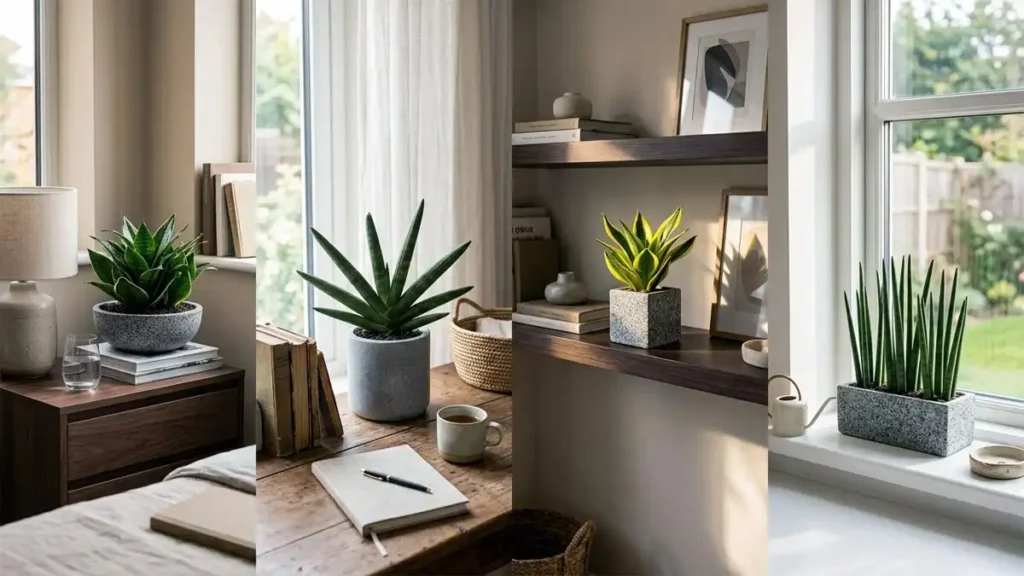
The compact size of these varieties opens up so many styling possibilities.
I use a Bird’s Nest on my nightstand, tucked into a wide terracotta bowl that shows off the rosette shape. In my writing corner, the Starfish Boncel sits in a simple white ceramic pot—the clean lines complement the plant’s sculptural form. I placed a Golden Hahnii on a dark wood shelf where the yellow variegation catches the afternoon light, and a small cluster of Cylindrica on my kitchen windowsill for a touch of green without clutter.
One well-placed small snake plant feels more intentional than five random plants crowded together. Rotate the pot every few weeks to keep growth even, and wipe the leaves with a damp cloth once a month to remove dust and keep them looking glossy.
Where Small Snake Plants Spark Big Ideas
These little plants have become part of my creative process. There’s something about the quiet presence of a small plant on a desk that changes the mood of a workspace. My Starfish Boncel sits beside my notebook while I work on stories for KidsMiniStories.com, and somehow its calm, sculptural shape helps me slow down and think more clearly.
On busy days, it becomes a small visual pause — a reminder that growth doesn’t always have to be loud or fast. Oddly enough, some of my best story ideas have arrived during those quiet moments between writing sessions and watering routines.
Final Thoughts
Small snake plants have changed the way I think about indoor greenery. They aren’t fussy. They don’t require constant attention or complicated care routines. They just sit there, quietly beautiful, doing their thing while I do mine.
If you’re new to plants, start with a Bird’s Nest. If you want something that doubles as art, try a Boncel. If you need a pop of color, pick up a Golden Hahnii. Any of these varieties will reward you with months—and eventually years—of low-maintenance companionship.
And who knows? Maybe one of them will sit quietly in your favorite corner and make your space feel calmer, greener, and a little more alive.
FAQs
Q: Are small snake plants safe for pets?
A: No. Snake plants contain saponins, which are toxic to cats, dogs, and other pets if ingested. They can cause nausea, vomiting, and drooling. If you have a curious pet that chews on everything, place your snake plant on a high shelf or hang it out of reach.
Q: Can I grow a small snake plant in a windowless room?
A: Snake plants tolerate low light better than most houseplants, but “low light” doesn’t mean “no light.” If the room has no natural light at all, you’ll need to supplement with a grow light. A small LED grow light on a timer works wonders.
Q: My Golden Hahnii is losing its yellow color. What’s wrong?
A: It’s probably not getting enough light. Variegated varieties need brighter light to maintain their color. Move it closer to a window with bright, indirect light, and the yellow should gradually return.
Q: Can small snake plants be propagated?
A: Yes. Most small snake plant varieties can be propagated through leaf cuttings or division. Division is usually the fastest and most reliable method, especially for compact varieties like Bird’s Nest and Golden Hahnii.
Q: How often should I repot my small snake plant?
A: Snake plants prefer to be root-bound, so you don’t need to repot often. Every two to three years is typical. Repot when you see roots growing out of the drainage holes or the plant looks visibly crowded.
Q: Why are the leaves on my snake plant getting soft and mushy?
A: That’s a classic sign of overwatering. Let the soil dry out completely before watering again. If the base of the plant feels rotten, you may need to remove the affected leaves and repot the healthy portions in fresh, dry soil.
Related Articles
10 Houseplants That Can Thrive in the Right Kitchen
