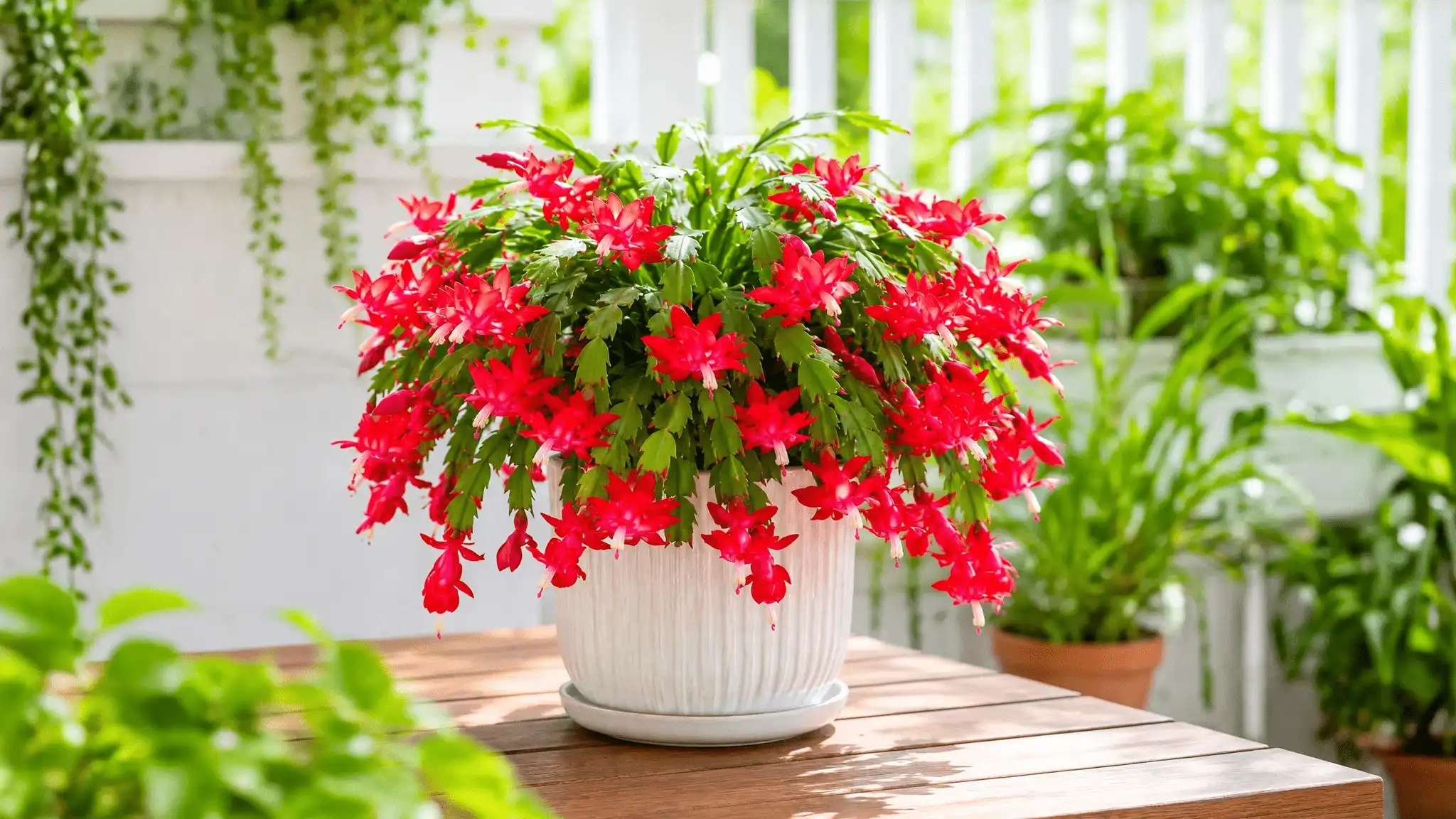
A Christmas cactus is one of those houseplants that can make a room feel a little more welcoming without adding much to your decorating list. When its flowers open in late fall or winter, even a simple windowsill can become a lovely little display.
What I particularly like about this plant is that it doesn’t need a dedicated plant corner. You can place it on a living room side table, brighten a kitchen windowsill, or let its stems spill naturally over a plant stand. The best spot depends on how you want to use it in your home and how much natural light that spot receives.
There’s one thing worth knowing before choosing a location, though. A Christmas cactus (Schlumbergera) isn’t a desert cactus. It comes from the tropical forests of southeastern Brazil, where its relatives grow on trees and rocks. It prefers bright, indirect light, a well-draining potting mix, and more moisture than a typical desert cactus.
With that in mind, here are nine practical places to put a Christmas cactus, whether you’re decorating for the holidays or looking for a houseplant to enjoy throughout the year.
Christmas Cactus Care Checklist
- Light: Bright, indirect light.
- Water: Water when the top inch of soil feels dry.
- Soil: Well-draining, slightly acidic potting mix.
- Humidity: Moderate to high humidity.
- Temperature: 60–75°F (16–24°C) during active growth.
- Fertilizer: Feed monthly during spring and summer; stop during flowering.
- Pruning: Pinch stem tips after flowering to encourage branching.
- Flowering: Provide longer, uninterrupted nights and cooler temperatures to encourage buds.
- Repotting: Every 2–3 years, preferably after flowering.
- Pet Safety: Generally considered non-toxic to cats and dogs.
1. On an East-Facing Windowsill for Natural Light
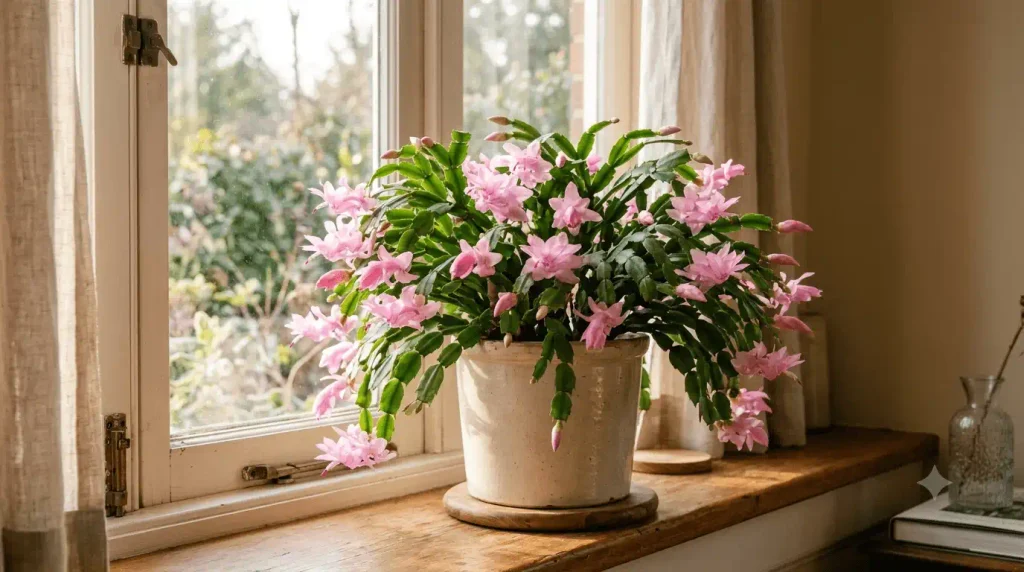
An east-facing windowsill is one of the first places I’d consider for a Christmas cactus. It usually receives gentle morning sunlight, followed by bright indirect light for much of the day.
This makes it a useful spot for keeping the plant healthy while enjoying its flowers up close. During the holiday season, pink, red, or white blooms can bring color to a window that might otherwise look a little bare.
A windowsill in the kitchen, bedroom, or living room can all work, provided there’s enough room for the pot and the temperature stays reasonably stable.
Best for: Everyday greenery and seasonal flowers.
A practical tip: If the window gets very cold at night, move the plant slightly away from the glass. Avoid strong afternoon sun, which can scorch its stems, and don’t let the pot sit in water on the sill.
2. On a Living Room Side Table to Fill an Empty Corner
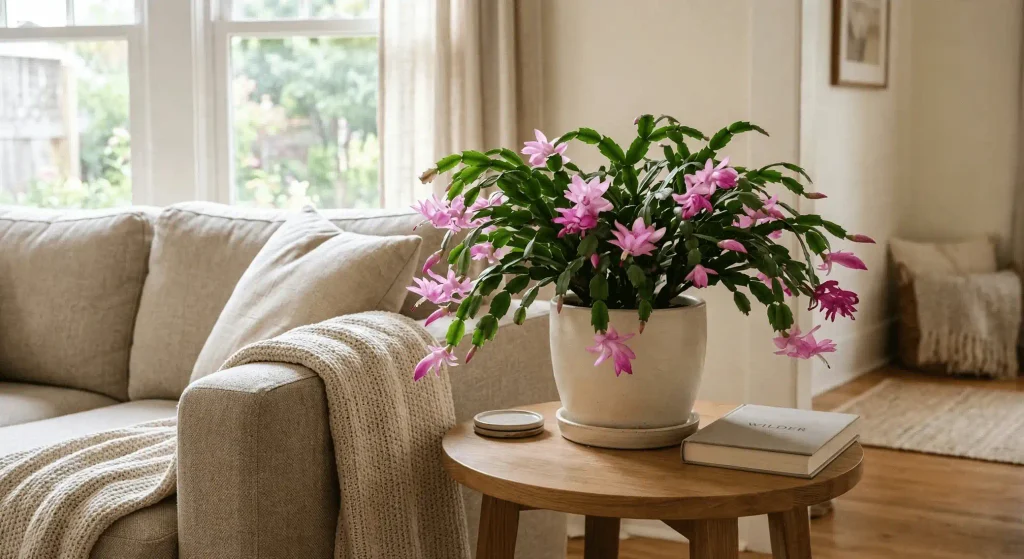
That little space beside the sofa can be surprisingly difficult to decorate. A Christmas cactus on a side table offers a simple solution, especially when the table sits near a bright window.
When the plant isn’t flowering, its segmented green stems still add texture. Once the blooms appear, the same corner becomes a natural seasonal accent without needing a collection of extra decorations.
I’d keep the arrangement uncomplicated. A ceramic pot in a neutral shade, a wooden side table, and the plant itself are often enough.
Best for: Making an unused living room corner feel more complete.
Where it works best: Near a bright window or in a room that receives plenty of indirect daylight. A dark corner across the room may look attractive, but it isn’t a suitable permanent home if the plant receives too little light.
3. On a Dining Room Sideboard for Holiday Color
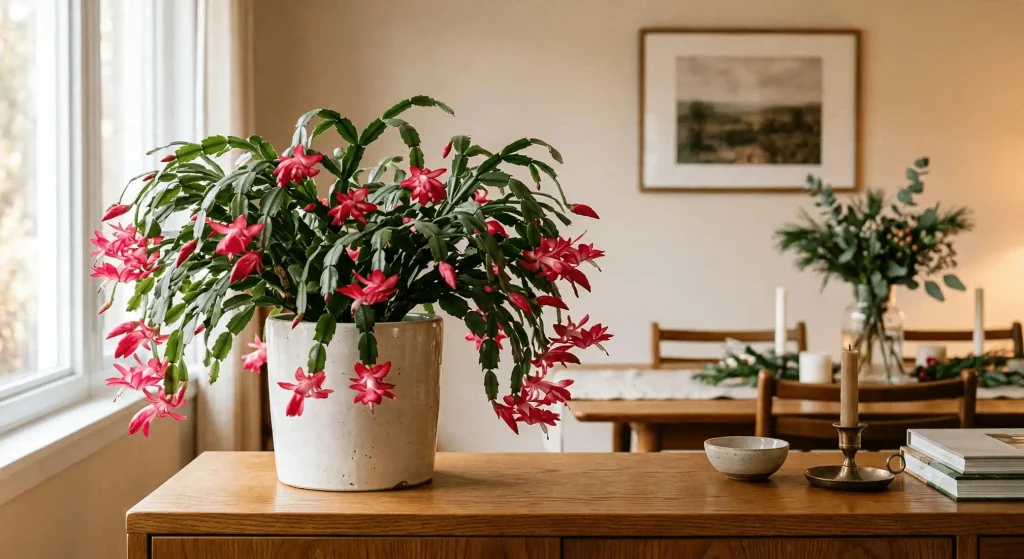
If you want a living decoration for the holiday season, consider placing your Christmas cactus on a dining room sideboard or buffet.
Unlike a large centerpiece, it doesn’t take up valuable dining space. You can enjoy the flowers during family meals, and the plant can remain there after the holiday decorations come down, provided the location has suitable light.
A simple pot works particularly well against a wooden sideboard or a light-colored wall. There’s no need to surround it with lots of seasonal accessories; the flowers already provide the color.
Best for: Adding a natural focal point to a dining room without cluttering the table.
One thing to remember: If the sideboard is far from a window, treat it as a temporary display spot rather than the plant’s permanent home. Once flower buds appear, avoid unnecessary moves and sudden changes in temperature or light.
4. On a Kitchen Windowsill for Everyday Greenery
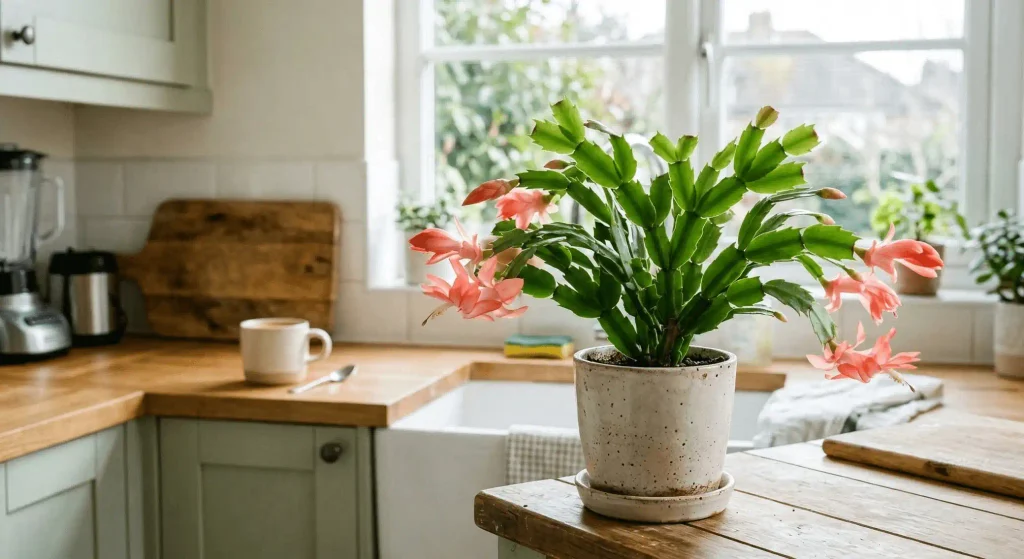
A Christmas cactus can be a lovely addition to a kitchen, particularly when the windowsill receives gentle morning light.
I like the idea of placing plants in rooms we use every day rather than saving them for special occasions. A flowering Christmas cactus near the kitchen window can become a small detail you notice while preparing breakfast or making your morning coffee.
Choose a compact pot if counter space is limited. A windowsill is especially convenient because the plant remains visible without taking up a work surface.
Best for: Bringing greenery into a frequently used room.
Avoid: Placing the plant right beside the stove, oven, or another source of heat. Temperature fluctuations and hot, dry air can stress it. Make sure the pot drains properly, too, so water doesn’t collect on a wooden sill or countertop.
If your kitchen window receives intense afternoon sun, choose a nearby spot with gentler light instead.
5. In a Bright Bathroom for a Softer Look
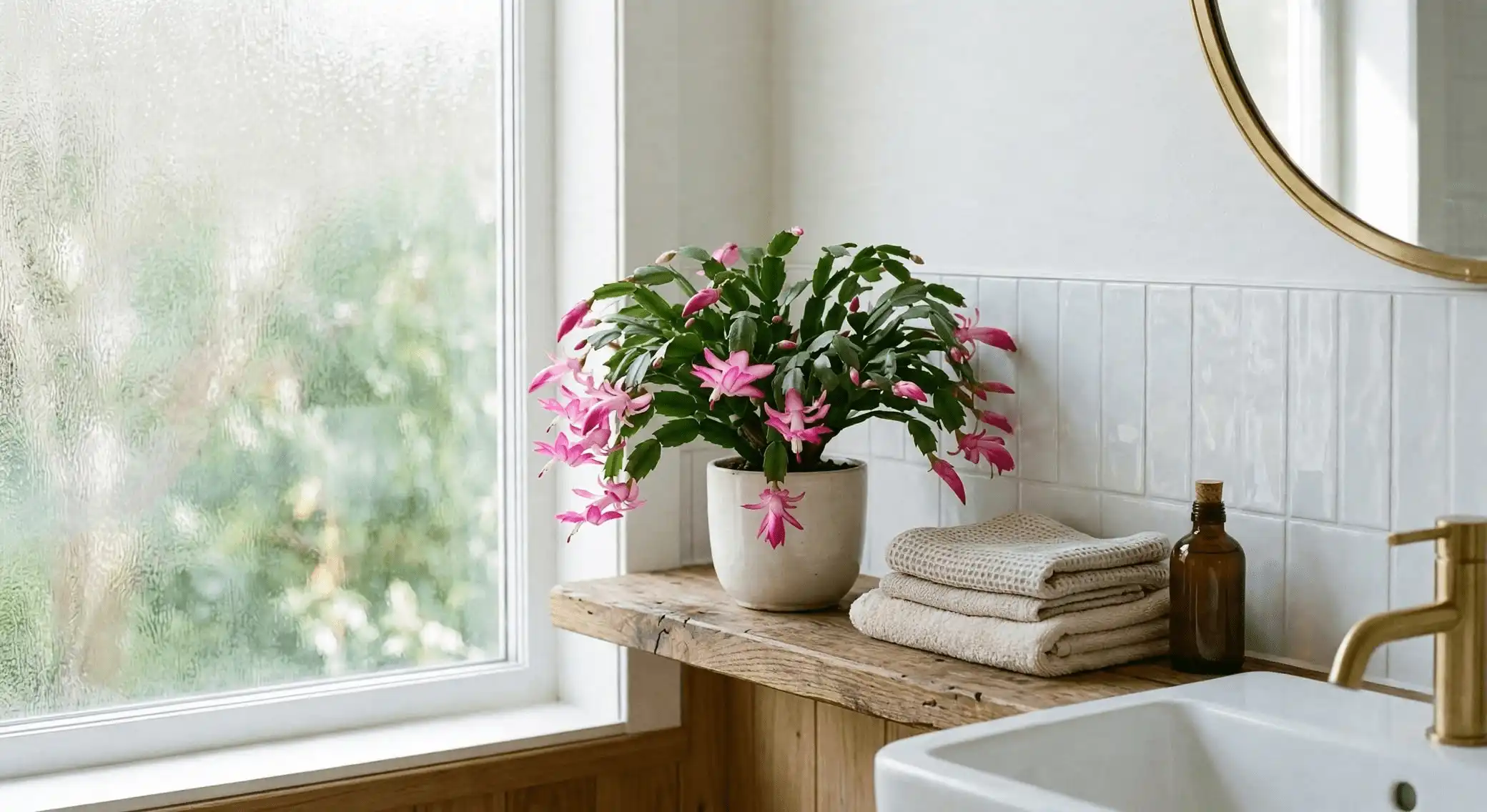
A bathroom with a window can be another good location for a Christmas cactus. These plants appreciate moderate humidity, which can make a bright bathroom more suitable than an especially dry room during winter.
A small plant on a stable shelf or windowsill can soften the look of hard bathroom surfaces. It works particularly well with simple interiors, natural wood, white tiles, and neutral colors.
Best for: Adding greenery to a bright bathroom where the air isn’t excessively dry.
The important word here is bright. Humidity cannot make up for insufficient light, so a windowless bathroom generally isn’t a good permanent location unless you provide suitable grow lighting.
Keep the plant away from cold drafts, and let excess water drain freely after watering. A humid room doesn’t mean the soil should remain soggy.
6. On a Bedroom Dresser for a Small Decorative Touch
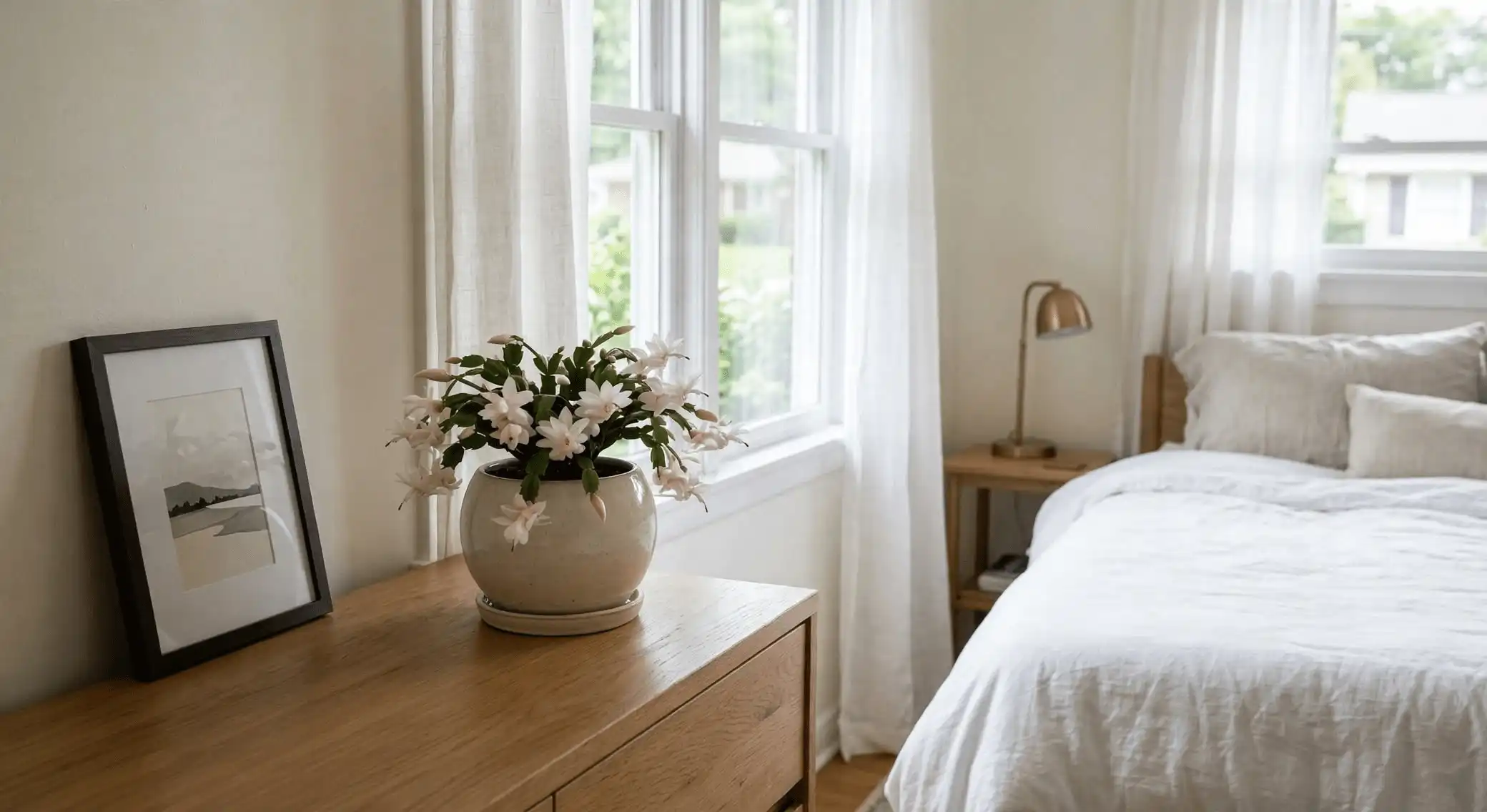
A bedroom dresser near a bright window can be a useful place for a smaller Christmas cactus.
It adds a little natural texture without taking up floor space or making the room feel crowded. When the plant flowers, it can also introduce color into a bedroom that otherwise uses a simple, neutral palette.
Choose a stable section of the dresser where the pot won’t be knocked over when you open drawers or reach for everyday items.
Best for: Adding a living accent to a bedroom or dressing area.
If the dresser is against a dark wall, check how much daylight the plant actually receives. Move it closer to a bright window if necessary, rather than choosing a spot based on appearance alone.
Also, keep it away from heating vents and cold drafts. Consistent conditions become especially important once the flower buds begin to form.
7. On a Covered Porch or Shaded Patio in Warm Weather
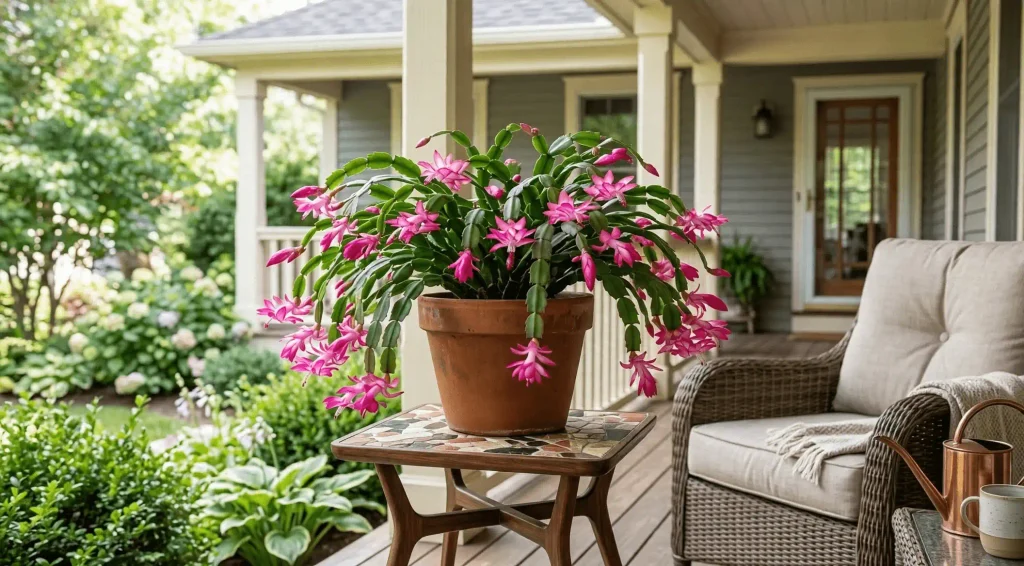
A Christmas cactus doesn’t have to remain indoors all year. During warm weather, it can enjoy a protected outdoor spot, provided you introduce it to the conditions gradually.
A covered porch or shaded patio is a practical choice. The plant can add greenery to an outdoor seating area, sitting on a sturdy table or plant stand where its stems have room to grow.
Look for bright shade or filtered light rather than a location exposed to strong afternoon sunshine.
Best for: Enjoying your houseplant outdoors during spring and summer.
Before moving it outside, allow the plant time to adjust. Protect it from heavy rain that could keep the soil saturated, and bring it indoors before temperatures approach frost.
In colder parts of the United States, outdoor placement is seasonal. A Christmas cactus isn’t a frost-tolerant patio plant.
8. On a Plant Stand to Show Off Its Trailing Stems
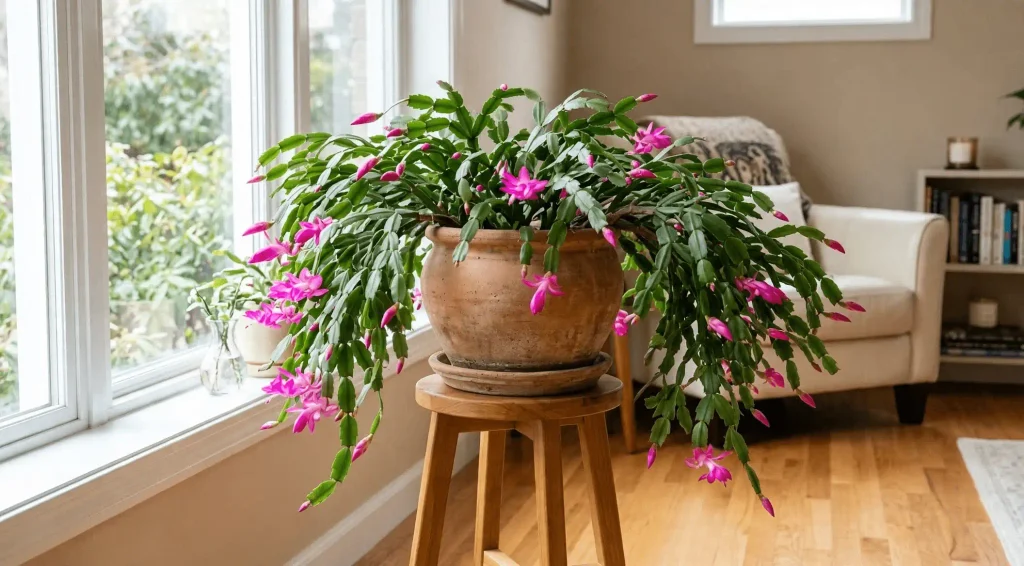
As a Christmas cactus matures, its segmented stems can arch over the sides of the pot. A plant stand gives those stems room to hang naturally and makes the plant easier to appreciate.
This is a good option if you have a bright living room corner, an open area near a window, or a spot beside a sunny window that feels a little empty.
You don’t need a tall or elaborate stand. Choose one that complements the pot and supports its weight securely, including after watering.
Best for: Displaying a fuller, more mature Christmas cactus while keeping floor space clear.
Remember that the stand is a styling choice, not a substitute for suitable light. A beautiful stand in a dim hallway won’t provide the conditions the plant needs to grow well.
9. Near a Bright Window to Encourage Winter Flowers
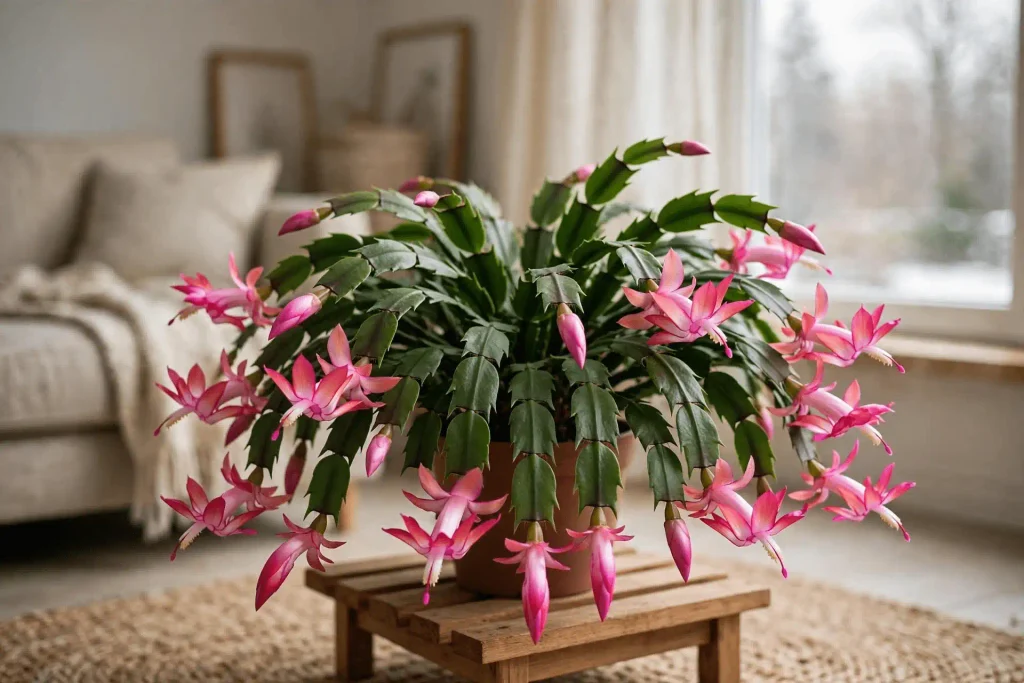
If flowering is your main reason for growing a Christmas cactus, its location becomes particularly important in early fall.
Christmas cactus typically needs suitable day length, long uninterrupted nights, and appropriate temperatures to initiate flower buds. A bright window provides daytime light, while a room with a natural day-and-night cycle can help support flowering.
Best for: Enjoying seasonal blooms and giving the plant consistent growing conditions.
During fall, avoid keeping bright indoor lights on late into the night immediately beside the plant. Warm nighttime conditions can also affect flowering, depending on the variety and its growing environment.
Once buds appear, try to leave the plant in its chosen spot. Sudden changes in light, temperature, or watering can contribute to bud drop.
You don’t need to create a complicated setup. A suitable bright location and consistent conditions are a much better starting point than repeatedly moving the plant around.
Pot Works Best for a Christmas Cactus
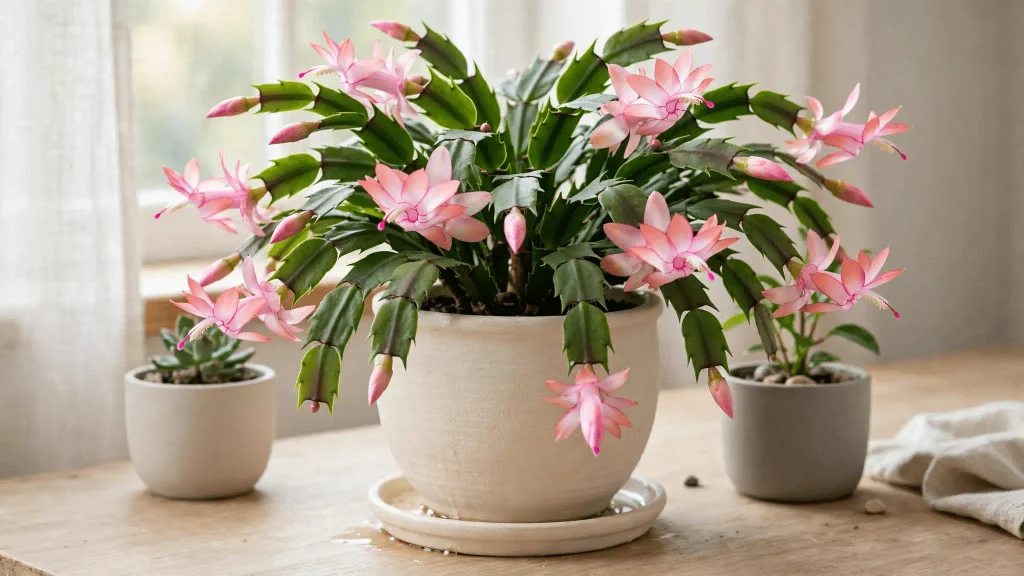
Once you’ve chosen a location, think about the pot. It affects both the appearance of the plant and how easy it is to care for.
For a living room or bedroom, a simple ceramic pot can complement the furniture without competing with the flowers. On a windowsill, a smaller, lighter container may be more practical, especially if you need to move it occasionally.
Whatever style you choose, make sure the pot has drainage holes.
Christmas cactus needs a loose, well-draining potting mix that doesn’t remain waterlogged. A suitable houseplant mix or an appropriately adjusted cactus mix can work.
If you prefer a decorative pot without drainage holes, keep the plant in a separate nursery pot and place that inside the decorative container. Remove it for watering when needed, and make sure excess water doesn’t remain trapped at the bottom.
You also don’t need to choose an oversized pot. Christmas cactus can tolerate being somewhat pot-bound, and a much larger container may hold more moisture than its roots can use.
Do You Know How Often to Water a Christmas Cactus?
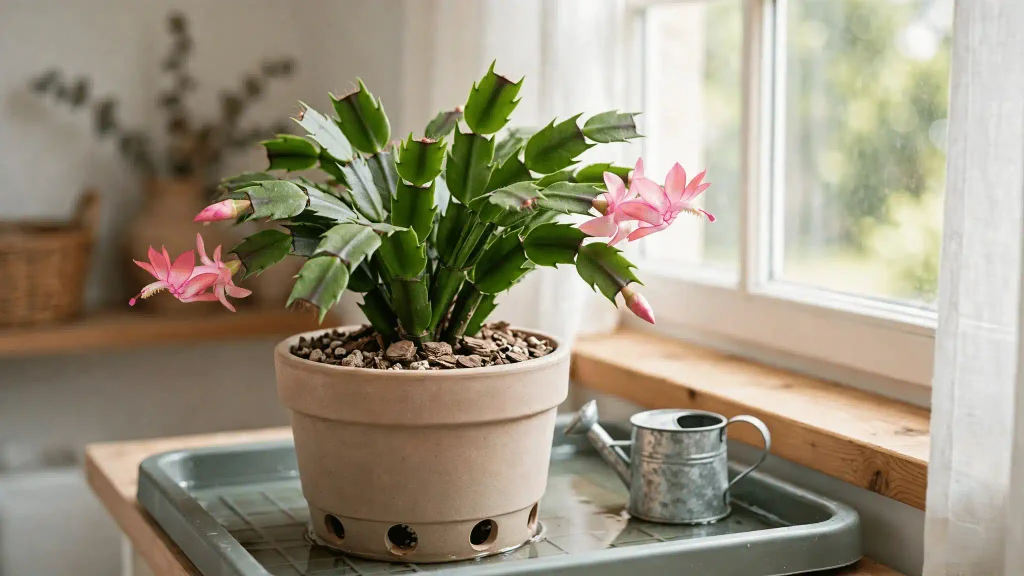
The word cactus can make watering a little confusing. Unlike desert cacti, Christmas cactus generally needs more regular moisture, but it doesn’t like constantly wet soil.
Rather than watering according to a strict weekly schedule, check the potting mix. When the upper portion has dried sufficiently, water thoroughly and allow the excess to drain away.
Your home makes a difference. A plant near a heating vent in a dry winter room may dry out faster than one in a cooler, more humid space.
If the stems look wrinkled or limp, check the soil before adding water. Dry soil may indicate that the plant needs watering, while persistently wet soil can point to root problems.
The goal is to provide moisture when the plant needs it without leaving its roots sitting in water.
Tips to Keep Your Christmas Cactus Blooming
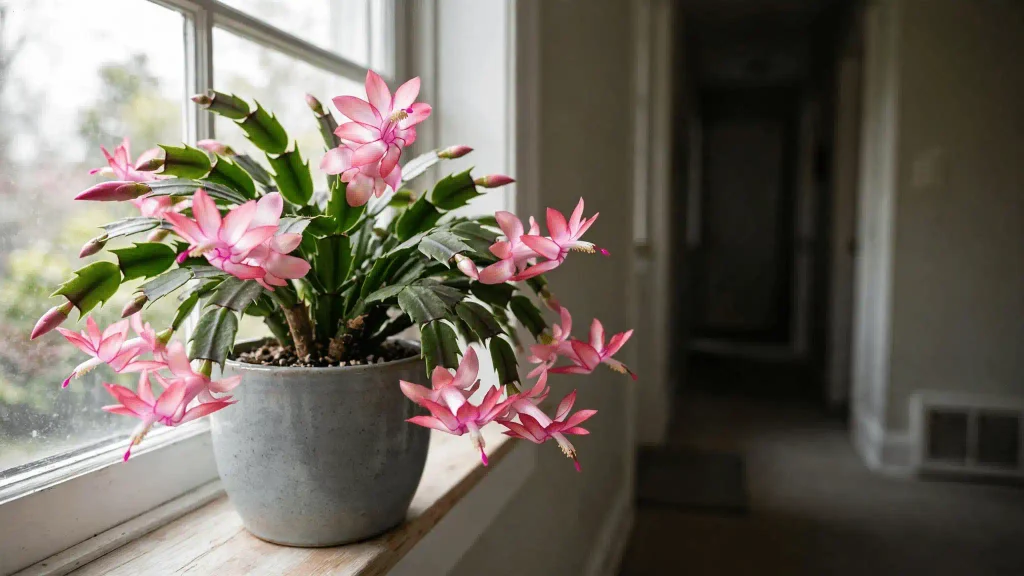
A Christmas cactus can grow healthy green stems without flowering, so don’t assume that more fertilizer is the answer if buds haven’t appeared.
Flowering depends on the plant’s variety and environmental conditions. Shorter days, long uninterrupted nights, and suitable cooler temperatures help encourage bud formation in fall.
Keep the plant in bright, indirect light during the day. Avoid exposing it to strong artificial light late at night, and protect it from heating vents, cold drafts, and sudden temperature changes.
Once buds form, keep conditions as consistent as possible. Avoid moving the plant unnecessarily, and continue watering when the potting mix needs it.
Feed during active growth according to the fertilizer label, then reduce or stop regular feeding as the plant prepares to flower.
One final detail: some plants sold as Christmas cactus are actually Thanksgiving cactus or hybrids. Their flowering times can differ, so a plant blooming in November isn’t necessarily doing anything wrong.
Common Placement Mistakes to Avoid
A Christmas cactus is relatively easy to maintain, but a few location choices can make care more difficult.
- A dark hallway: It may look like the perfect decorative spot, but insufficient light can weaken growth and affect flowering.
- A hot, sunny windowsill: Strong afternoon sunlight can scorch the stems, particularly if the plant hasn’t acclimated to it.
- Beside a heating vent: Hot, dry air and temperature fluctuations can stress the plant.
- An exposed outdoor patio: Direct sunlight, heavy rain, and frost can create problems.
- A pot without drainage: Trapped water can leave the roots sitting in soggy soil.
- Moving it repeatedly after buds appear: Sudden changes in its environment can contribute to flower-bud drop.
The easiest approach is to choose a suitable location first and avoid unnecessary changes once the plant settles in.
A Christmas cactus doesn’t need a complicated display to earn its place in your home.
If you want to enjoy its flowers, a bright windowsill is a practical starting point. If you’re looking to soften an empty living room corner, a side table near natural light may work better. A covered porch can be another option during warm weather, while a stable plant stand gives a mature plant room to show off its arching stems.
I’d choose the location based on two things: how you want the plant to look in your home and whether that spot provides enough suitable light.
The prettiest corner isn’t always the best growing environment, and a healthy Christmas cactus doesn’t need to be surrounded by decorations to look lovely.
Give it bright, indirect light, a pot that drains properly, and watering that suits the conditions in your home. Keep its environment stable when the flower buds appear, and you can enjoy much more than a few weeks of holiday color.
With the right spot, a Christmas cactus can become one of those familiar houseplants you look forward to seeing bloom year after year.