An empty corner can be surprisingly difficult to decorate. A small table sometimes looks lost, another piece of furniture feels unnecessary, and leaving the space bare doesn’t always feel right.
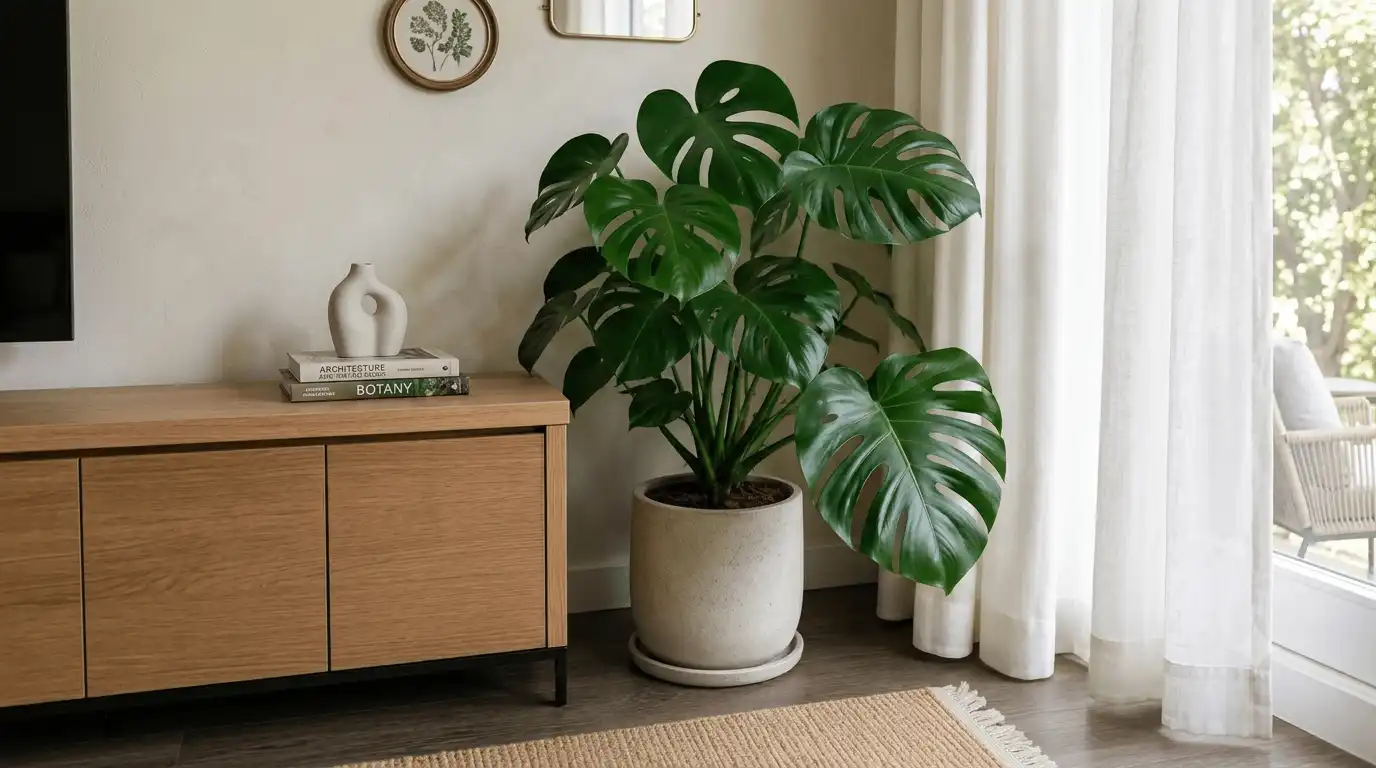
This is where a Monstera deliciosa can make a difference. Its broad green leaves add height and natural texture, making it a lovely choice for spaces that need a little life without more furniture.
I’d consider a Monstera for an empty living room corner, the space beside a sofa, or even a bright home office that feels a bit too plain. The plant has enough presence to stand on its own, so you don’t need to surround it with lots of decorative accessories.
The only catch? Monstera can grow much larger than you might expect, and a spot that looks perfect isn’t necessarily a good spot for the plant.
Here are nine places to consider, with practical tips for choosing a location that works for both your home and your Monstera.
Monstera Plant Care Checklist
- Light: Bright, indirect sunlight.
- Water: Water when the top 1–2 inches of soil feel dry.
- Soil: Well-draining potting mix.
- Humidity: Moderate to high humidity.
- Temperature: 65–85°F (18–29°C).
- Fertilizer: Monthly during spring and summer.
- Pruning: Remove yellow or damaged leaves.
- Support: Use a moss pole as the plant grows.
- Repotting: When roots outgrow the pot, usually every 1–2 years.
- Pet Safety: Toxic to cats and dogs if chewed.
Fill an Empty Living Room Corner
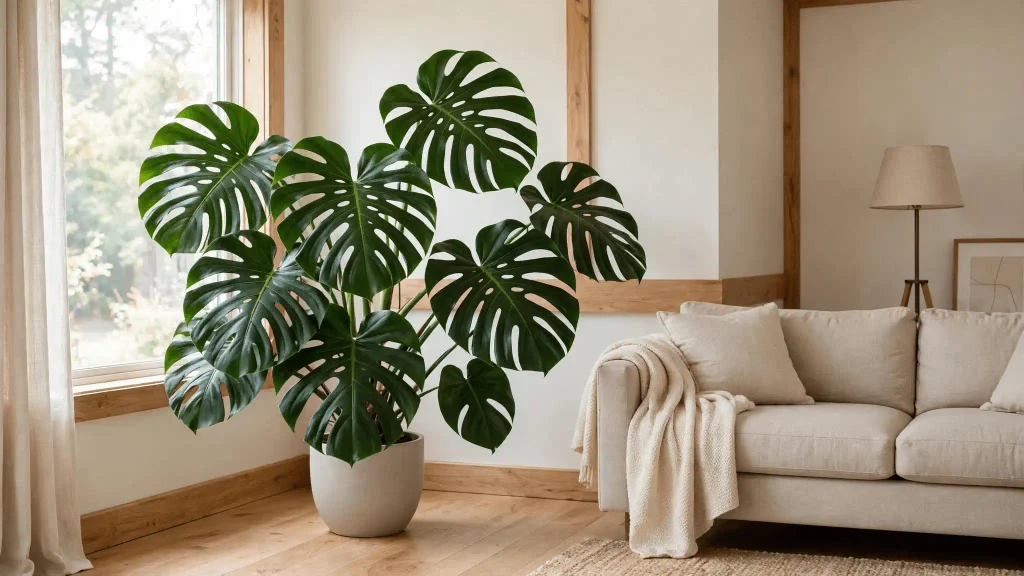
Best for a corner that feels unfinished but doesn’t need another piece of furniture.
If I were choosing just one place for a Monstera, an empty living room corner would be high on my list.
These spaces often need something with a little height. A short stool or small decorative object may not fill the space, while a cabinet can make the room feel crowded. A Monstera offers a middle ground: plenty of visual interest without the bulk of another furniture piece.
Place it in a bright corner near a window, leaving enough room for the leaves to spread. A simple floor pot is usually all you need.
I’d keep the surrounding area fairly uncluttered. The leaves already have an interesting shape, and adding too many baskets, stands, or ornaments can make the corner feel busy.
A practical detail: Measure the space before buying a mature plant. Monstera can spread several feet wide, so leave room for future growth rather than choosing a spot that barely fits the pot.
Place It Beside the Sofa
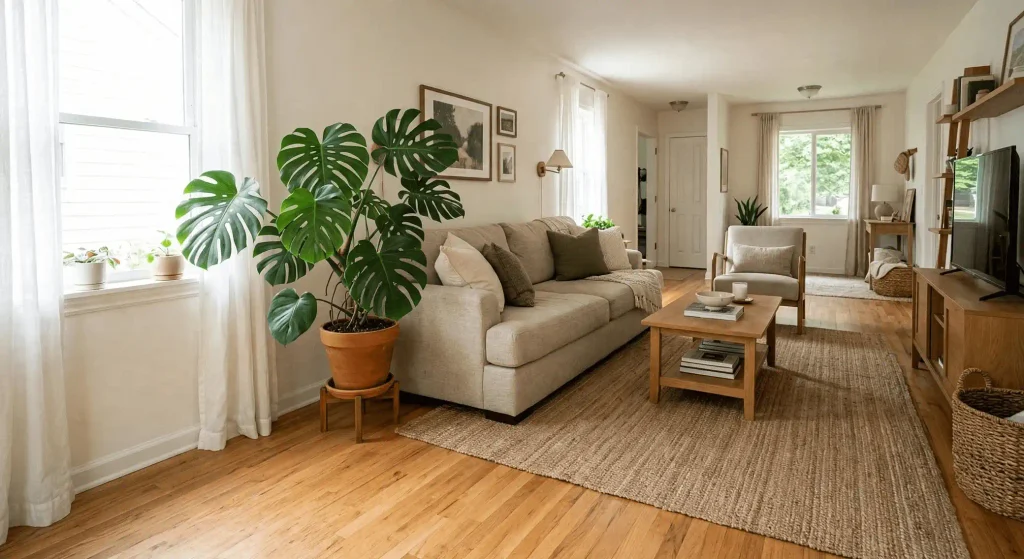
Best for softening a seating area without adding another table.
Sometimes a sofa looks perfectly fine, but the area at one end feels a little empty. A Monstera can help connect the seating area to the rest of the room.
I’d place the pot beside one end of the sofa, slightly behind the front edge rather than directly in the walking path. This gives the foliage room to spread while keeping the seating area comfortable to use.
This arrangement works particularly well in larger living rooms where the sofa sits away from the wall. A plant can help fill the gap without making the room feel as though every inch needs furniture.
You don’t need a matching plant stand or a carefully coordinated collection of accessories. A healthy plant in a pot that suits your existing room is enough.
Before placing it: Check that the leaves won’t constantly brush against the sofa or interfere with people getting in and out of their seats.
Make Use of the Space Beside a Window
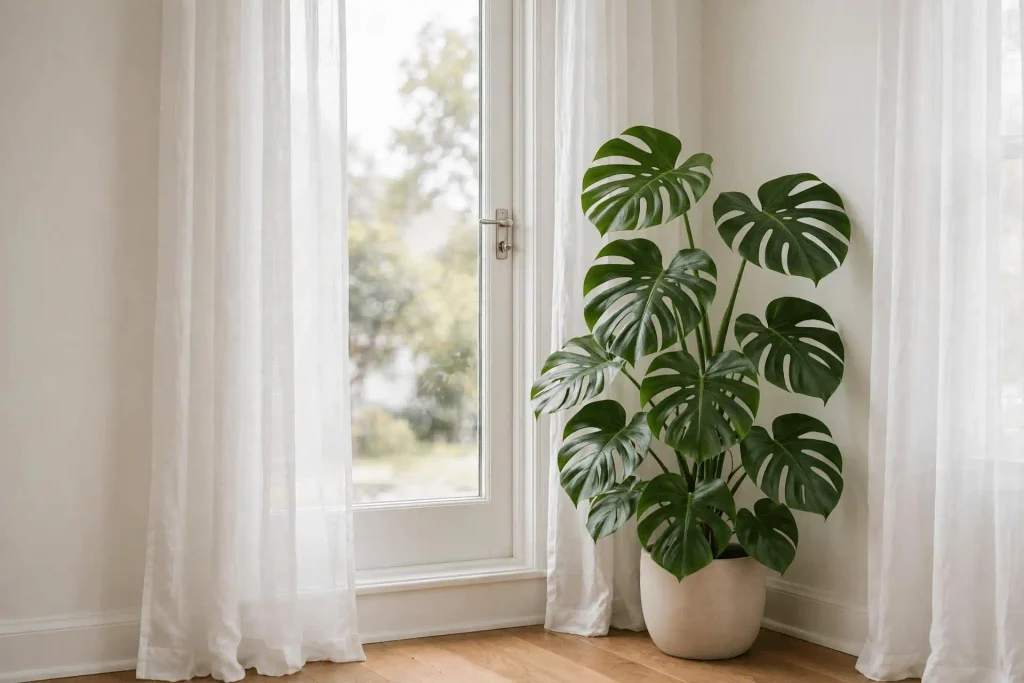
Best for a bright area that feels too small for furniture.
The space beside a window is often useful but awkward to decorate. There’s daylight, but not always enough room for a chair or side table.
A Monstera can make that space feel intentional. Rather than filling the windowsill with several small pots, try one floor plant beside the window. Its larger leaves create a stronger focal point without taking up the entire area.
Bright, indirect light is ideal. An east-facing window can work well, while a south- or west-facing window may require some distance from the glass or a sheer curtain to soften intense sunlight.
I’d also keep the plant clear of curtains and window handles so the area remains easy to use.
A practical detail: Watch the sunlight at different times of day. A spot that looks gentle in the morning may receive strong afternoon sun.
Bring Greenery Into Your Home Office
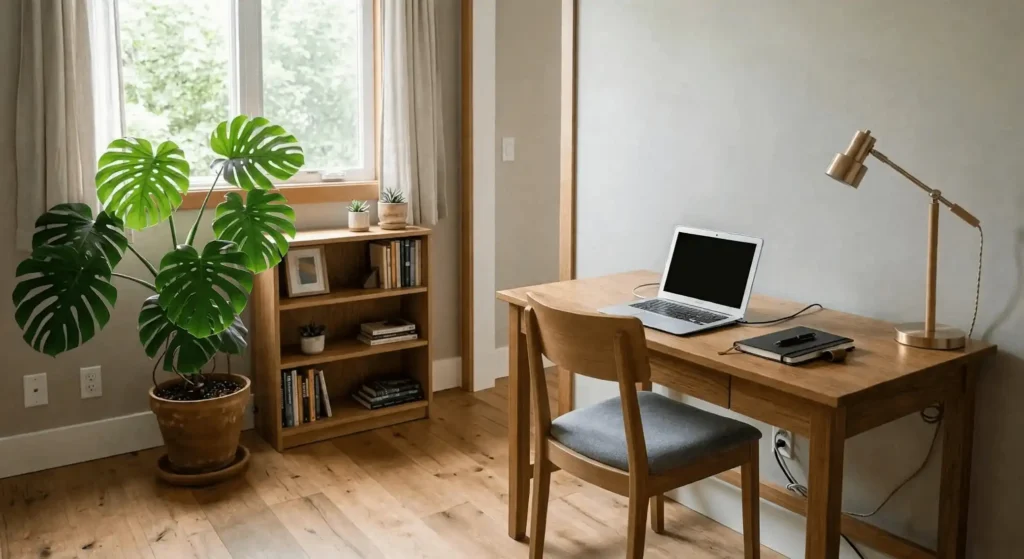
Best for a workspace that feels functional but a little bare.
A home office can quickly become a collection of hard surfaces: a desk, monitor, shelves, and storage. A Monstera introduces a different shape and a natural element without taking up valuable desk space.
I’d place it on the floor near the desk, perhaps beside a low bookcase or in a bright corner just outside the main working area.
The goal isn’t to squeeze the plant into the smallest available gap. Give it enough space to grow without blocking your chair, covering outlets, or making cables difficult to reach.
If your desk is near a bright window, the plant may work well in the same area. If the office is dim, choose a brighter spot or consider a suitable grow light.
My tip: Keep the desktop relatively clear and let the Monstera provide the greenery. You don’t need multiple little plants and accessories to make the workspace feel more welcoming.
Use It in a Bright Bedroom Corner
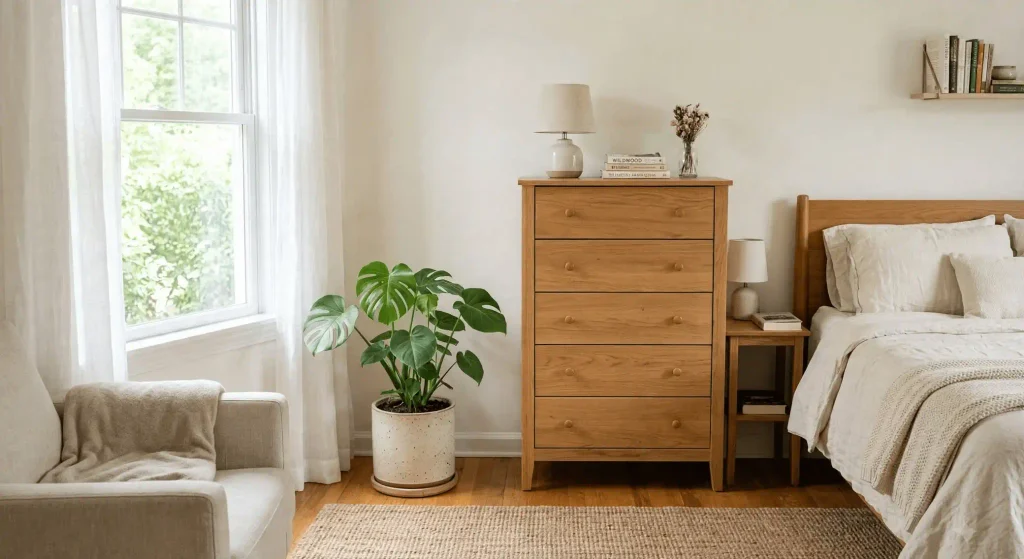
Best for an unused corner near a window or dresser.
Bedrooms often have one corner that never quite gets used. It may be beside a dresser, near the window, or on the opposite side of the bed.
A Monstera can fit nicely there, especially if the bedroom already receives plenty of daylight.
For a smaller bedroom, I’d start with a young plant rather than a large specimen with leaves that spread into the walking space. Choose a stable pot and make sure you can still open drawers, access the wardrobe, and change the bedding comfortably.
A dim bedroom is a different story. If very little natural light reaches the room, it may be better to place the plant in the living room instead.
One thing to remember: Monstera deliciosa is toxic to cats, dogs, and humans if chewed or ingested. Choose a location that keeps it out of reach of children and pets.
Place It Beside a Bookcase or Low Cabinet
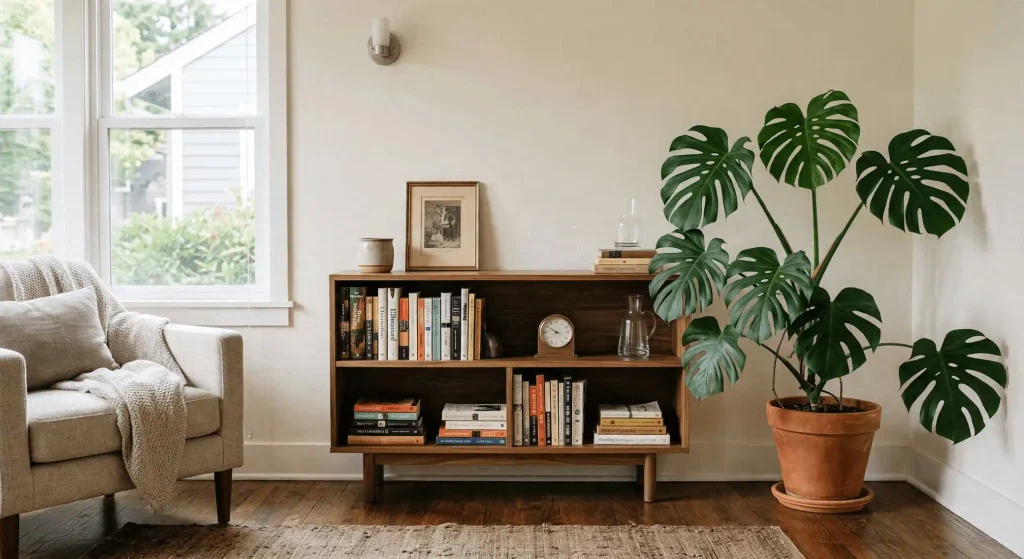
Best for balancing furniture with tall, leafy greenery.
A bookcase or low cabinet can look a little heavy when it sits alone against a wall. A Monstera beside it adds an organic shape that contrasts with straight shelves and cabinet edges.
I’d place the pot at one end of the furniture, where the leaves have room to spread without covering shelves or blocking doors.
This is also a useful way to decorate a living room or home office without adding more objects to the cabinet top. Instead of filling every surface with frames, ornaments, and small plants, let one floor plant do the work.
Just be careful not to choose a dark corner simply because it sits beside your favorite bookcase. The plant still needs suitable light to grow well.
A practical detail: Leave enough space to clean behind the pot and reach any drawers or cupboard doors.
Add Greenery Near the Dining Area
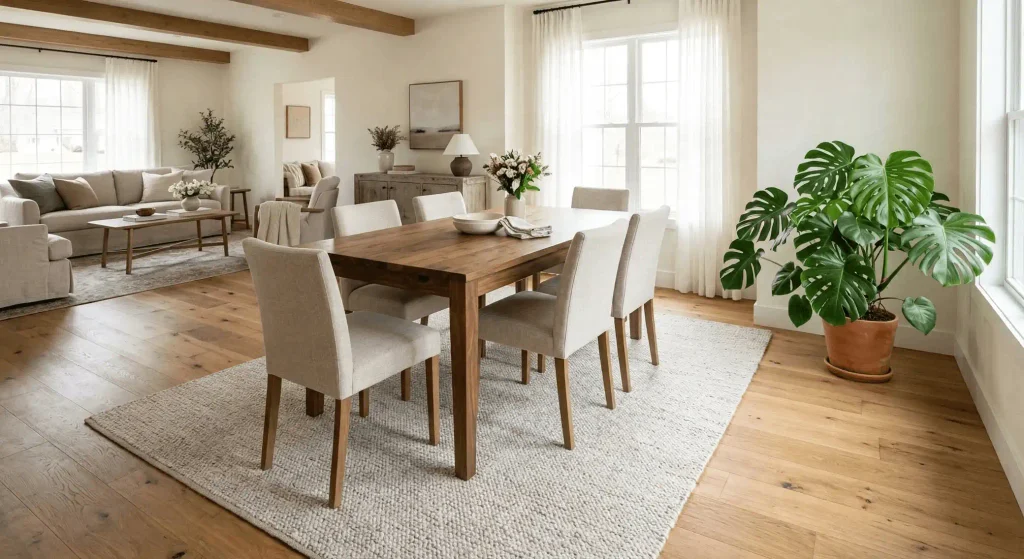
Best for open-plan homes or dining rooms with an unused corner.
A dining area doesn’t always need more decoration on the table itself. Sometimes the room feels better balanced when greenery sits just outside the main dining space.
A Monstera can work well in a corner near the dining table, particularly in an open-plan living and dining room. It adds height and can help distinguish the dining area from the lounge without a screen or room divider.
I’d keep it away from the backs of chairs and the route people use to walk around the table. Large leaves can quickly become inconvenient when they sit directly in a busy path.
If the dining area is far from the windows, check the light carefully before choosing this location.
My tip: Let the plant sit slightly to one side of the dining arrangement rather than placing it where it competes with the table for space.
Brighten a Spacious Entryway
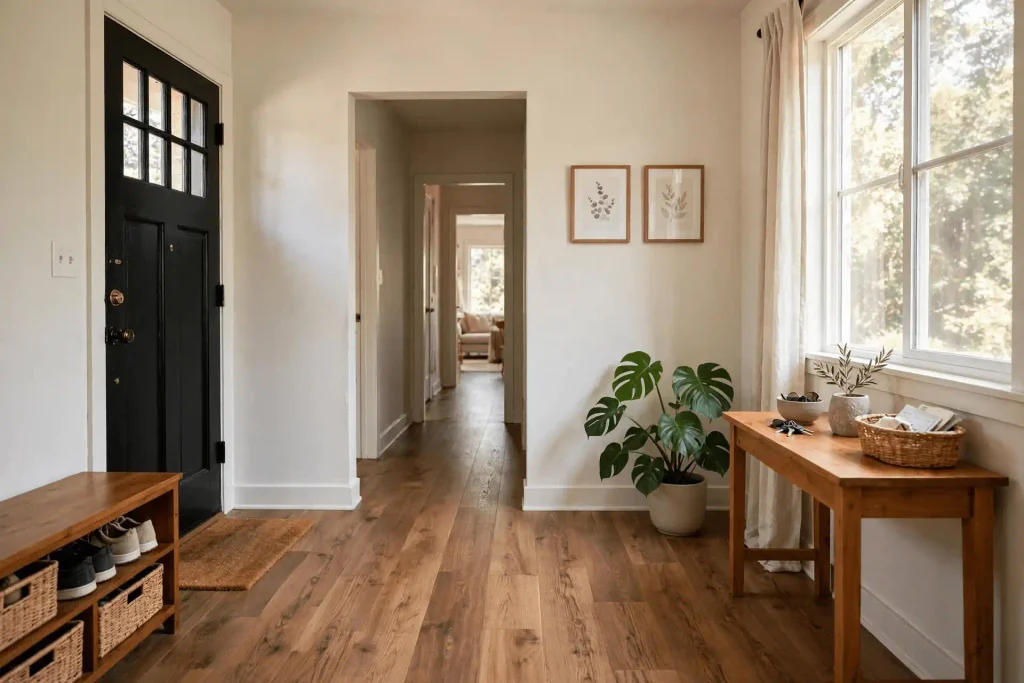
Best for an entrance with daylight and enough room to walk comfortably.
A little greenery near the front door can make an entrance feel more welcoming. If you have a spacious foyer or an entryway with a nearby window, a Monstera is worth considering.
I’d place it to one side of the entrance, away from shoes, bags, and the path people take when coming in or going out.
A younger plant is usually easier to manage here. A mature Monstera can spread into a narrow entryway, and frequent contact with its leaves can damage the foliage.
Think about temperature, too. In colder parts of the United States, an exterior door that opens regularly in winter can expose the plant to chilly drafts.
Before choosing this spot: If the entryway stays dark for most of the day, use a brighter room instead. A welcoming entrance isn’t worth sacrificing the plant’s growing conditions.
Train It Upward to Save Floor Space
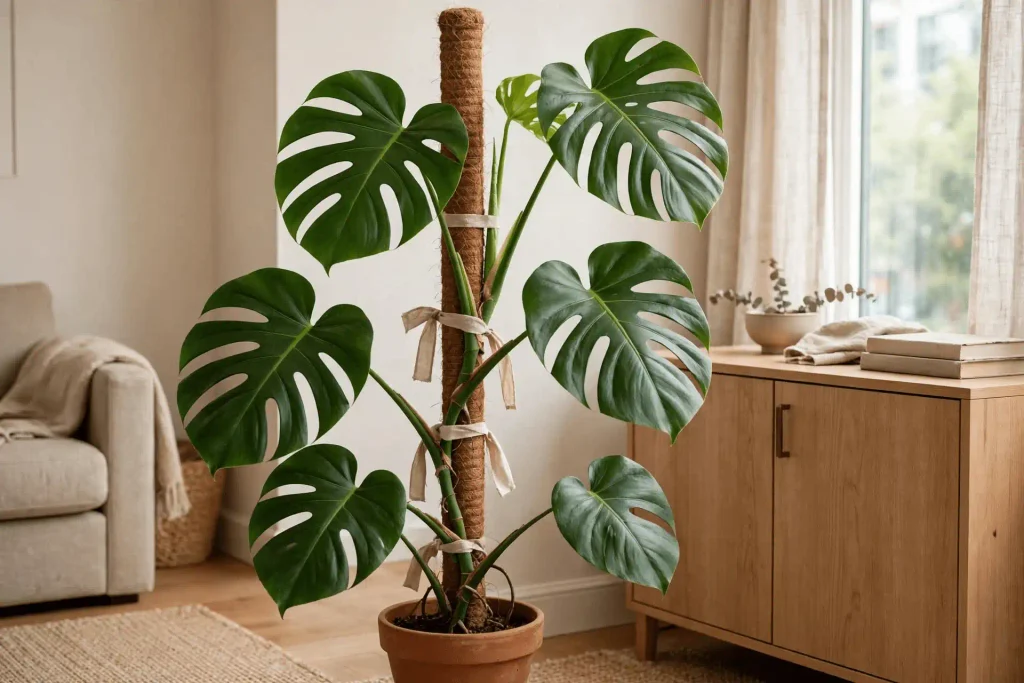
Best for smaller homes where a more upright shape works better.
A Monstera doesn’t always need to spread outward. As a climbing plant, it can be trained to grow upward with a suitable support.
This is useful in an apartment or smaller living room where you want a substantial plant but don’t have much room for wide, sprawling leaves.
A sturdy moss pole or coir pole can support the main stem as the plant grows. Attach the stem loosely with soft plant ties, and check them occasionally to make sure they’re not constricting it.
Keep in mind that climbing doesn’t make a Monstera completely compact. Its leaves can still become large, so you’ll need to leave enough room around the plant.
My tip: Add support while the plant is still manageable. It’s easier to guide a young Monstera than to rearrange a large, heavy plant later.
You Should Avoid Putting a Monstera in These Places
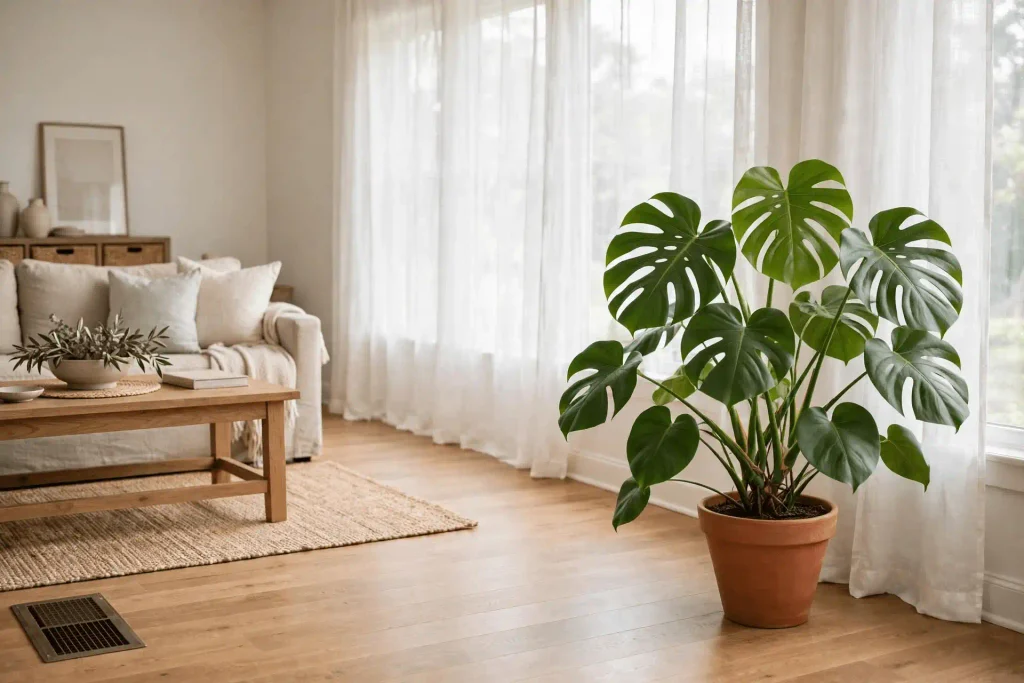
Before settling on a location, there are a few places I’d cross off the list.
- A very dark corner: Growth can slow considerably, and new leaves may stay small. Consider a grow light if you want to keep the plant there.
- A spot in harsh, direct afternoon sun: Prolonged intense sunlight can scorch the leaves. Filter the light or move the plant farther from the window.
- Beside a cold exterior door: Sudden temperature changes and chilly drafts can stress this tropical plant.
- A narrow walkway: Large leaves can get in the way, and the pot may be knocked over.
- Right next to a heating or air-conditioning vent: Direct hot or cold airflow can create uncomfortable conditions.
- Within reach of pets or young children: Monstera contains insoluble calcium oxalate crystals that can cause irritation if chewed or ingested.
The best location isn’t necessarily the prettiest empty corner. It’s the place where the plant receives suitable light, has room to grow, and doesn’t make everyday life more difficult.
Choose the Right Monstera for Your Space
The size of the plant matters just as much as the location.
A young Monstera is easier to fit beside a dresser or in a smaller bedroom. A mature plant with large, split leaves is better suited to a room where it can spread without blocking furniture or walkways.
Before buying one, consider three things:
Light: Bright, indirect light is usually best. Don’t choose a dark corner just because it needs filling.
Room to grow: Think about the mature plant’s height and width, not just the size of the pot at the garden center.
Support and drainage: If you want an upright plant, allow room for a sturdy support. Choose a pot with drainage holes to help prevent excess moisture around the roots.
Also remember that young Monsteras often have solid leaves. The familiar holes and splits generally become more pronounced as the plant matures, so a plant without dramatic foliage isn’t necessarily unhealthy.
A Monstera doesn’t need a perfectly styled corner or an entire room designed around it. Sometimes the space beside a sofa, a bright spot near a bookcase, or an unused living room corner is all you need.
I’d start by looking for an area that feels a little unfinished, then check whether it gets enough light and has room for the plant to grow. Think about how you’ll move around the room, too. A plant should make the space more comfortable, not turn a walkway into an obstacle course.
Choose the spot for the home you have now, allow for the plant you may have later, and keep the rest of the arrangement simple. A healthy Monstera in the right place can bring plenty of character to a room without making decorating feel like another project.