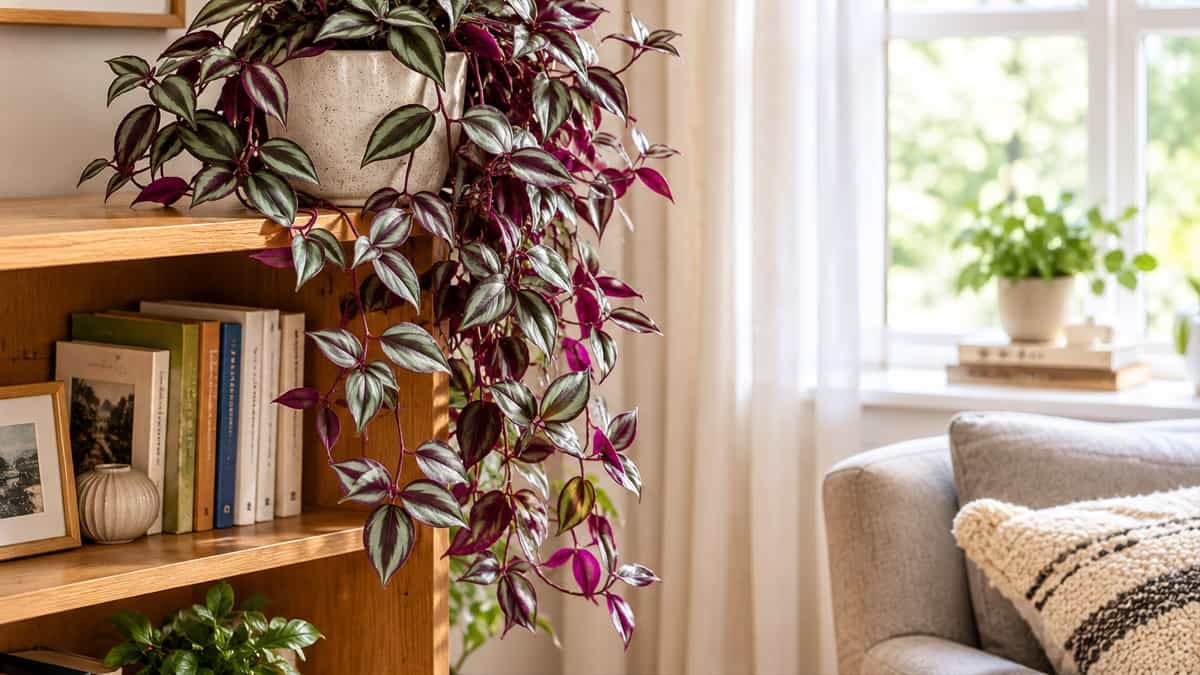
Some plants look best on a windowsill. Others need a little height to show off their shape. Wandering Jew, commonly known as Tradescantia zebrina, is a trailing plant that can do both, depending on how you choose to display it.
Its green and silver-striped leaves, purple undersides, and spreading stems make it a lovely option for hanging baskets, bookshelves, plant stands, and bright corners that feel a little unfinished.
What I like about using a trailing plant in home decor is that it can add color without taking up much floor space. You don’t need a large room, an expensive planter, or a collection of matching pots to make it work.
The trick is choosing a location that looks good and provides the light the plant needs. A beautiful spot won’t help much if the foliage becomes stretched and sparse because the room is too dark.
Here are nine practical ways to use Tradescantia zebrina around your home, along with a few placement details worth considering before you choose a spot.
Hang It Near a Bright Window
Best for: Adding greenery to an empty window corner.
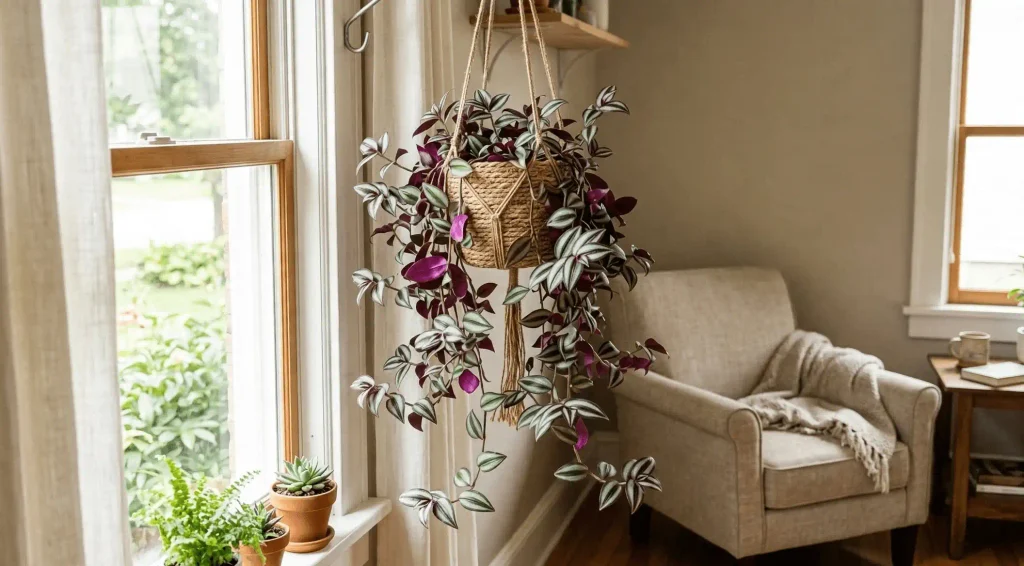
A hanging basket near a bright window is one of the most natural ways to display Tradescantia zebrina. Its stems can grow over the edges and hang freely, making the window area feel softer without covering the entire view.
An east-facing window can be a good starting point because it often provides gentler morning sunlight. Other bright windows can work, too, although strong afternoon sunshine may need filtering.
This arrangement is particularly useful in smaller homes where you want greenery without sacrificing a table or floor space.
Choose a basket with drainage holes and make sure you can reach it comfortably when it’s time to water or trim the plant. A removable hanging basket can be easier to maintain than one installed too high.
One thing to remember: Leave enough room for the stems to grow without becoming tangled in curtains or blinds.
Fill an Empty Living Room Corner
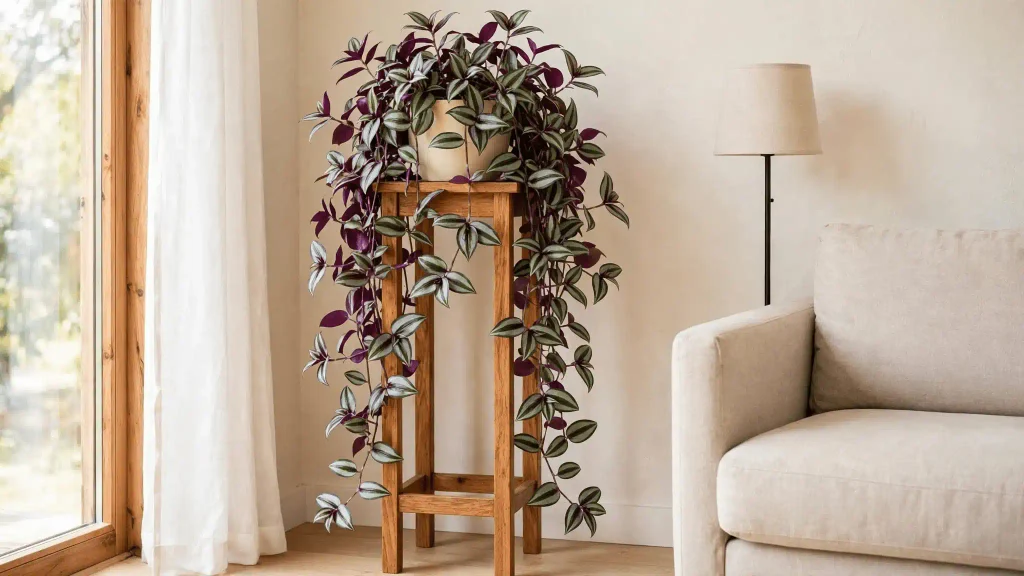
Best for: Adding height without another bulky piece of furniture.
Some living room corners look bare even after the main furniture is in place. A trailing plant can help fill that visual gap without requiring another chair, cabinet, or side table.
I’d consider a stable plant stand or a hanging planter in a bright corner near a window. The trailing foliage creates a different shape from the straight lines of sofas, shelves, and other furniture.
This works especially well in a room with neutral walls or natural wood furniture, where the plant’s purple and silver coloring can stand out.
You don’t need to fill the entire corner with decorations. One well-positioned plant can be enough to make the space feel more complete.
If the corner receives very little natural light, though, choose a brighter location instead. Tradescantia zebrina can lose some of its color and develop leggy growth in low light. <Cite refs={[“turn488232search1”]}/>
Let It Trail From a Bookshelf
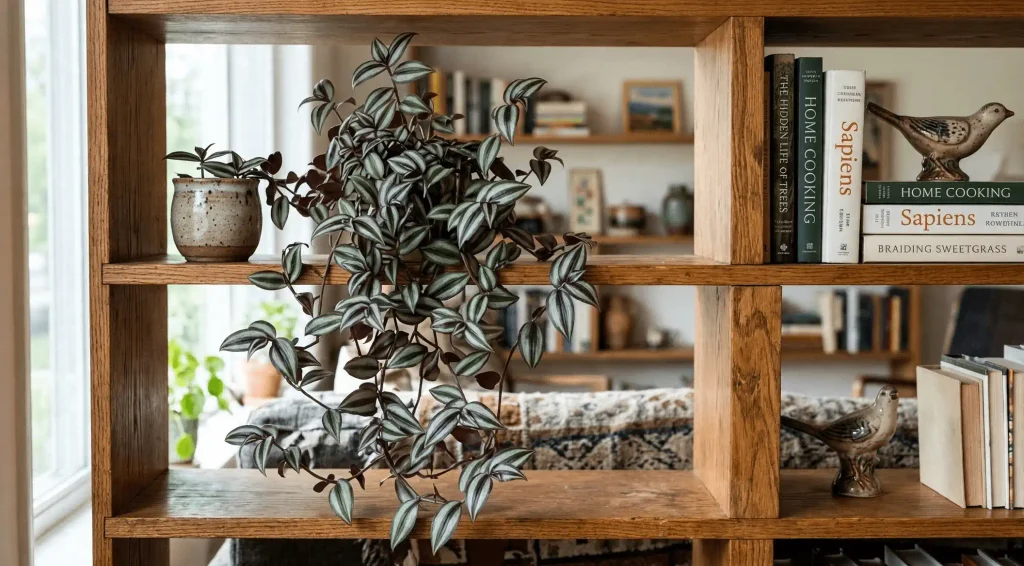
Best for: Softening a plain bookcase or open shelf.
Bookshelves can look a little rigid when everything sits in straight lines. A trailing plant introduces a softer shape and adds greenery without requiring a complete shelf makeover.
Place a small pot near one end of a sturdy shelf and allow the stems to grow over the edge. This can work in a living room, home office, or reading area, particularly when the shelf sits near a bright window.
The main consideration is light. A shelf can look like the perfect location but still be too dark for the plant to thrive.
I’d also use a waterproof saucer beneath the pot to protect the shelf from moisture. Keep the plant away from books and other items that could be damaged by spilled water.
If your bookshelf doesn’t receive enough light, a nearby plant stand is a better alternative.
Place It Beside a Reading Chair
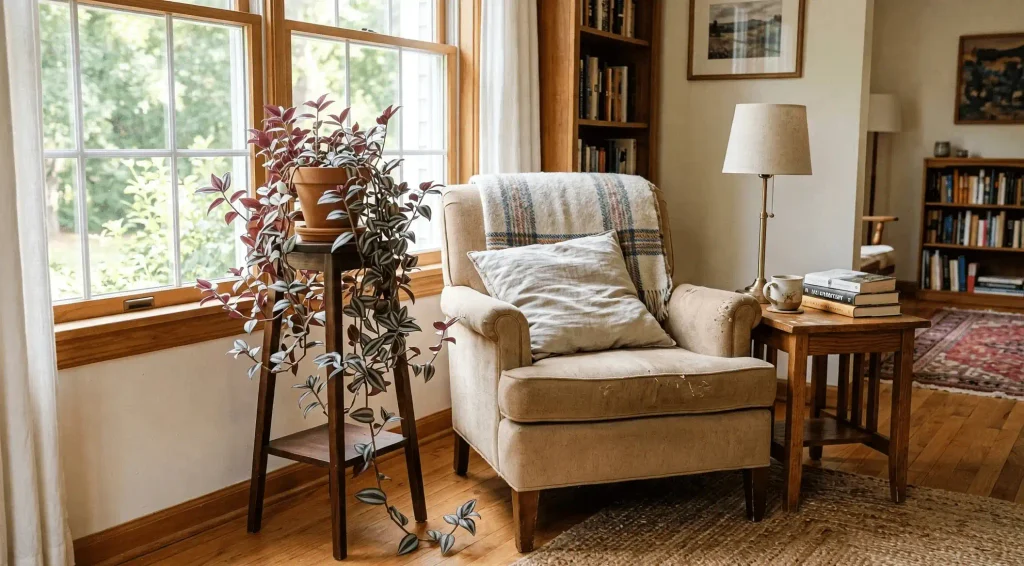
Best for: Adding greenery to a cozy reading corner.
A reading corner doesn’t need much to feel inviting. A comfortable chair, a reading lamp, and a little greenery can create a simple arrangement without adding unnecessary clutter.
A small pot on a plant stand beside the chair can work particularly well. The trailing stems add color and texture while keeping the seat and side table available for everyday use.
This placement is a good choice when you want the room to feel more relaxed without introducing lots of new decorative objects.
Keep the plant far enough away that the stems won’t catch on clothing or get pulled when someone sits down.
If pets share the room, make sure they cannot chew on the foliage. Tradescantia sap can irritate the skin, and related species have documented pet-safety concerns. We’ll cover that distinction below.
Add Greenery to a Home Office
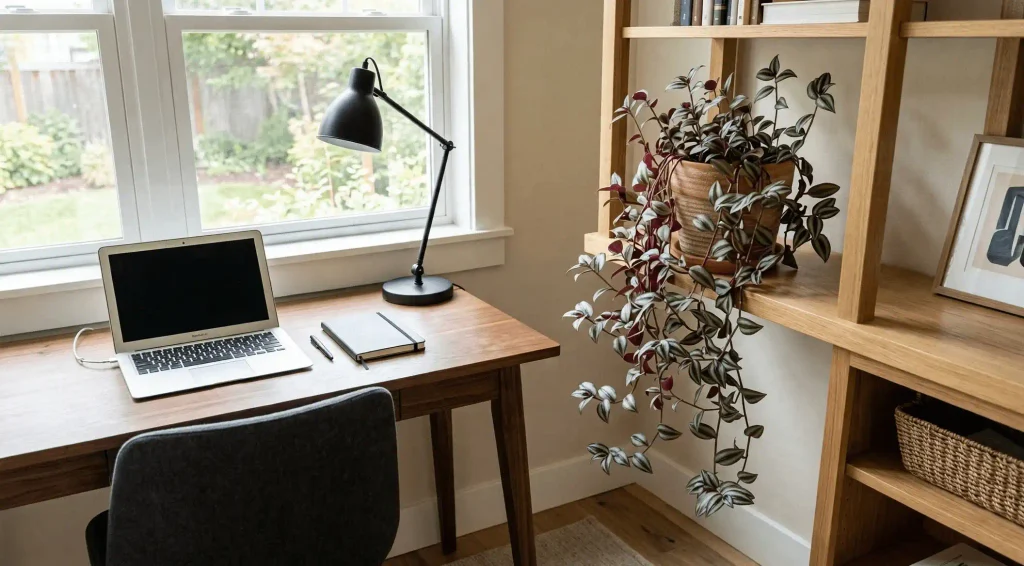
Best for: Keeping your desk clear while making the workspace feel less plain.
A desk already has enough going on between a computer, notebooks, chargers, and everyday essentials. Another plant pot may simply take up space you need for working.
Instead, consider placing Tradescantia zebrina on a nearby shelf, a stable plant stand, or a hanging planter beside a bright window.
The foliage adds color without crowding your workspace. Its trailing habit also makes it suitable for smaller home offices where floor space is limited.
Avoid hanging the basket directly above your computer or power strip. Watering is much easier when you can reach the plant safely and keep moisture away from electronics.
A nearby shelf can give you a similar decorative effect without the extra risk.
Decorate a Covered Porch or Patio
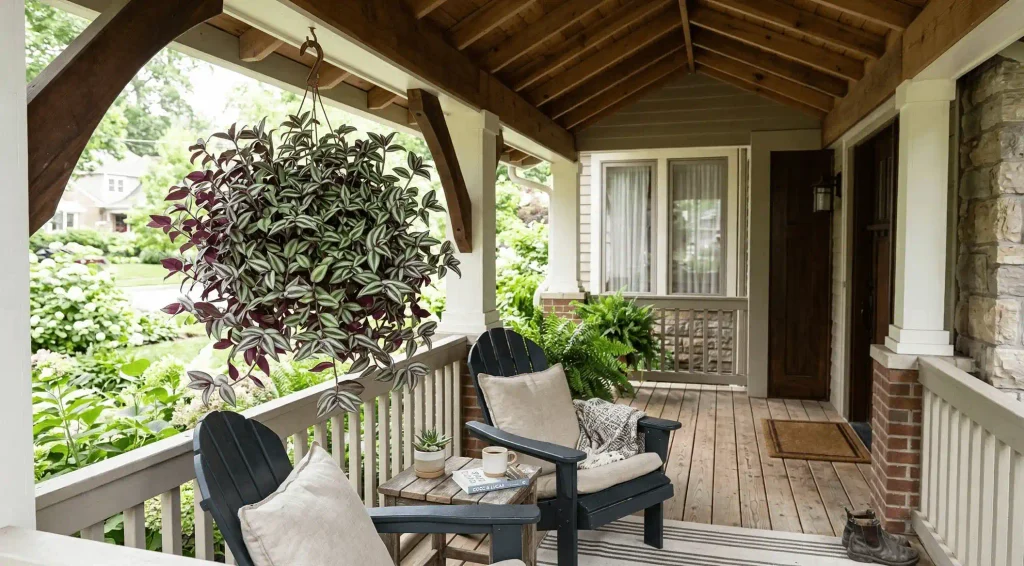
Best for: Bringing color to an outdoor seating area in warm weather.
A covered porch or patio can be a lovely place for Tradescantia zebrina during suitable weather. A hanging basket near a chair or small outdoor table adds greenery without taking up seating space.
Choose a bright location with protection from harsh sunlight, particularly during the hottest part of the afternoon.
If the plant has been growing indoors, introduce it to outdoor conditions gradually. Moving it straight from a dim room into intense sunlight can damage the foliage.
Outdoor pots may dry out more quickly because of warmth and airflow, so check the potting mix regularly rather than following a fixed watering schedule.
Temperature matters, too. Tradescantia zebrina is a tender plant and should be brought indoors before frost or freezing temperatures arrive. Wisconsin–Madison’s horticultural guidance recommends moving it outdoors only after the danger of frost has passed. <Cite refs={[“turn488232search1”]}/>
For a simple patio arrangement, one trailing basket near your seating area may be all you need.
Bring Color to a Bedroom
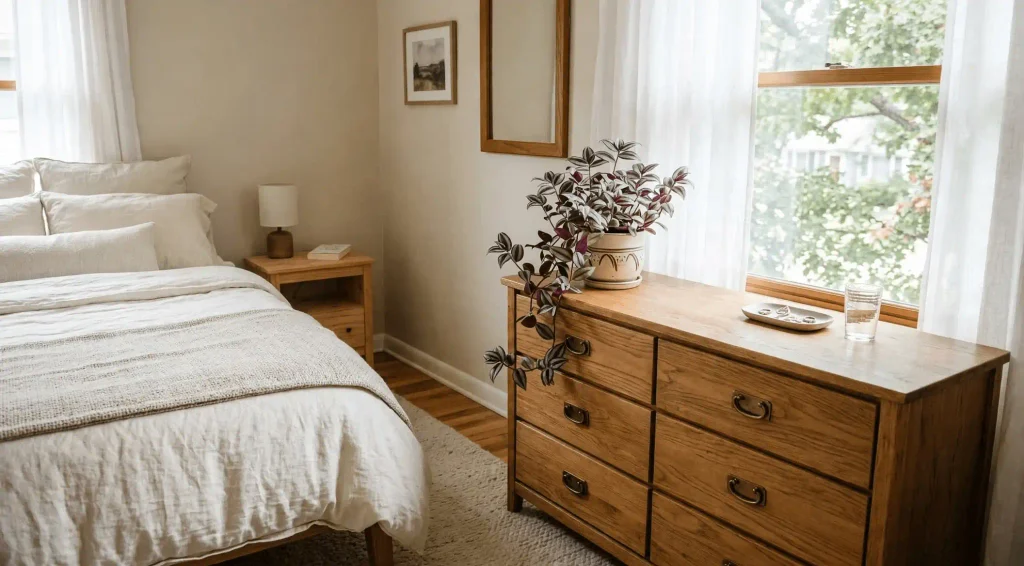
Best for: A bright dresser, window area, or unused corner.
If your bedroom has a bright window and some spare space, Tradescantia zebrina can introduce color without requiring more furniture.
A small pot on a dresser or a plant stand near the window is an easy option. A hanging basket can work, too, provided it has secure support and won’t interfere with curtains or everyday movement.
The purple and silver foliage creates a pleasant contrast against white walls, cream bedding, and natural wood furniture.
I’d avoid choosing a spot based on appearance alone. A dark corner beside the bed might look attractive, but it may not provide enough light for healthy, colorful growth.
If your bedroom is naturally dim, try another room or consider suitable grow lighting.
Use a waterproof saucer on furniture, and make sure trailing stems don’t obstruct drawers or frequently used surfaces.
Brighten a Kitchen Window
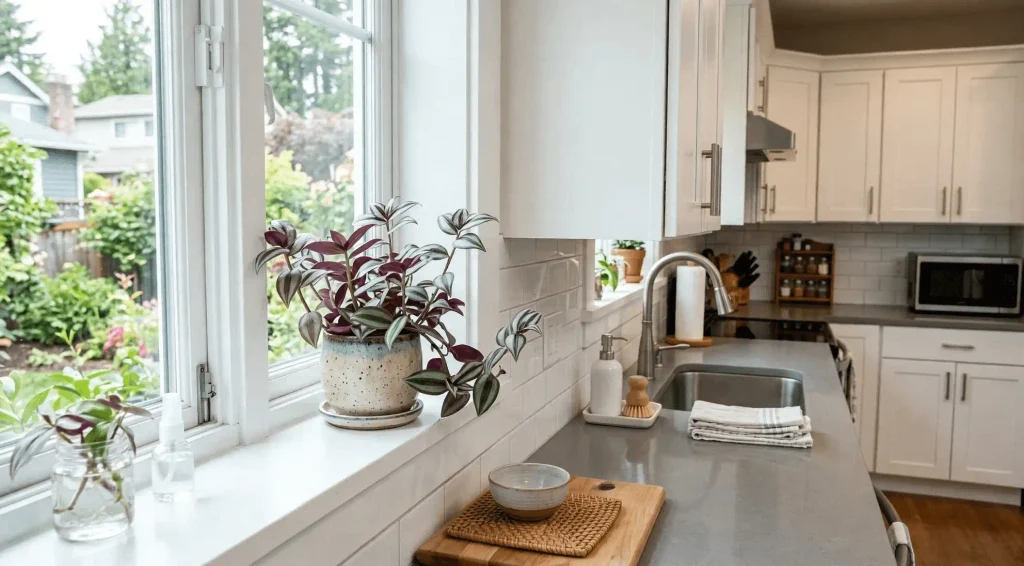
Best for: Adding greenery without using valuable counter space.
A bright kitchen window can be a useful place for Tradescantia zebrina, especially if your kitchen has simple cabinetry and uncluttered surfaces.
A small pot on a suitable windowsill or a hanging basket near the window can add a little color without taking up much room.
Before settling on a location, check how much light the window receives throughout the day. Strong afternoon sunshine may need filtering, while a very dark window may not provide enough light.
Keep the plant away from the stove, oven, and food-preparation surfaces. Avoid locations where cooking heat could stress the foliage or where trailing stems might get in the way.
If your kitchen doesn’t receive sufficient natural light, another bright room may be a better home for the plant.
Use It on a Tall Plant Stand
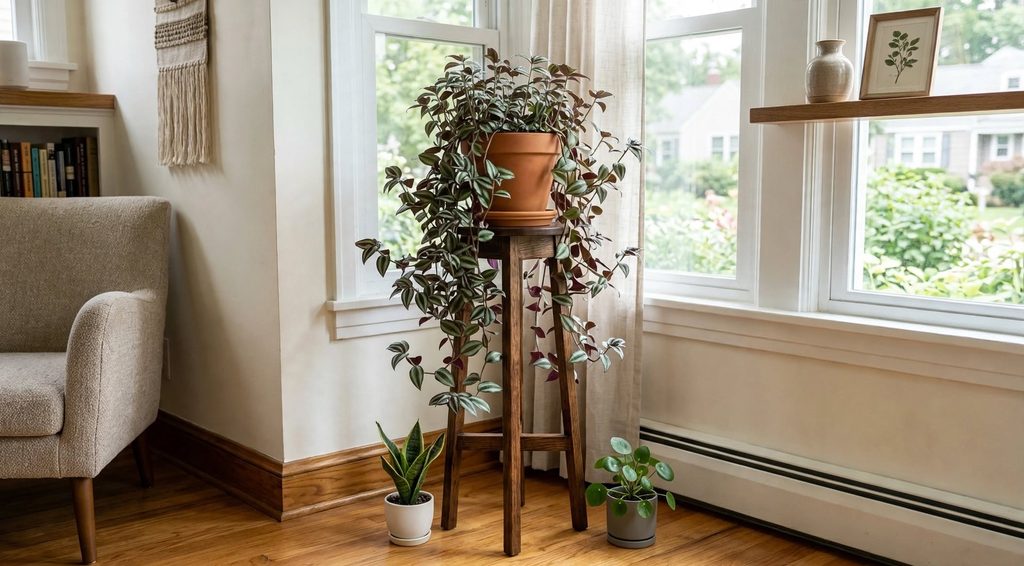
Best for: Creating height in a collection of houseplants.
If you already have several houseplants, you don’t necessarily need another hanging basket. A tall, stable plant stand can lift Tradescantia zebrina above the surrounding pots and give its stems room to trail.
This arrangement works well beside a bright window, in a living room corner, or near a reading chair.
The plant’s cascading shape adds another layer to a collection without requiring a large floor plant.
Choose a stand that can support the combined weight of the pot, soil, and water. Also consider how easily you can reach the plant for watering and pruning.
One practical detail: Keep the stems clear of busy walkways so they aren’t repeatedly brushed or broken.
How to Keep Tradescantia Zebrina Full and Colorful
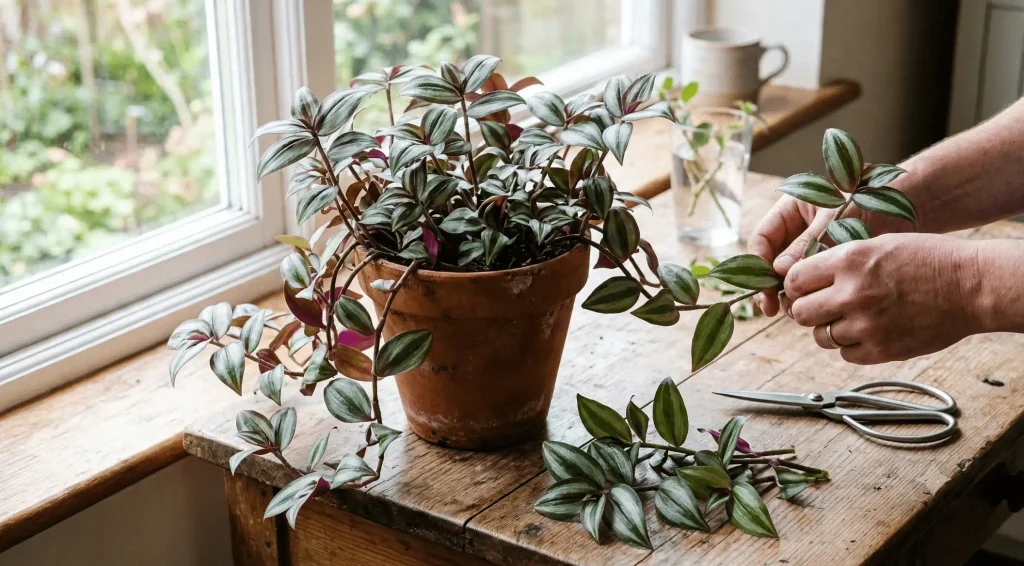
Once you’ve found the right location, a few straightforward care habits can help the plant maintain its shape.
Give it bright light. Bright indoor light helps support healthy growth and attractive foliage. Low light can cause stems to become stretched and leaves to lose some of their color. <Cite refs={[“turn488232search1”]}/>
Prune long stems. Trim leggy growth just above a healthy node. Pinching back the tips encourages branching and helps maintain a fuller appearance.
Reuse healthy cuttings. Tradescantia zebrina is easy to propagate. Place healthy stem cuttings in water or moist potting mix, then use rooted cuttings to fill sparse areas of the container. <Cite refs={[“turn488232search1”]}/>
Check the soil before watering. Let the potting mix dry somewhat between waterings. Water thoroughly, then allow excess water to drain. Avoid leaving the roots in persistently soggy soil. <Cite refs={[“turn488232search1”]}/>
Rotate the pot occasionally. A plant near a window may grow toward the light. Turning it from time to time can help keep the growth more balanced.
These small steps can make a bigger difference than continually buying new planters or moving the plant from one room to another.
Where I Wouldn’t Place Wandering Jew
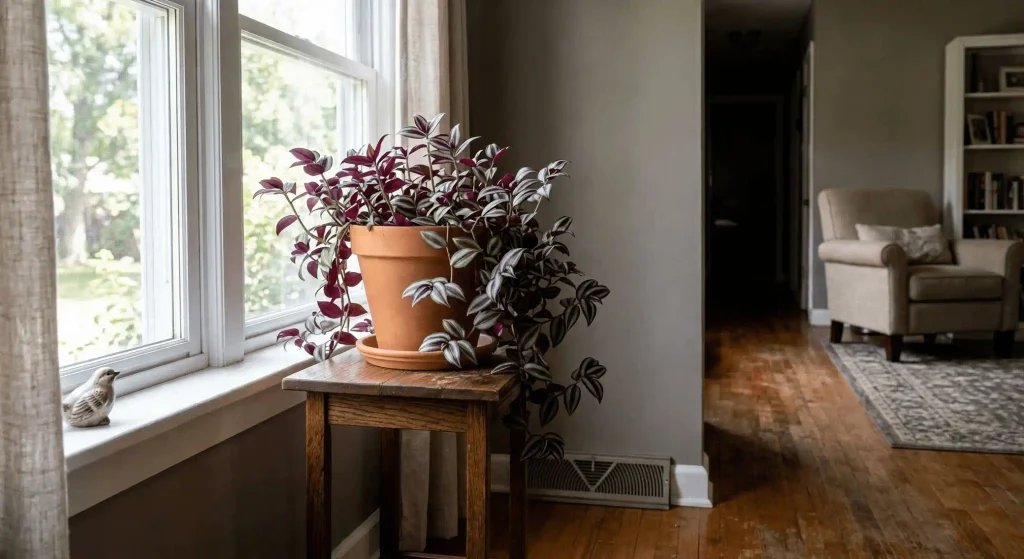
Even an adaptable plant has locations that are less suitable.
- A very dark hallway: Insufficient light can lead to stretched stems and less colorful foliage.
- Beside a hot stove: Cooking heat can create an unsuitable growing environment.
- In intense afternoon sun without acclimation: Strong sunlight can damage leaves, especially after moving the plant outdoors.
- Outside during freezing weather: Tradescantia zebrina isn’t frost-tolerant.
- Within reach of pets that chew houseplants: Its sap may irritate skin, and chewing can be a concern.
Rather than filling every empty corner with greenery, choose one location where the plant can grow well and remain easy to maintain.
Frequently Asked Questions
Does Wandering Jew need to grow in a hanging basket?
No. Tradescantia zebrina can grow in ordinary pots, too. Hanging baskets simply make its trailing stems more noticeable. A bookshelf or plant stand can create a similar look.
Can I keep Tradescantia zebrina indoors all year?
Yes. Provide adequate light, sensible watering, and suitable temperatures. If you move it outdoors in warm weather, bring it inside before frost arrives.
Why is my Wandering Jew losing its purple color?
Low light is one possible reason. Gradually move the plant to a brighter location and observe its new growth. Avoid suddenly exposing a plant accustomed to low light to intense direct sunshine.
Can I keep Wandering Jew in a bathroom?
Yes, if the bathroom receives sufficient natural light or you provide suitable grow lighting. Humidity alone cannot compensate for inadequate light.
Is Tradescantia zebrina safe for cats and dogs?
It’s best to prevent pets from chewing it. The sap can irritate sensitive skin, and horticultural guidance recommends caution with Tradescantia plants around pets. The ASPCA specifically lists the related species Tradescantia fluminensis as toxic to cats and dogs, but that listing should not be presented as a species-specific assessment of T. zebrina. <Cite refs={[“turn488232search0″,”turn488232search1”]}/>
How can I make a sparse Wandering Jew look fuller?
Check its light first, then trim leggy stems and replant healthy cuttings around the pot. With suitable conditions and time, the new growth can create a fuller display. <Cite refs={[“turn488232search1”]}/>
Final Thoughts
If I were choosing one place to start with Tradescantia zebrina, I’d look for a bright window and a simple hanging basket. Its natural trailing habit makes that combination especially practical, and the colorful foliage can become part of the room’s decoration without using floor space.
But the best placement depends on your home. A bookshelf may need a little greenery, a reading corner may benefit from a softer shape, and a home office may work better with a plant beside the desk instead of on it.
Start with the light, think about how you use the space, and choose a location where watering and pruning won’t become a chore.
You don’t need an expensive planter or a perfectly styled room. Give the plant a suitable spot, let its stems grow naturally, and trim them when needed.
Sometimes, one well-placed plant is all a room needs to feel a little more like home.