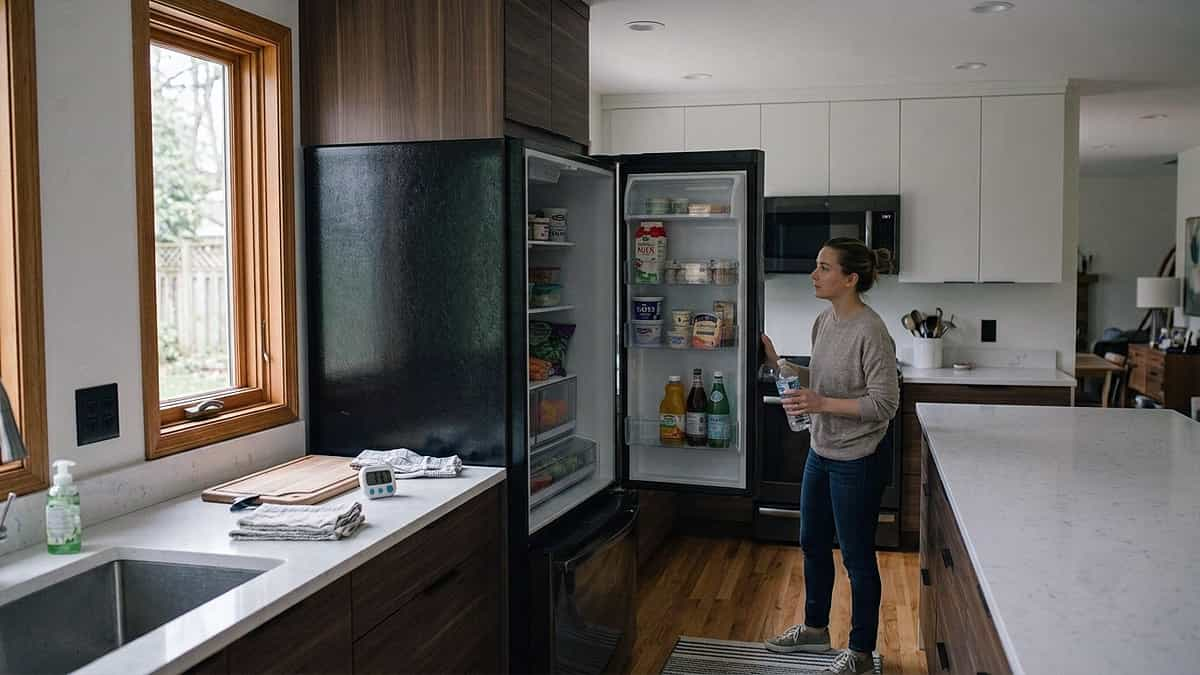
If you’ve just experienced a power outage, you’re probably standing in front of your refrigerator wondering, “Do I need to throw everything away?”
Take a deep breath—you may not have to.
Food doesn’t spoil the moment the electricity goes out. In fact, if you keep the refrigerator door closed, most refrigerated food stays safe for up to 4 hours. A full freezer can usually keep food frozen for about 48 hours, while a half-full freezer lasts around 24 hours.
Before you start tossing groceries into the trash, here’s how to decide what’s safe and what isn’t.
The Quick Answer
| Appliance | How Long Food Usually Stays Safe |
|---|---|
| Refrigerator (door closed) | Up to 4 hours |
| Half-full freezer | About 24 hours |
| Full freezer | About 48 hours |
The biggest mistake is opening the refrigerator repeatedly to check the food. Every time the door opens, cold air escapes and the temperature rises faster.
First, Ask Yourself These 3 Questions
- ✓ How long was the power out?
- ✓ Did you keep the refrigerator door closed most of the time?
- ✓ Is the food still cold, or has it become warm?
These three answers will usually tell you more than simply looking at the food.
You May Also Like
Bra Size Calculator – No App Required
Food Safety Guidelines Checklist
GOOD
- ✓ Butter & Margarine
- ✓ Hard cheeses (Cheddar, Parmesan)
- ✓ Fresh fruits (un应用于peeled/whole)
- ✓ Whole raw vegetables
- ✓ Pickles & Olives
- ✓ Jams & Jellies
- ✓ Mustard, Ketchup & Relish
- ✓ Peanut butter
BAD
- ✕ Milk, Cream, Yogurt & Sour Cream
- ✕ Soft cheeses (Brie, Mozzarella, Ricotta)
- ✕ Raw poultry, meat & seafood
- ✕ Cooked leftovers & casseroles
- ✕ Deli meats & hot dogs
- ✕ Opened canned foods
- ✕ Cut fruits & vegetables
- ✕ Cooked pasta & rice
Always check for signs of spoilage, but items like hard cheeses and condiments are generally less sensitive to short power outages, whereas high-risk dairy and raw meats develop harmful bacteria quickly once they lose their chill.
What About Frozen Food?
Your freezer is actually your best friend during a blackout.
Freezer Safety Timeline
- ✓ A full freezer can usually keep food frozen for about 48 hours.
- ✓ A half-full freezer typically keeps food frozen for about 24 hours.
If food still has ice crystals or feels frozen, it’s usually safe to keep.
Don’t Trust Your Nose
This surprises many people.
Crucial Warning
- ✓ Food can contain harmful bacteria even if it smells completely normal. That’s why smell, taste, or appearance shouldn’t be your only test.
- ✓ If you’re unsure how long a perishable food has been warm, it’s safer not to risk it.
Tips That Can Save Your Food
- Keep the refrigerator and freezer doors closed tightly.
- Open appliances only when absolutely necessary.
- If you have ice packs or bags of ice, place them inside the refrigerator right away.
- Group frozen foods tightly together so they insulate each other and stay colder longer.
- Once electricity returns, check food condition before cooking or serving it.
Small steps like these can make a noticeable difference during a long outage.
FAQs
Can food stay good in the fridge without power overnight?
It depends on how many hours the power was out and whether the refrigerator stayed closed. If it’s been more than about 4 hours and perishable foods became warm, many of them should be discarded.
Is butter still safe?
Usually, yes. Butter is less likely to spoil quickly than milk or yogurt.
Can I refreeze food after the power comes back?
If frozen food still contains ice crystals or feels solidly frozen, it can often be refrozen. Food that has completely thawed and stayed warm for several hours should generally not be refrozen.
What if I'm not sure how long the power was out?
When you can’t confidently tell how long food has been warm, it’s safest to throw away high-risk foods like meat, seafood, dairy, and leftovers.
A power outage doesn’t always mean every item in your refrigerator has gone bad. Keeping the doors closed, knowing how long the electricity was out, and understanding which foods spoil the fastest can help you avoid unnecessary waste while still protecting your family’s health.
When you’re unsure, remember one simple rule: it’s always better to replace questionable food than risk food poisoning.