
I’ve always liked spider plants a little more when they’re allowed to hang rather than sit quietly on a shelf.
Their long leaves naturally spill over the sides of the pot, and once the little baby plants start appearing, the whole thing gets that relaxed, slightly wild look that works so well indoors.
If you’re thinking about turning a spider plant into a hanging plant, you really don’t need a complicated setup. But a few small choices—especially the pot, hanging rope or chain, and where you place it—can make a big difference.
Here’s how I’d set one up at home.
Start With the Right Spider Plant

You don’t need a huge spider plant to create a nice hanging display.
I actually prefer starting with a healthy, medium-sized plant because it gives the roots enough room without making the hanging pot unnecessarily heavy.
Look for a plant with firm leaves and healthy new growth. If it already has a few baby spider plants hanging from the mother plant, that’s even better.
Those little offshoots eventually become part of the display and give the plant that naturally cascading look.
You May Also Like
Best Indoor Plants for Beginners (Low Maintenance & Stylish)
Choose a Pot That Works for Hanging

The pot matters more than you might expect.
A spider plant doesn’t need an oversized container, and a huge ceramic pot can become surprisingly heavy once you add soil and water.
For a hanging plant, I’d lean toward a lightweight pot with drainage holes.
A few options that work well:
- Plastic hanging pots – lightweight and practical
- Resin or lightweight composite pots – a little more decorative without being extremely heavy
- Woven hanging baskets with a nursery pot inside – great for a softer, casual look
- Lightweight ceramic pots – beautiful, but make sure the hanging hardware is strong enough
If you love the look of a heavier ceramic planter, I’d be more careful about where and how you hang it. Once it’s filled with moist soil, the weight adds up quickly.
For everyday indoor use, lightweight is usually the easier choice.
Steel Chain or Rope — Which Is Better?
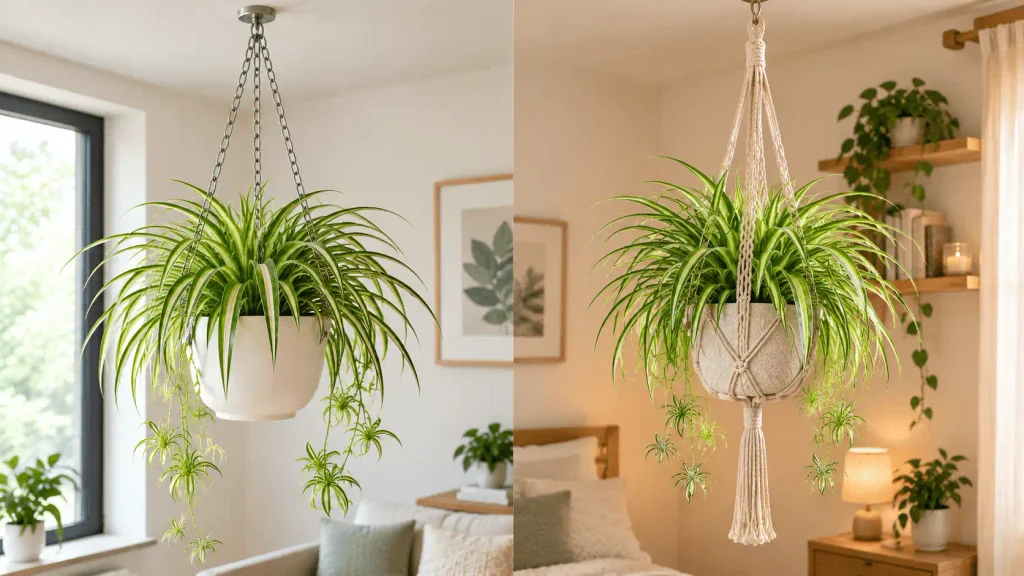
This is one of those little decisions that can completely change the look of the plant.
Personally, I’d choose steel chain when I want something clean, sturdy, and long-lasting.
A simple metal chain looks particularly nice with a plain ceramic, black, white, or neutral planter. It also feels more secure when you’re hanging a plant in a busy part of the house.
Rope gives a completely different feeling.
A cotton, jute, or macramé-style hanger makes the plant look softer and more relaxed. I especially like this option for bedrooms, reading corners, cozy living rooms, or spaces with a more natural interior.
So, for me:
Steel chain = clean and simple
Rope or macramé = warm and cozy
If you’re unsure, I’d go with the option that matches the room rather than choosing based only on appearance.
And whichever one you use, make sure the hook, hanger, and ceiling attachment are rated to safely support the fully watered pot, not just the empty planter.
Don’t Forget the Hanging Hook
The hook is probably the least exciting part of the setup, but it’s also one of the most important.
You don’t want to hang a plant from a random hook that wasn’t designed to hold weight overhead.
Think about the total weight of the pot, soil, plant, and water—not just the plant itself.
For a ceiling-mounted hanging plant, use hardware appropriate for the type of ceiling you’re working with. If you’re not sure what your ceiling can support, it’s worth checking before drilling.
I’d rather spend a few extra minutes getting the hardware right than worry about a beautiful spider plant crashing down later.
Pick a Pot Shape That Lets the Leaves Show
For a spider plant, I like pots that aren’t too deep or bulky.
The plant’s real beauty comes from the foliage spilling outward and downward, so you don’t want a huge container competing with it.
A simple round planter works well.
A slightly wider hanging basket can look even better once the leaves begin trailing over the sides.
If you’re using a decorative basket, you can keep the actual plant in a lightweight nursery pot inside it. That way, you still get the decorative look without adding unnecessary weight.
Give It Bright, Indirect Light
Once the hanging setup is ready, find the right spot.
Spider plants generally do well with bright, indirect light. A window with filtered light can be a great location.
I wouldn’t put the plant directly in the strongest afternoon sun for hours, especially if the leaves are getting hot against the glass.
A few feet away from a bright window can sometimes work beautifully.
And there’s no rule saying the plant has to hang directly in front of the window. If the room gets good natural light, you can place it slightly to the side and let the foliage become part of the room instead of blocking the window.
Hang It at a Comfortable Height
This is where I’d avoid making the same mistake people often make with hanging plants: don’t hang it so high that caring for it becomes annoying.
You should be able to reach the planter easily enough to check the soil, remove a damaged leaf, or take the pot down for watering.
I also like leaving enough space underneath for the leaves and spider plant babies to grow.
If you hang it too close to a wall, doorway, or piece of furniture, the trailing leaves can quickly start getting in the way.
Give the plant some breathing room.
Let the Spider Plant Grow Naturally
One of the reasons spider plants work so well as hanging plants is that you don’t have to constantly arrange them.
Let the leaves fall naturally.
As the plant matures, some leaves will point outward while others will trail down. The little baby plants may eventually hang below the main pot, which makes the whole display look fuller.
I wouldn’t try to make every leaf point in the same direction.
A slightly imperfect, cascading shape is what makes a hanging spider plant look natural.
Think About the Room Before Choosing the Hanger
I like matching the hanging material to the feeling of the room.
For a minimal living room, a simple pot with a thin steel chain can look clean without drawing too much attention.
For a cozy bedroom, a woven basket with a cotton or macramé hanger feels softer.
In a home office, a simple neutral planter and understated hanger can add greenery without making the space feel busy.
And for a kitchen, I’d keep the setup simple and make sure the plant isn’t positioned somewhere it can get splashed by water, cooking grease, or excessive heat.
The spider plant should feel like part of the room—not like a decoration that was squeezed into an empty spot.
Don’t Make Watering Difficult
Before you decide on the final height, think about how you’re actually going to water it.
This sounds obvious, but it’s easy to forget.
A hanging plant that looks beautiful three feet above your head isn’t nearly as appealing when you need to drag a chair across the room every time the soil feels dry.
I prefer hanging spider plants at a height where I can comfortably reach them.
You can also take the pot down for watering if the setup makes that easier. Just allow excess water to drain before putting it back.
Let the Baby Plants Become Part of the Display
Spider plant babies are one of my favorite parts of growing these plants.
When they appear along the long stems, you can leave some attached to the mother plant and let them trail naturally.
This can make a hanging spider plant look much fuller without buying a larger plant.
If the plant starts becoming too crowded, you can remove a few babies and root them separately.
Eventually, one hanging spider plant can turn into several little plants around the house—which is a pretty nice bonus.
Use Hanging Spider Plants Where Floor Space Is Limited
This is another reason I like this idea for smaller homes and apartments.
Instead of using a plant stand, side table, or shelf, you’re using vertical space.
You could hang a spider plant:
- Beside a bright bedroom window
- In an empty living room corner
- Near a reading chair
- Beside a home office window
- In a bright entryway
- In a kitchen with suitable natural light
- Near a sunny bathroom window, as long as the conditions work for the plant
That little bit of greenery can make an otherwise empty area feel much more finished.
A Few Things I Would Avoid
There are a few mistakes I’d skip when setting up a hanging spider plant.
Don’t choose a pot that’s unnecessarily heavy. Remember that wet soil adds weight.
Don’t use weak rope or old hanging hardware. Replace anything that looks worn or questionable.
Don’t hang the plant somewhere with harsh, direct sunlight all day.
Don’t put it so high that watering becomes a chore.
And don’t squeeze it into a tiny corner just because there’s an empty hook there.
The plant needs enough room for its leaves to spread and trail.
My Favorite Simple Setup
If I were putting one together for my own home, I’d keep it pretty simple.
I’d choose a lightweight neutral-colored pot with drainage, place the spider plant inside, and use either a simple steel chain for a clean look or a natural rope/macramé hanger for something warmer.
I’d hang it near a bright window, but not directly in harsh sunlight, and leave enough space underneath for the leaves and baby plants to trail.
Nothing overly styled.
Just a healthy spider plant, a good-looking pot, secure hardware, and enough room for it to grow.
That’s really all you need.
Final Thoughts
A spider plant is one of those plants that can look completely different depending on how you display it.
On a shelf, it stays fairly compact. In a hanging planter, the long leaves get room to fall, and the little baby plants can turn the whole thing into a naturally cascading display.
The key is getting the basic setup right: keep the pot reasonably lightweight, choose a secure chain or rope hanger, use proper hanging hardware, give the plant bright indirect light, and make sure you can still reach it easily for watering.
Once you’ve got those things sorted, you can mostly let the plant grow into its own shape.
And honestly, that’s my favorite kind of home decor—something that looks beautiful because it’s growing naturally, not because you had to fuss over it every day.
FAQs
Can I use a steel chain to hang a spider plant?
Yes. A steel chain can be a great choice, particularly if you want a clean, simple look. Just make sure the entire hanging system and ceiling hardware can safely support the fully watered plant and pot.
Is rope safe for hanging a spider plant?
Yes, provided you use a strong, suitable plant hanger and secure hardware. Cotton, jute, and macramé-style hangers can give the plant a warmer, more relaxed appearance.
What type of pot is best for a hanging spider plant?
A lightweight pot with good drainage is usually the easiest option. Plastic, resin, and lightweight composite pots work well. A decorative basket can also be used around a lightweight nursery pot.
Can I use a ceramic pot for a hanging spider plant?
You can, but keep the total weight in mind. A ceramic pot becomes considerably heavier after adding soil and water, so the hanger and mounting hardware need to be strong enough for the full load.
How high should I hang a spider plant?
Hang it high enough to look attractive but low enough that you can comfortably check the soil and water it. There’s no benefit to putting it so high that basic plant care becomes difficult.
Can spider plant babies stay attached to the mother plant?
Yes. You can leave some babies attached and allow them to trail down naturally. They can make a hanging spider plant look fuller and more established.