

I Learned the Hard Way That Climate Matters for Your Bath Mat
Let me tell you about the bath mat that finally broke me.
It was a gorgeous cream shag rug—hotel spa vibes, absolute perfection. Three weeks later, it smelled like a wet dog. Two months in, I peeled it off the floor to find mould. Actual mould.
At first, I blamed the rug. Then I realized the real problem: I’d bought a bathroom mat without thinking about my climate.
I live in the UK, where the air is basically water for half the year. What works beautifully in a dry climate can turn into a soggy, smelly mess in a humid one. That expensive mistake sent me down a rabbit hole of research on materials, drying times, and how climate affects bath mat performance. Just like choosing plants that match your climate zone, your bathroom textiles need to suit your local weather to thrive.
If you’re wondering which bath mat works best for hot, humid, cold, or dry conditions, here’s what I learned.
Quick Reference Summary
| Material | Best Climate | Key Benefit |
| Cotton | Dry | Highly absorbent & soft |
| Microfiber | Hot/Humid/Rainy | Quick-drying |
| Memory Foam | Cold/Dry | Maximum cushioning |
| Chenille | Dry | Plush, elegant texture |
| Bamboo | Humid/Rainy | Mold & mildew resistant |
| Shag/Plush | Dry | Deep, luxurious comfort |
| Diatomaceous Earth | Humid/Rainy | Instant water absorption |
| Teak/Wooden | Humid/Rainy | Durable & spa-like look |
| Polyester | All-around | Affordable & low-maintenance |
A bath mat does way more than look pretty. It’s a critical functional piece, but if you’re looking for more budget-friendly decor upgrades to refresh your space without making expensive mistakes, think about how materials interact with your room first.
The Real Problems a Good Bath Mat Solves
A bath mat does way more than look pretty. It stops cold tile floors from shocking your feet on winter mornings. It prevents slips (my toddler nearly achieved flight once). And in damp homes, the right mat fights mould and that awful musty smell.
The wrong mat or rug? It makes all those problems worse.
What I Learned About Bath Mat Materials (The Hard Way)
1. Cotton Bath Mat
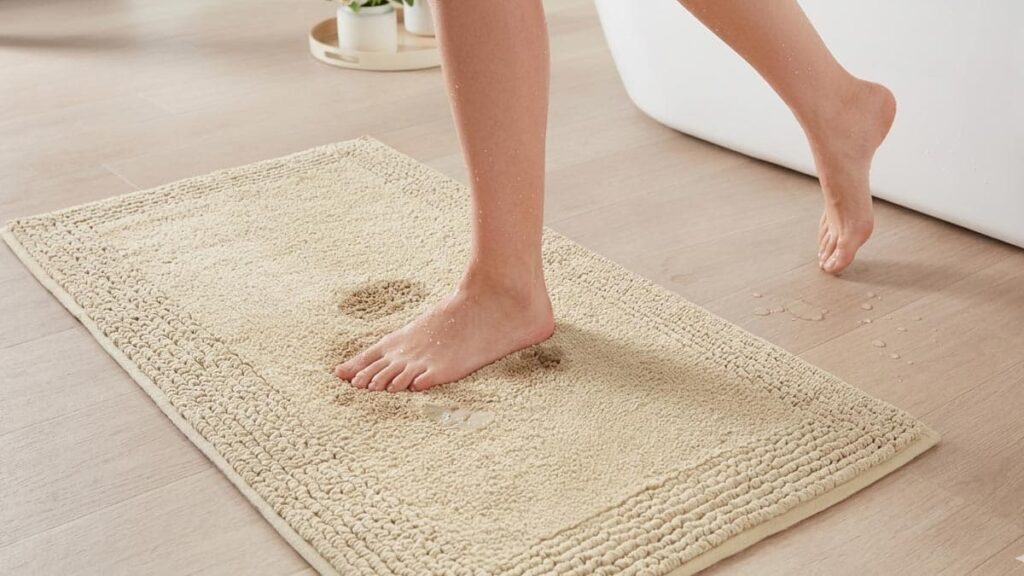
Cotton bath mats are soft, absorbent, and easy to wash, which is why they’re one of the most popular choices. But whether they’re a good fit depends heavily on your climate.
- 🌦️ Hot and humid climates: Thick cotton mats can absorb a lot of moisture and take hours to dry. If your bathroom has poor ventilation, they may develop odors or even mould over time. Lightweight cotton mats or those with a looser weave are usually a better choice.
- 🌵 Dry climates: Cotton performs much better in dry areas because moisture evaporates faster. Plush cotton mats feel cozy and comfortable without staying damp for long, making them an excellent option for everyday use.
- ❄️ Cold climates: Cotton mats feel warm and soft underfoot, which is great during colder months. However, thick cotton can still stay damp if the bathroom lacks proper airflow, so drying speed is worth considering.
Cotton bath mats without latex backing are usually the better choice for humid climates because they dry faster, are fully machine washable, and don’t risk the rubber backing cracking or peeling over time.
Cotton bath mats with latex backing offer better grip and stay in place more securely. They’re a good choice for dry or moderately humid climates, but the latex layer can slow down drying and may wear out faster in constantly damp bathrooms.
Pros
- ✔️ Soft and comfortable underfoot
- ✔️ Highly absorbent
- ✔️ Machine washable and easy to maintain
- ✔️ Available in a wide range of styles and thicknesses
- ✔️ Works especially well in dry and moderately humid climates
Cons
- ❌ Thick cotton can take a long time to dry
- ❌ May develop odors or mould in humid bathrooms
- ❌ Latex backing can crack or peel over time
- ❌ Plush models may lose shape after repeated washing
- ❌ Not always the best choice for poorly ventilated bathrooms
Cotton is a classic choice for a reason—it feels great, looks cozy, and is easy to care for. But if you live in a hot, humid, or rainy area, pay close attention to thickness and backing, because those details can make the difference between a mat that stays fresh and one that stays soggy.
2. Microfiber Bath Mat
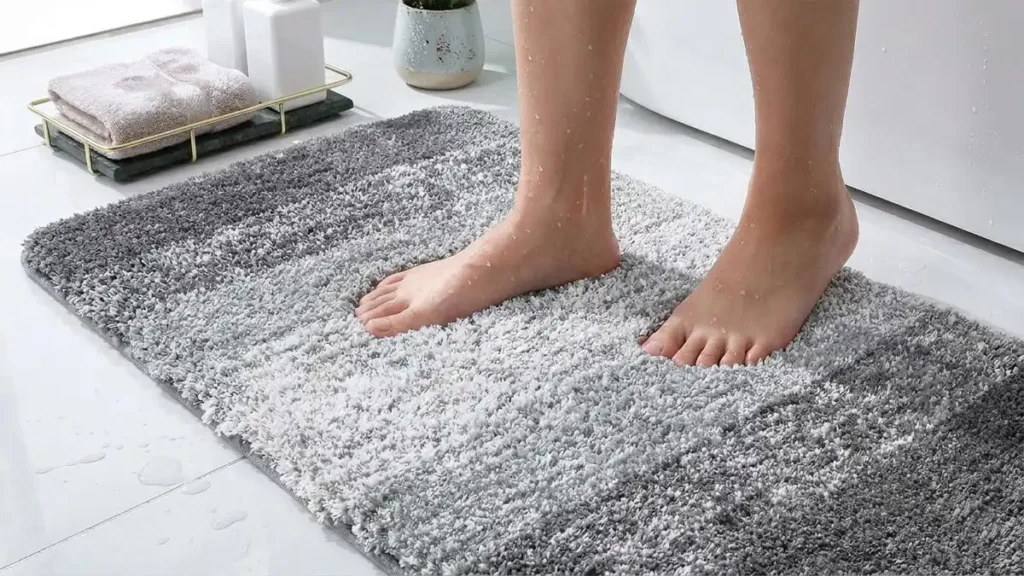
Microfiber bath mats are incredibly absorbent and dry much faster than most cotton mats, making them a practical choice for busy bathrooms. They’re soft underfoot, easy to clean, and surprisingly good at handling everyday moisture.
- 🌦️ Hot and humid climates: This is where microfiber shines. It absorbs water quickly and dries much faster than thick cotton, reducing the chances of lingering odors or mould. If your bathroom stays damp or doesn’t get much ventilation, microfiber is one of the safest bets.
- 🌵 Dry climates: Microfiber still performs well, but its quick-drying advantage isn’t as important. Some people also find that thinner microfiber mats don’t feel as luxurious as plush cotton options.
- ❄️ Cold climates: Microfiber dries quickly even in cooler weather, but many models are thinner and offer less cushioning. If warmth and a soft, spa-like feel matter most, you may prefer a thicker mat.
Cleaning and maintenance: Most microfiber bath mats are machine washable and dry relatively quickly after washing. However, they can trap hair and lint more easily than cotton, and very cheap microfiber mats may lose softness or flatten after repeated washes.
Pros
- ✔️ Extremely absorbent
- ✔️ Dries quickly
- ✔️ Machine washable
- ✔️ Resistant to mildew and odors compared with thicker fabrics
- ✔️ Ideal for humid or rainy climates
Cons
- ❌ Often thinner than cotton mats
- ❌ Can trap hair and lint
- ❌ Lower-end options may flatten over time
- ❌ Doesn’t always have the plush, luxury feel of thick cotton
If you live somewhere rainy or humid, microfiber is one of the easiest bath mat materials to live with. It may not feel like walking on a cloud, but the quick drying and low-maintenance nature make it a favorite for everyday use.
3. Memory Foam Bath Mat
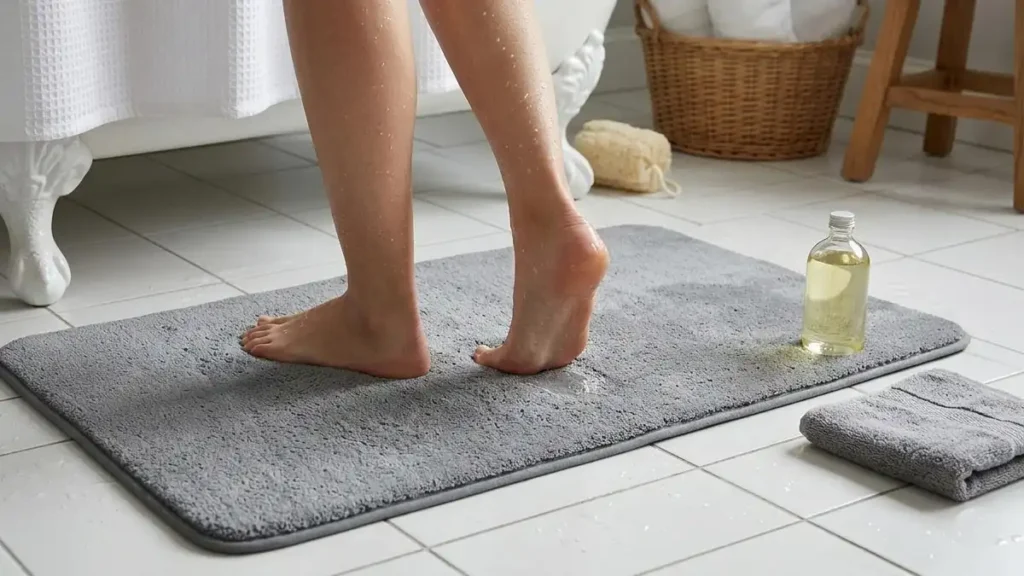
If comfort is your top priority, memory foam bath mats are hard to beat. They feel soft, cushioned, and warm underfoot—almost like standing on a cloud. But all that comfort comes with a trade-off: memory foam tends to hold onto moisture longer than other materials.
- 🌦️ Hot and humid climates: Memory foam is usually not the best choice here. The foam core can trap moisture and take a long time to dry, especially in bathrooms with poor ventilation. Over time, this can lead to musty odors or mildew.
- 🌵 Dry climates: This is where memory foam works best. The mat dries faster in low-humidity environments, and you get to enjoy the plush feel without worrying as much about trapped moisture.
- ❄️ Cold climates: Memory foam feels fantastic on cold tile floors and adds extra warmth and cushioning. Just make sure your bathroom has decent airflow, because thicker foam mats can still stay damp after use.
Cleaning and maintenance: Many memory foam bath mats are machine washable, but some require gentle washing or air drying to protect the foam. They also take longer to dry after washing compared with cotton or microfiber mats.
Pros
- ✔️ Extremely soft and comfortable
- ✔️ Great cushioning for hard bathroom floors
- ✔️ Feels warm and cozy in colder weather
- ✔️ Often comes with a non-slip backing
Cons
- ❌ Dries slowly
- ❌ Can trap moisture in humid bathrooms
- ❌ More likely to develop odors if not dried properly
- ❌ Takes longer to dry after washing
- ❌ Foam may flatten or lose shape over time
Memory foam bath mats are perfect if you want maximum comfort and live in a cold or dry climate. But if your bathroom is humid, poorly ventilated, or stays damp for long periods, a quick-drying material like microfiber is usually a smarter choice.
4. Chenille Bath Mat
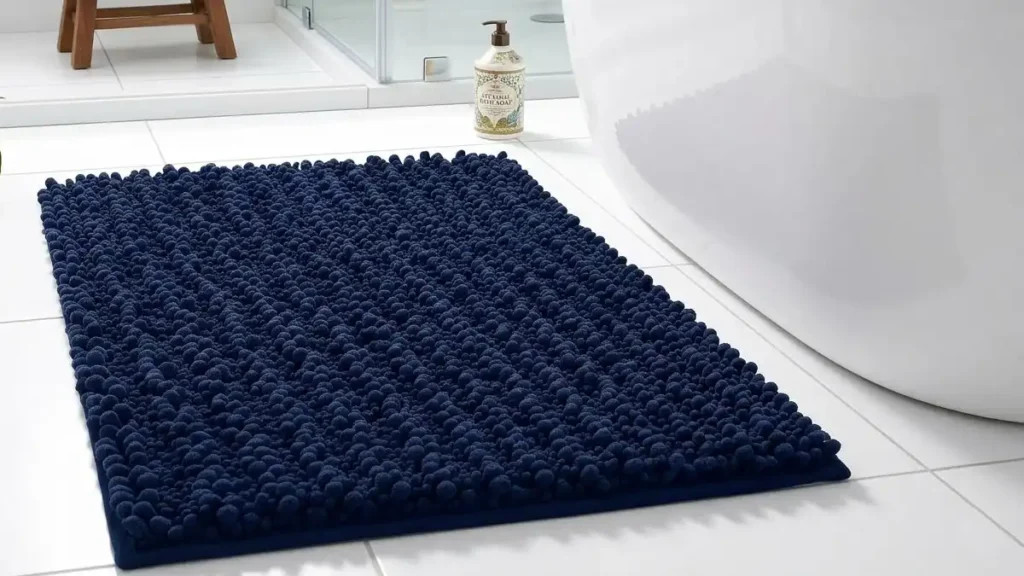
Chenille bath mats are known for their ultra-soft texture and elegant look. Their deep, fluffy pile feels luxurious and gives your bathroom that cozy hotel-spa look. If you love that aesthetic but live in a high-humidity area, save the plush textiles for other rooms and check out our cozy styling tips for smaller spaces instead.
- 🌦️ Hot and humid climates: Chenille isn’t the best choice here. The thick fibers absorb moisture and can take a long time to dry, especially in bathrooms with poor ventilation. Water spots, lingering dampness, and musty odors are more common than with quick-drying materials.
- 🌵 Dry climates: Chenille performs much better in dry areas where moisture evaporates quickly. You get the soft, plush feel without waiting forever for the mat to dry.
- ❄️ Cold climates: Chenille feels warm and cozy, making it a nice option for colder months. However, frequent use can still leave the mat damp for longer than microfiber or lightweight cotton.
Cleaning and maintenance: Chenille mats are usually machine washable, but they require more care to keep their fluffy texture. They can trap dust, hair, and lint, and the fibers may flatten or look worn after repeated washing.
Pros
- ✔️ Extremely soft and plush
- ✔️ Stylish, luxurious appearance
- ✔️ Feels warm and cozy underfoot
- ✔️ Works well in dry climates or low-traffic bathrooms
Cons
- ❌ Slow to dry
- ❌ Shows water spots and footprints easily
- ❌ Can trap moisture in humid bathrooms
- ❌ Requires more maintenance than cotton or microfiber
- ❌ Fibers may flatten over time
Chenille mats look gorgeous and feel amazing, but they’re not the most practical choice for a busy bathroom. They’re best suited for guest bathrooms or powder rooms where they won’t be exposed to constant moisture. For daily use—especially in humid climates—quicker-drying materials are usually a better bet.
5. Bamboo Bath Mat
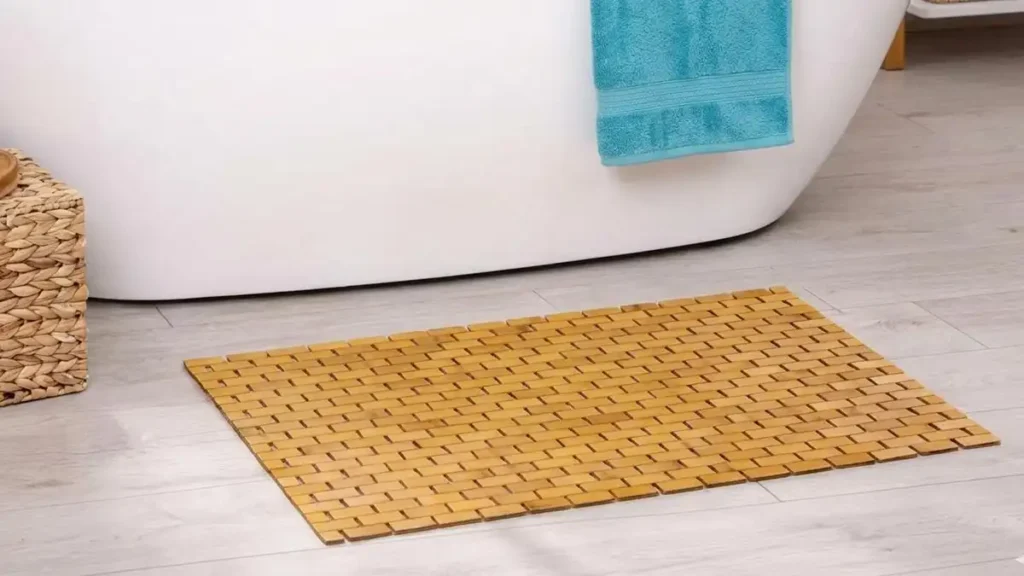
Bamboo bath mats are completely different from fabric bath mats. Instead of absorbing water, the slats allow water to drain and evaporate quickly, which means they stay dry and rarely develop odors or mould. They may feel a little hard or unusual at first, but many people end up loving how low-maintenance they are.
- 🌦️ Hot and humid climates: Bamboo is one of the best choices for humid bathrooms. Since it doesn’t trap moisture like fabric mats, it dries quickly and is naturally resistant to mould and mildew. If your bathroom stays damp year-round, bamboo can be a game changer.
- 🌵 Dry climates: Bamboo works well here too, although its quick-drying advantage isn’t as noticeable. The main trade-off is comfort—it’s firmer underfoot than cotton or memory foam.
- ❄️ Cold climates: This is where bamboo struggles a bit. It doesn’t provide warmth or cushioning, and standing on a hard bamboo mat on a cold tile floor may not feel as cozy as a plush mat.
Cleaning and maintenance: Bamboo mats are incredibly easy to maintain. Most only need a quick wipe-down or occasional cleaning with mild soap. However, they should be kept dry underneath and occasionally treated according to the manufacturer’s instructions to prevent cracking or warping over time.
Pros
- ✔️ Dries extremely quickly
- ✔️ Doesn’t trap moisture
- ✔️ Naturally resistant to mould and mildew
- ✔️ Very easy to clean
- ✔️ Perfect for humid and rainy climates
Cons
- ❌ Harder underfoot than fabric mats
- ❌ Offers little cushioning
- ❌ Can feel cold in winter
- ❌ Some models may crack or warp if not maintained properly
Bamboo bath mats aren’t the softest option, but they’re among the most practical. If you live in a humid climate or are tired of soggy mats that never seem to dry, bamboo is one of the few options that simply sidesteps the problem altogether.
6. Shag / Plush Bath Mat
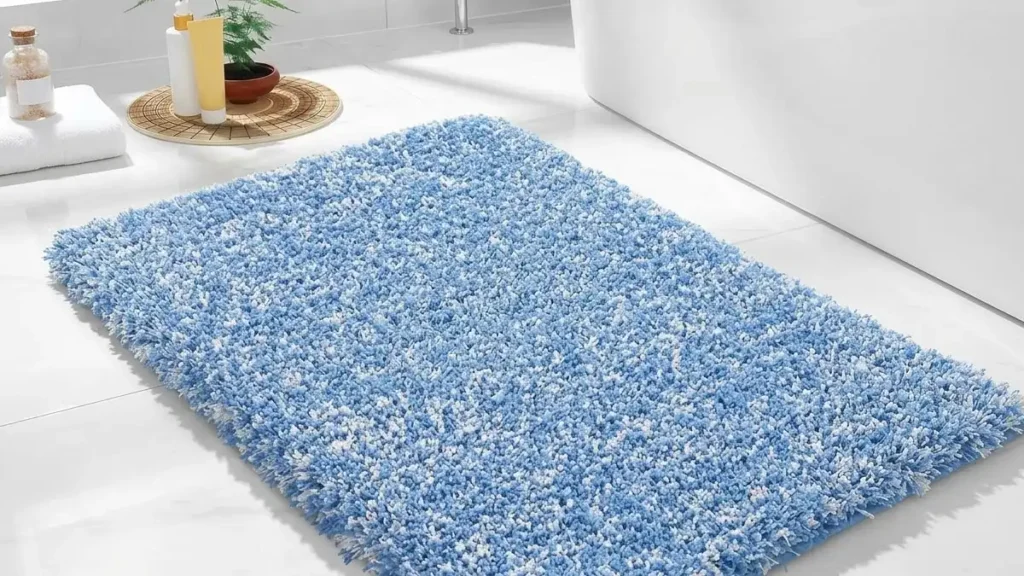
Shag and plush bath mats are the definition of comfort. Their deep, fluffy pile feels luxurious and gives your bathroom that cozy hotel-spa look. But all that softness comes at a price: thick fibers trap a lot of water and can take a very long time to dry.
- 🌦️ Hot and humid climates: This is usually the worst environment for shag mats. The deep pile holds moisture for hours—or even days—creating the perfect conditions for musty odors and mould. If your bathroom stays humid or lacks ventilation, it’s best to avoid them altogether.
- 🌵 Dry climates: Shag mats perform much better in dry areas where moisture evaporates quickly. If you love the plush feel and live in a low-humidity climate, this is one of the few situations where a shag mat makes sense.
- ❄️ Cold climates: Shag mats feel wonderfully warm and soft on cold tile floors. However, you’ll still need good airflow and regular cleaning to prevent moisture from building up inside the thick fibers.
Cleaning and maintenance: Deep-pile mats are harder to clean than most other bath mats. Hair, dust, and moisture can get trapped deep in the fibers, and the mat may take a long time to dry after washing. Regular washing and thorough drying are essential.
Pros
- ✔️ Extremely soft and comfortable
- ✔️ Adds warmth and a luxurious look
- ✔️ Great cushioning on hard floors
- ✔️ Ideal for dry climates
Cons
- ❌ Very slow to dry
- ❌ Traps moisture easily
- ❌ Higher risk of odors and mould in humid bathrooms
- ❌ Harder to clean and maintain
- ❌ Not ideal for daily use in damp environments
Shag bath mats look amazing in photos, but they’re often the least practical option for everyday bathrooms. Unless you live in a dry climate with good ventilation, their plush comfort can quickly turn into a damp, high-maintenance headache.
7. Diatomaceous Earth Bath Mat
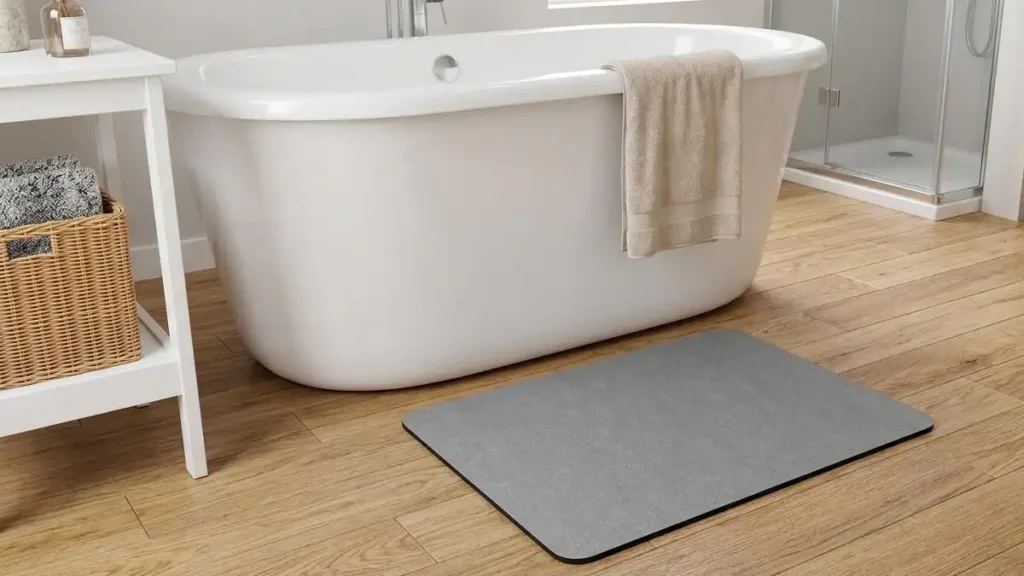
Diatomaceous earth bath mats don’t look or feel like traditional bath mats at all. They’re made from a porous, stone-like material that absorbs water instantly and dries within minutes. The first time you step on one, it feels a little strange—hard, smooth, and cool—but the quick-drying performance can be genuinely impressive.
- 🌦️ Hot and humid climates: This is where diatomaceous earth mats shine. They absorb water almost instantly and dry so quickly that mould, mildew, and musty odors are rarely a problem. If your bathroom stays damp or humid, few options are as low-maintenance.
- 🌵 Dry climates: They work just as well in dry areas, although the fast-drying advantage isn’t as noticeable. The biggest question is whether you prefer practicality over the soft feel of a fabric mat.
- ❄️ Cold climates: These mats can feel cold and hard underfoot, especially on tile floors in winter. If comfort and warmth are your top priorities, cotton or memory foam may be a better fit.
Cleaning and maintenance: Diatomaceous earth mats are surprisingly easy to maintain. Most only need a quick rinse or wipe-down, and some can be lightly sanded to restore absorbency over time. However, they should be handled carefully because the rigid material can chip or crack if dropped.
Pros
- ✔️ Absorbs water almost instantly
- ✔️ Dries in minutes
- ✔️ Resistant to mould, mildew, and odors
- ✔️ Extremely low maintenance
- ✔️ Excellent for humid and rainy climates
Cons
- ❌ Hard surface with little cushioning
- ❌ Can feel cold underfoot
- ❌ More expensive than basic fabric mats
- ❌ May chip or crack if dropped
- ❌ Unusual feel compared with traditional bath mats
Diatomaceous earth bath mats aren’t for everyone—they’re hard, minimalist, and take some getting used to. But if you’re tired of soggy mats that never seem to dry, this “stone mat” might be the most practical bath mat you’ll ever own.
8. Teak & Wooden Bath Mat
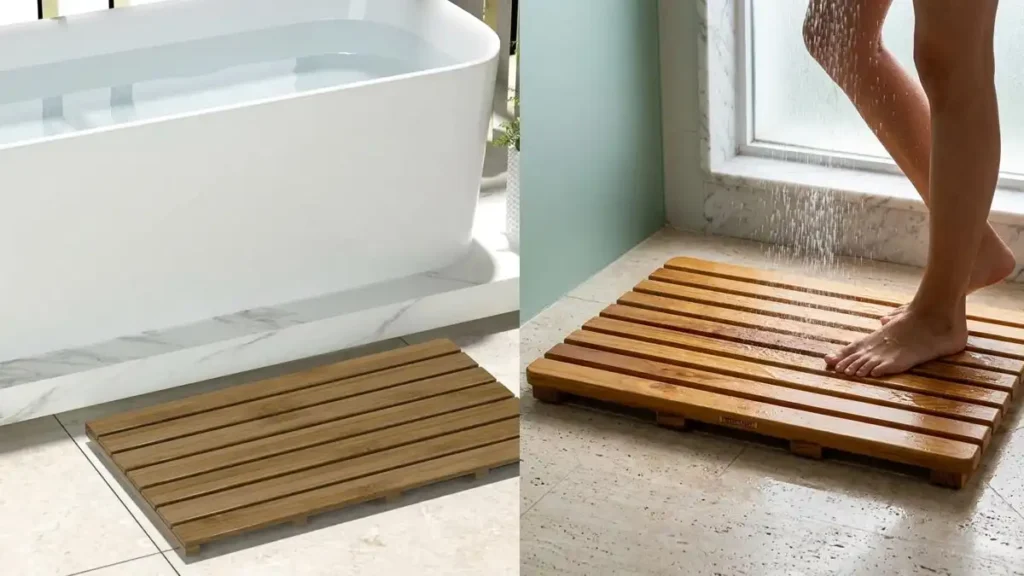
Wooden bath mats—especially those made from teak—are a stylish alternative to fabric mats. Instead of absorbing water, the slats allow water to drain and air to circulate, helping the mat dry quickly. They don’t feel as soft as cotton or memory foam, but they’re durable, easy to maintain, and surprisingly practical.
- 🌦️ Hot and humid climates: Teak and other quality wooden mats perform exceptionally well in humid bathrooms. They don’t trap moisture like fabric mats, which means fewer worries about mould, mildew, or musty smells. Teak is especially popular because its natural oils help it resist water damage.
- 🌵 Dry climates: Wooden mats work just as well in dry areas. Their biggest advantage here is aesthetics—they add a spa-like look and require very little upkeep.
- ❄️ Cold climates: Wood feels warmer than stone or tile, but it still won’t provide the plush comfort of a fabric mat. If you want cushioning and warmth, cotton or memory foam may be more comfortable.
Cleaning and maintenance: Wooden bath mats are easy to clean—usually a quick wipe or rinse is enough. However, they should be allowed to dry properly, and some woods may need occasional oiling or care to maintain their finish. Teak requires less maintenance than many other woods.
Pros
- ✔️ Dries quickly
- ✔️ Doesn’t trap moisture
- ✔️ Naturally resistant to mould and mildew
- ✔️ Durable and long-lasting
- ✔️ Adds a spa-like, premium look
Cons
- ❌ Hard surface with no cushioning
- ❌ Can feel cold compared with fabric mats
- ❌ Higher-quality teak mats can be expensive
- ❌ Some woods require occasional maintenance
- ❌ Water may pool underneath if the floor doesn’t drain well
Teak and wooden bath mats are ideal if you want a clean, minimalist look and hate dealing with soggy mats. They’re especially popular in humid climates and modern bathrooms, where quick drying and low maintenance matter more than plush comfort.
9. Polyester Bath Mat
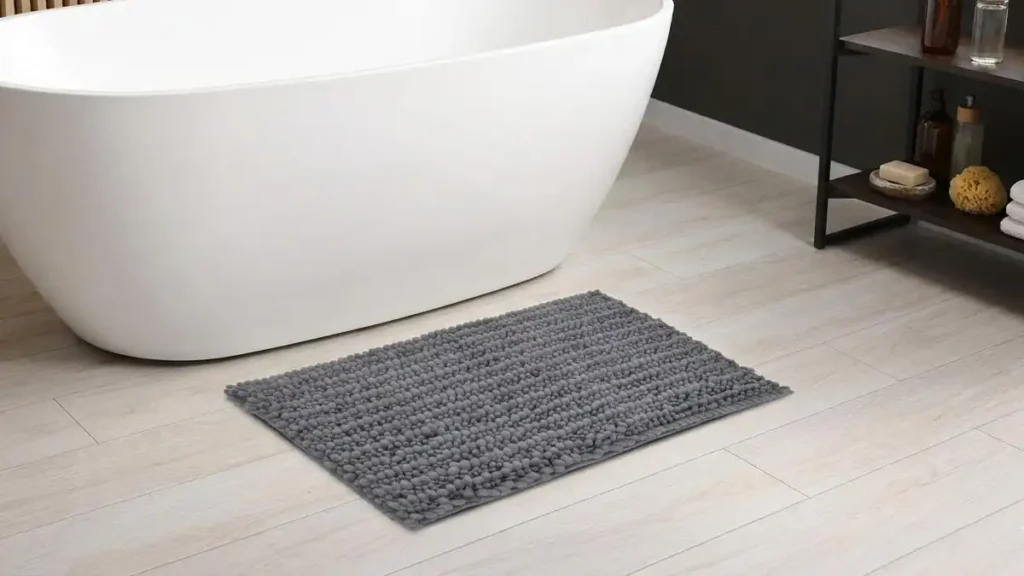
You’ll often see polyester bath mats marketed under different names, including microfiber, plush, or quick-dry rugs. In fact, many microfiber mats are made from polyester fibers. The material is affordable, durable, and dries faster than cotton—but the quality can vary a lot from one mat to another.
- 🌦️ Hot and humid climates: Polyester is a solid choice because it absorbs less water than cotton and dries relatively quickly. It resists mould and mildew better than thick natural fibers, making it a practical option for damp bathrooms.
- 🌵 Dry climates: Polyester works well here too. Since moisture evaporates quickly, you can choose from a wider range of styles, including plush or shaggy polyester mats.
- ❄️ Cold climates: Polyester mats are available in thicker, softer designs that feel cozy on cold floors. Just remember that very plush versions may dry more slowly.
Cleaning and maintenance: Most polyester bath mats are machine washable and hold their shape well after repeated washing. However, cheaper mats may flatten over time or lose some softness.
Pros
- ✔️ Dries faster than cotton
- ✔️ Resistant to mould and mildew
- ✔️ Durable and easy to clean
- ✔️ Available in many styles and price ranges
- ✔️ Good all-around choice for most climates
Cons
- ❌ Not as naturally soft or breathable as cotton
- ❌ Cheap versions can flatten or shed
- ❌ Thick polyester mats may still dry slowly
- ❌ Made from synthetic fibers, which some people prefer to avoid
Polyester may not be the most exciting bath mat material, but it’s one of the most practical. If you want something affordable, easy to maintain, and suitable for almost any climate, it’s hard to go wrong—especially if you choose a good-quality quick-dry model.
Best Bath Mats by Climate
Not everyone needs the same bath mat. The best choice depends less on trends and more on how much moisture your bathroom deals with.
🌦️ Hot & Humid Climates
Best: Microfiber, Bamboo, Diatomaceous Earth
Avoid: Shag/Plush, Thick Cotton, Memory Foam
These materials dry quickly and don’t trap moisture, which helps prevent mould and musty smells.
🌵 Dry Climates
Best: Cotton, Chenille, Shag/Plush
Dry air helps mats and rugs dry faster, so you can prioritize comfort and softness without worrying as much about trapped moisture.
❄️ Cold Climates
Best: Memory Foam, Cotton, Chenille
Avoid: Bamboo and stone mats if warmth is important.
If you hate stepping onto cold tile, plush fabrics and cushioned mats are hard to beat.
🌧️ Rainy Climates
Best: Microfiber, Bamboo
Avoid: Thick Cotton and Shag
Quick-drying materials are your friend when the air already feels damp most of the year.
The Mistakes I Made (So You Don’t Have To)
❌ Choosing style over function
That cream shag rug betrayed me. I fell for the spa look and ignored how slowly it dried.
Now I choose material first, drying speed second, and aesthetics third.
❌ Ignoring drying time
This became my rule:
If a bath mat is still damp two hours after a shower in your bathroom, it’s probably the wrong one.
Your bathroom’s ventilation matters just as much as the mat itself.
❌ Buying the wrong size
Too small and your feet end up on cold tile.
Too large and the bath mat curls at the edges, collects dust, and becomes annoying to wash.
Measure your space before buying.
❌ Forgetting non-slip backing
I once bought a bath mat that slid across the floor like a hockey puck.
Now I always look for visible latex or rubber backing—or use a separate non-slip mat pad.
❌ Ignoring your climate
This was my biggest mistake.
A bath mat that works perfectly in Arizona might be a disaster in Manchester or Vancouver.
Be honest about where you live and buy accordingly.
How I Keep My Bath Mats From Getting Gross
- 🧺 Wash every 1–2 weeks. Hot water works best for most washable bath mats.
- ☀️ Dry completely before putting it back. Never place a damp bath mat back on the floor.
- 🌬️ Ventilate the bathroom. Run the fan after showers or crack open a window whenever possible.
- 🔄 Replace when necessary. If the smell won’t go away or the backing starts falling apart, it’s time for a new one.
Quick Buying Checklist
Before buying a bath mat, ask yourself:
- ✔️ Does the material suit my climate?
- ✔️ Will it dry within a few hours in my bathroom?
- ✔️ Does it have non-slip backing?
- ✔️ Is it machine washable?
- ✔️ Have I measured the space properly?
- ✔️ Do I need a different bath mat for different seasons?
After trying cotton, microfiber, memory foam, bamboo, chenille, and one truly awful shag rug, I’ve learned that the “best” bath mat isn’t the softest or the prettiest.
It’s the one that works with your climate, dries quickly, and doesn’t become tomorrow’s mould problem.
Choose wisely, and your bathroom floor—and your nose—will thank you.
Final Thoughts
The best bath mat isn’t the prettiest or most expensive – it’s the one designed for your home. Your climate, your bathroom’s ventilation, how you actually use the space.
Once I stopped chasing fluffiness and started paying attention to materials and drying speed, everything changed. My bathroom floor stays dry. The musty smell is gone. My feet are comfortable year-round.
Take five minutes to think about your local weather. Then choose a bath mat that solves your specific problems. It’s a small change that makes every single shower more pleasant.
Now if you’ll excuse me, I need to go hang my microfiber bath mat over the towel rail. Old habits die hard—but making this quick task a part of a mindful evening routine keeps the whole home feeling comfortable.
Got a bath mat horror story? Drop it in the comments. I read every one.